

• HOME
  • NEWS
  • EXPLORE
    • CAREER
      • Companies
      • Jobs
    • EVENTS
    • iGEM
      • News
      • Team
    • PHOTOS
    • VIDEO
    • WIKI
  • BLOG
  • COMMUNITY
    • FACEBOOK
    • INSTAGRAM
    • TWITTER
Saturday, February 7, 2026
BIOENGINEER.ORG
No Result
View All Result
  • Login
  • HOME
  • NEWS
  • EXPLORE
    • CAREER
      • Companies
      • Jobs
        • Lecturer
        • PhD Studentship
        • Postdoc
        • Research Assistant
    • EVENTS
    • iGEM
      • News
      • Team
    • PHOTOS
    • VIDEO
    • WIKI
  • BLOG
  • COMMUNITY
    • FACEBOOK
    • INSTAGRAM
    • TWITTER
  • HOME
  • NEWS
  • EXPLORE
    • CAREER
      • Companies
      • Jobs
        • Lecturer
        • PhD Studentship
        • Postdoc
        • Research Assistant
    • EVENTS
    • iGEM
      • News
      • Team
    • PHOTOS
    • VIDEO
    • WIKI
  • BLOG
  • COMMUNITY
    • FACEBOOK
    • INSTAGRAM
    • TWITTER
No Result
View All Result
Bioengineer.org
No Result
View All Result
Home NEWS Science News Chemistry

Too much information – Aston University researchers to tackle global data storage crisis

Bioengineer by Bioengineer
December 19, 2022
in Chemistry
Reading Time: 2 mins read
0
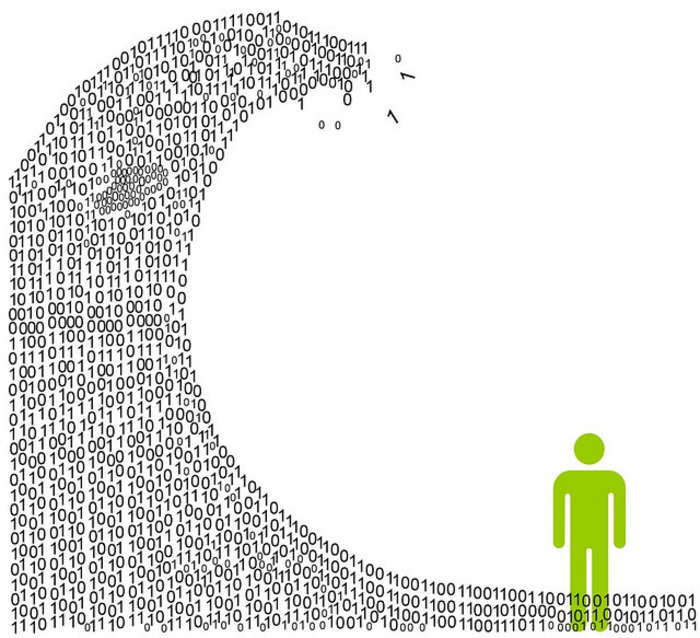
Social Media Information Overload
Share on FacebookShare on TwitterShare on LinkedinShare on RedditShare on Telegram


Social Media Information Overload

Credit: Intersection Digital

  • The global datasphere is predicted to increase by 300%.
  • New surfaces around 10,000 times smaller than a human hair will increase data space
  • Solution will improve capacity to cope with mind-blowing amount of data produced each day.


19 December 2022 | Birmingham, UK


Scientists at Aston University are starting a research programme to tackle the global shortage of digital data storage.

Currently all the data we use is stored on banks of servers housed in huge warehouses, or data centres.

In the next three years the total amount of data in the world – the global datasphere – is predicted to increase by 300%.

However, as data centres account for around 1.5% of the world’s annual electricity usage it has been recognised that building more huge warehouses is not sustainable.

Aston University has received funding (£204,031) to explore solutions to this problem.

Experts will develop a new technology to provide surfaces with channels less than five nanometres in width, around 10,000 times smaller than the width of a human hair.

This will enable increased capacity in data storage devices to cope with the mind-blowing amount of data produced around the world each day.

Dr Matt Derry, lecturer in chemistry within the University’s College of Engineering and Physical Sciences, is leading the project which is in collaboration with Specialist Computer Centres (SCC), the science facility Diamond Light Source and Babeș-Bolyai University, Romania.

Dr Derry said: “Simply building new data centres without improving data storage technologies is not a viable solution.

“Increasingly we face the risk of a so-called data storage crunch and improved data storage solutions are imperative to keep up with the demands of the modern world.”

Dr Derry will be working with Dr Amit Kumar Sarkar, a researcher in materials chemistry, who is being funded by the Engineering and Physical Sciences Research Council.

Dr Sarkar said: “I’m delighted to be joining Aston University to develop more efficient data storage technologies.

“We will be exploiting advanced polymer chemistry as a pathway to increase the amount of data that can be housed on storage media.

“Increasing the efficiency of existing technologies will significantly reduce the need for costly, environmentally damaging construction of new ‘mega data centres’.

“The next three years will be crucial. The global datasphere is predicted to increase to 175 zettabytes, with one zettabyte being approximately equal to one billion terabytes.”

The research will contribute to the UK Research and Innovation’s (UKRI) 2022-2027 strategy, and the United Nations sustainable development goals.

It also has the potential to impact other technologies where performance relies on creating regular patterns on the nanometre scale, such as organic electronics for solar energy.

For more information about studying chemistry at Aston University visit https://www.aston.ac.uk/eps/infrastructure-and-sustainable-engineering/ceac



Share12Tweet8Share2ShareShareShare2

Related Posts

blank

Breakthrough in Environmental Cleanup: Scientists Develop Solar-Activated Biochar for Faster Remediation

February 7, 2026
blank

Cutting Costs: Making Hydrogen Fuel Cells More Affordable

February 6, 2026

Scientists Develop Hand-Held “Levitating” Time Crystals

February 6, 2026

Observing a Key Green-Energy Catalyst Dissolve Atom by Atom

February 6, 2026

POPULAR NEWS

  • Robotic Ureteral Reconstruction: A Novel Approach

    Robotic Ureteral Reconstruction: A Novel Approach

    82 shares
    Share 33 Tweet 21
  • Digital Privacy: Health Data Control in Incarceration

    63 shares
    Share 25 Tweet 16
  • Study Reveals Lipid Accumulation in ME/CFS Cells

    57 shares
    Share 23 Tweet 14
  • Breakthrough in RNA Research Accelerates Medical Innovations Timeline

    53 shares
    Share 21 Tweet 13

About

We bring you the latest biotechnology news from best research centers and universities around the world. Check our website.

Follow us

Recent News

Evaluating Pediatric Emergency Care Quality in Ethiopia

TPMT Expression Predictions Linked to Azathioprine Side Effects

Improving Dementia Care with Enhanced Activity Kits

Subscribe to Blog via Email

Enter your email address to subscribe to this blog and receive notifications of new posts by email.

Join 73 other subscribers
  • Contact Us

Bioengineer.org © Copyright 2023 All Rights Reserved.

Welcome Back!

Login to your account below

Forgotten Password?

Retrieve your password

Please enter your username or email address to reset your password.

Log In
No Result
View All Result
  • Homepages
    • Home Page 1
    • Home Page 2
  • News
  • National
  • Business
  • Health
  • Lifestyle
  • Science

Bioengineer.org © Copyright 2023 All Rights Reserved.