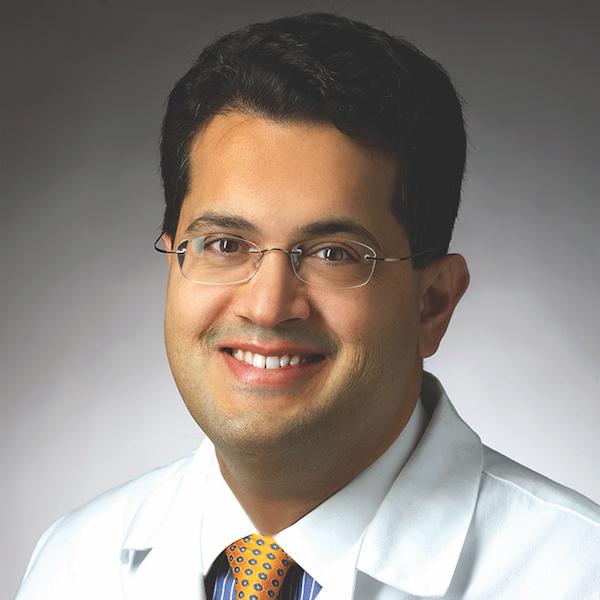
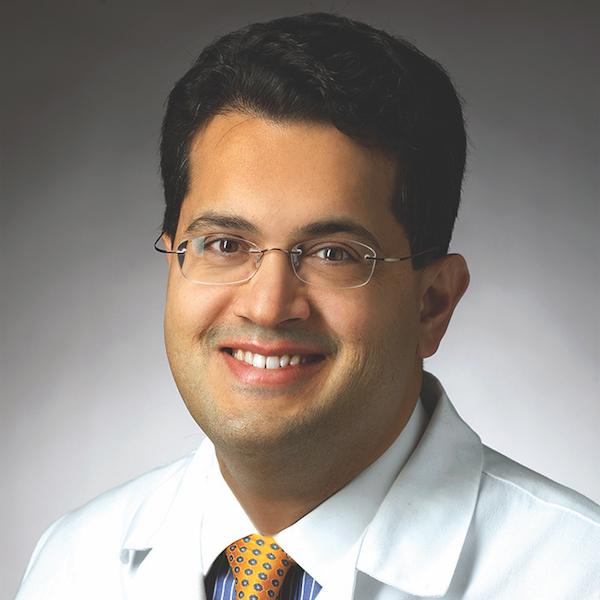
Credit: Georgetown University
WASHINGTON — An analysis of the New York State's Medicaid expansion, which predated the 2010 Affordable Care Act, finds substantial decrease in uninsured rate but little change in racial disparities when it comes to access to cancer surgery – a proxy for complex cancer care.
The results, published in the Journal of the American College of Surgeons, found that the Medicaid expansion significantly improves access to surgical cancer care overall, but the proportion of minorities having surgery, relative to whites, did not change – an unexpected finding.
The researchers from Georgetown University and MedStar Health representing medical research, policy and law, say their findings may provide timely and meaningful insight into what could result from the expansion of Medicaid, a state and federal program that provides health insurance for those with very low income, that has occurred in 32 states including the District of Columbia as part of ACA.
"This study shows that New York's Medicaid expansion, one of the largest in U.S. history before the Affordable Care Act, improved access to cancer surgery for the previously uninsured. However, it did not appear to preferentially benefit ethnic and racial minorities who are typically the most vulnerable of American poorest population," explains the study's lead investigator, Waddah B. Al-Refaie, MD, FACS, surgeon-in-chief at Georgetown Lombardi Comprehensive Cancer Center and chief of surgical oncology at MedStar Georgetown University Hospital.
The researchers say that, in short, the New York State Medicaid expansion fulfilled two objectives: 1) reduce the number of the uninsured, and 2) provide high access to persons undergoing cancer surgery.
"There was a sharp decrease in the uninsured, but the proportion of the racial minority patients undergoing cancer surgery through Medicaid– about 25 percent African-Americans and 13 percent Hispanic — did not change," explains Al-Refaie who also leads the MedStar Georgetown Surgical Outcomes Research Center (MG-SORC).
In fact, they found that the proportion of minorities relative to whites who received cancer surgeries was unchanged in New York before and after the Medicaid expansion.
"We know that roughly 50 percent of individuals newly eligible under the New York State Medicaid expansion were minorities. Thus, we would have expected the expansion to lead to a reduction in disparities – that is that both the raw numbers and the proportion of minority use for cancer surgery to have increased," explains Thomas DeLeire, professor of at Georgetown's McCourt School of Public Policy, and a former senior advisor in the U.S. Department of Health and Human Services in the Obama Administration.
The researchers say additional analysis now underway might help explain why the proportion of minority use did not change after the expansion, which was designed to mirror socioeconomic status in New York. They say it could be due to a number of factors such as selective referral patterns, "minority crowd-out," where non-minority patients displace minority patients, hospital reimbursements, or insurance contracting.
"From establishing need for cancer surgery to actually having the surgery involves many steps, and is a complicated process to unravel," Al-Refaie says.
The authors identified 67,685 adults age 18-64, who underwent cancer surgery in New York between 1997-2006. They found that the proportion of cancer surgeries paid by Medicaid increased from 8.9 percent to 15.1 percent in the five years after the expansion, and the percentage of uninsured patients dropped by 21.3 percent immediately following the expansion. Still, more than 76 percent of surgeries were paid for by private insurance, but the total number of cancer surgeries was not affected.
"To our knowledge, this study and its findings represent one of the first reports in surgery on the lack of effect on Medicaid expansion on the most vulnerable of low income populations," says senior author Nawar Shara, PhD, director of MedStar Health Research Institute's Department of Biostatistics and Biomedical informatics.
"It will be years before this type of evaluation can be done for the ACA-related Medicaid expansion, and we believe these findings should help open a dialogue about what could be done to uncover and improve potential inadequacies of this policy change," Al-Refaie concludes. "Empirical evidence from our study can inform policy decisions regarding the much-contended Medicaid expansion in ACA."
###
In addition to Al-Refaie, DeLeire and Shara, co-authors include Chaoyi Zheng of Georgetown University Medical Center; Manila Jindai, a medical student and fellow with the MG-SORC; David Xiao, a medical student with the MG-SORC; Michele L. Clements of MedStar Health Research Institute; Patryce Toye, MD, with MedStar Health; Lynt B. Johnson, MD, of Georgetown University School of Medicine and MedStar Georgetown University Hospital; and Timothy M. Westmoreland, JD, of the O'Neill Institute for National and Global Health Law at Georgetown Law.
The study was supported in part by the Lee and Juliet Folger Foundation. Research support was also provided by the Georgetown-Howard Universities Center for Clinical and Translational Science. The authors report having no personal financial interests related to the study.
About Georgetown University Medical Center
Georgetown University Medical Center (GUMC) is an internationally recognized academic medical center with a three-part mission of research, teaching and patient care (through MedStar Health). GUMC's mission is carried out with a strong emphasis on public service and a dedication to the Catholic, Jesuit principle of cura personalis — or "care of the whole person." The Medical Center includes the School of Medicine and the School of Nursing & Health Studies, both nationally ranked; Georgetown Lombardi Comprehensive Cancer Center, designated as a comprehensive cancer center by the National Cancer Institute; and the Biomedical Graduate Research Organization, which accounts for the majority of externally funded research at GUMC including a Clinical and Translational Science Award from the National Institutes of Health. Connect with GUMC on Facebook (Facebook.com/GUMCUpdate), Twitter (@gumedcenter) and Instagram (@gumedcenter).
Media Contact
Karen Teber
[email protected]
@Gumedcenter
############
Story Source: Materials provided by Scienmag