

• HOME
  • NEWS
  • EXPLORE
    • CAREER
      • Companies
      • Jobs
    • EVENTS
    • iGEM
      • News
      • Team
    • PHOTOS
    • VIDEO
    • WIKI
  • BLOG
  • COMMUNITY
    • FACEBOOK
    • INSTAGRAM
    • TWITTER
Wednesday, July 8, 2026
BIOENGINEER.ORG
No Result
View All Result
  • Login
  • HOME
  • NEWS
  • EXPLORE
    • CAREER
      • Companies
      • Jobs
        • Lecturer
        • PhD Studentship
        • Postdoc
        • Research Assistant
    • EVENTS
    • iGEM
      • News
      • Team
    • PHOTOS
    • VIDEO
    • WIKI
  • BLOG
  • COMMUNITY
    • FACEBOOK
    • INSTAGRAM
    • TWITTER
  • HOME
  • NEWS
  • EXPLORE
    • CAREER
      • Companies
      • Jobs
        • Lecturer
        • PhD Studentship
        • Postdoc
        • Research Assistant
    • EVENTS
    • iGEM
      • News
      • Team
    • PHOTOS
    • VIDEO
    • WIKI
  • BLOG
  • COMMUNITY
    • FACEBOOK
    • INSTAGRAM
    • TWITTER
No Result
View All Result
Bioengineer.org
No Result
View All Result
Home NEWS Science News Chemistry

Polymer synthesis research expands, simplifies manufacturing of materials

Bioengineer by Bioengineer
December 8, 2022
in Chemistry
Reading Time: 2 mins read
0
Grants boosts expansion of high-tech materials study
Share on FacebookShare on TwitterShare on LinkedinShare on RedditShare on Telegram

By discovering a process that could simplify the manufacturing of advanced materials used in consumer electronics, Kennesaw State University assistant professor of chemistry Graham Collier has earned a nearly $400,000 grant from the National Science Foundation (NSF) to expand his research.
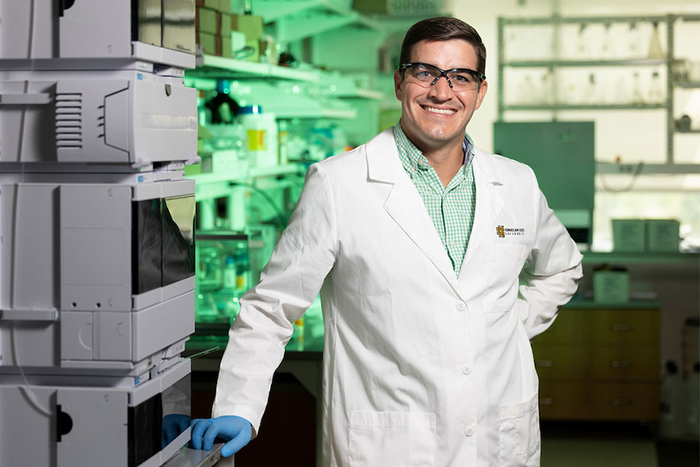
Grants boosts expansion of high-tech materials study

Credit: Kennesaw State University

By discovering a process that could simplify the manufacturing of advanced materials used in consumer electronics, Kennesaw State University assistant professor of chemistry Graham Collier has earned a nearly $400,000 grant from the National Science Foundation (NSF) to expand his research.

Synthetic polymers are used to make electronics and other technological tools, so there is a demand for research into streamlining the synthesis of polymeric materials, which Collier said can require around 20 steps and taxes natural resources, such as petroleum and water.

Shortly after Collier arrived at Kennesaw State in 2020 his research uncovered a chemical building block that simplifies the polymer synthesis process. That building block, called pyrrolopyrrole, is made under ambient conditions and does not require tedious purifications.

“The hypothesis was that we could exploit this simple process to more easily create polymers,” Collier said.

According to Collier, the future for the research could involve collaboration with manufacturers and engineers seeking quicker and more sustainable processes for producing electronics. The broad technological applications for polymers make the research relevant beyond the laboratory.

“You don’t need a Ph.D. to come into my lab and make the materials that we work with,” Collier said. “If you think about the screens for your phones, your smart watches, and your e-readers like a Kindle or a Nook, these polymers are everywhere.”

The three-year grant also includes a component for engaging undergraduate and graduate researchers in the work, particularly those from underrepresented communities.

“The work my undergraduates are doing for their own projects directly contributes to this research under the NSF grant,” Collier said. “Those students are adding an important dimension, too, and that’s going in a direction of recyclability and sustainability of our polymers. It’s pretty exciting.”

The research project will benefit not only manufacturers and consumers, but Kennesaw State students, as well.

“With this award, our lab can contribute to KSU’s mission of becoming a top-tier research university,” he said. “I can buy supplies for students and pay students to do summer research, which allows me to impact a lot of people over the next three years. That’s ultimately going to help shape the future of KSU.”



Share12Tweet8Share2ShareShareShare2

Related Posts

Acidifying oceans may shrink the brains of intelligent invertebrates

Acidifying oceans may shrink the brains of intelligent invertebrates

July 8, 2026
Return exactly one rewritten English science news headline for the original title below. Maximum 12 words. Output plain text only. Do not use HTML, Markdown, quotes, labels, explanations, bullets, numbering, or multiple options. Original title: MIT engineers whip up a more breathable hydrogel

Return exactly one rewritten English science news headline for the original title below. Maximum 12 words. Output plain text only. Do not use HTML, Markdown, quotes, labels, explanations, bullets, numbering, or multiple options. Original title: MIT engineers whip up a more breathable hydrogel

July 8, 2026

Salt adaptation linked to higher disease risk, Mizzou study finds

July 6, 2026

Intelligent Microgrid Management Promises Lower Household Energy Bills and Reduced Diesel Emissions

July 4, 2026

POPULAR NEWS

  • Detection of EDCs in Breast Milk and Infant Urine Up to Six Months Highlights Early Exposure Risks

    77 shares
    Share 31 Tweet 19
  • New Drug Candidate Developed at McMaster Shows Potential for Treating Brain Cancer

    58 shares
    Share 23 Tweet 15
  • KTU Researchers Explore Ultrasound’s Role in Enhancing Blood Flow Beyond Diagnostics

    53 shares
    Share 21 Tweet 13
  • 高齢者の骨粗鬆症治療の持続性比較

    51 shares
    Share 20 Tweet 13

About

We bring you the latest biotechnology news from best research centers and universities around the world. Check our website.

Follow us

Recent News

Rice and Neal Cancer Center award seed grants for translational cancer research

Return exactly one rewritten English science news headline for the original title below. Maximum 12 words. Output plain text only. Do not use HTML, Markdown, quotes, labels, explanations, bullets, numbering, or multiple options. Original title: Architecture of the 8 MDa Hdr–Vhu–Fwd super-assembly in class I methanogens

Return exactly one rewritten English science news headline for the original title below. Maximum 12 words. Output plain text only. Do not use HTML, Markdown, quotes, labels, explanations, bullets, numbering, or multiple options. Original title: New research provides a promising step towards safer, less toxic stem cell transplants

Subscribe to Blog via Email

Enter your email address to subscribe to this blog and receive notifications of new posts by email.

Join 83 other subscribers
  • Contact Us

Bioengineer.org © Copyright 2023 All Rights Reserved.

Welcome Back!

Login to your account below

Forgotten Password?

Retrieve your password

Please enter your username or email address to reset your password.

Log In
No Result
View All Result
  • Homepages
    • Home Page 1
    • Home Page 2
  • News
  • National
  • Business
  • Health
  • Lifestyle
  • Science

Bioengineer.org © Copyright 2023 All Rights Reserved.