• HOME
  • NEWS
  • EXPLORE
    • CAREER
      • Companies
      • Jobs
    • EVENTS
    • iGEM
      • News
      • Team
    • PHOTOS
    • VIDEO
    • WIKI
  • BLOG
  • COMMUNITY
    • FACEBOOK
    • INSTAGRAM
    • TWITTER
Sunday, April 5, 2026
BIOENGINEER.ORG
No Result
View All Result
  • Login
  • HOME
  • NEWS
  • EXPLORE
    • CAREER
      • Companies
      • Jobs
        • Lecturer
        • PhD Studentship
        • Postdoc
        • Research Assistant
    • EVENTS
    • iGEM
      • News
      • Team
    • PHOTOS
    • VIDEO
    • WIKI
  • BLOG
  • COMMUNITY
    • FACEBOOK
    • INSTAGRAM
    • TWITTER
  • HOME
  • NEWS
  • EXPLORE
    • CAREER
      • Companies
      • Jobs
        • Lecturer
        • PhD Studentship
        • Postdoc
        • Research Assistant
    • EVENTS
    • iGEM
      • News
      • Team
    • PHOTOS
    • VIDEO
    • WIKI
  • BLOG
  • COMMUNITY
    • FACEBOOK
    • INSTAGRAM
    • TWITTER
No Result
View All Result
Bioengineer.org
No Result
View All Result
Home NEWS Science News Biology

Is that turtle legal? Fighting wildlife trafficking with stable isotopes

Bioengineer by Bioengineer
December 2, 2022
in Biology
Reading Time: 2 mins read
0
Wood Turtle
Share on FacebookShare on TwitterShare on LinkedinShare on RedditShare on Telegram

Wildlife trafficking is a well-known threat to biodiversity, with many species imperiled by poachers working in the illegal pet trade. Worse still, when traffickers are caught in the act, they often evade prosecution through animal “laundering”—erroneously claiming that the confiscated wildlife was bred in captivity.
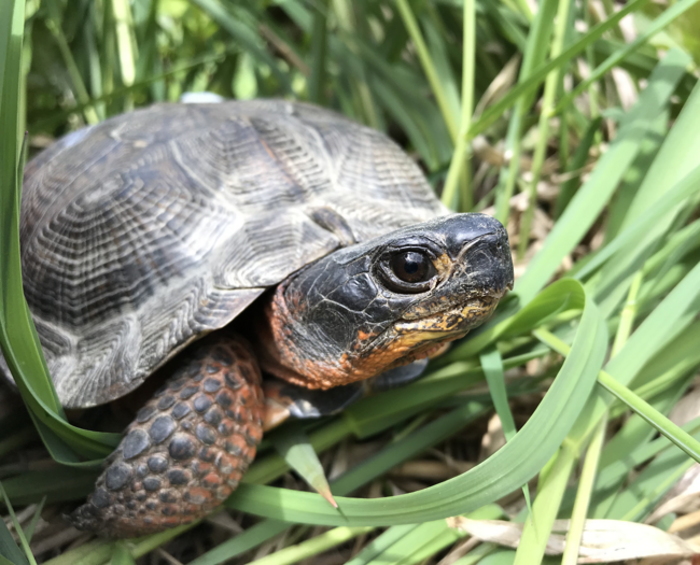
Wood Turtle

Credit: Center for Wildlife Studies

Wildlife trafficking is a well-known threat to biodiversity, with many species imperiled by poachers working in the illegal pet trade. Worse still, when traffickers are caught in the act, they often evade prosecution through animal “laundering”—erroneously claiming that the confiscated wildlife was bred in captivity.

Published in the journal Biology’s special issue, Applications of Stable Isotope Analysis in Ecology, Dr. Jack Hopkins, President and Associate Professor of the Center for Wildlife Studies and colleagues describe a novel technique to prevent laundering one of Maine’s imperiled species, the wood turtle. The key to the authors’ approach lies in carbon and nitrogen stable isotopes, chemicals that exist in animal tissues, which vary depending on diet. Using stable isotopes from turtle claw tips, the authors produced a statistical model that can determine—with impressive accuracy—whether wood turtles are wild-caught or captive-bred.

To develop the model, co-authors Drs. Matt Chatfield and Cheryl Frederick collected claw tips from 35 wild wood turtles in Maine and compared their isotopes with those of 36 captive turtles throughout the eastern U.S. Because captive and wild turtles have drastically different diets, the isotopic signatures of their tissues were also expected to differ. According to Hopkins, the resultant model was highly effective: “The model predicted all but two of the 71 turtles as wild or captive, yielding a success rate of over 97%.”

“This technique will provide conservation law enforcement officials a much-needed wildlife forensic tool and is the first crucial step in developing a more widespread application used to help combat the illegal turtle trade,” said Hopkins. “The need is particularly important because despite reptiles’ overwhelming prevalence in the wildlife trade, a relative paucity of funding is allocated to their protection.”

In the future, despite the nearly perfect predictions of the current model, Hopkins and co-authors are confident that new models will reach 100% accuracy and encompass other geographic regions and vulnerable turtle species.


Journal

Biology

DOI

10.3390/biology11121728

Method of Research

Experimental study

Subject of Research

Animals

Article Title

Forensic Application of Stable Isotopes to Distinguish between Wild and Captive Turtles

Article Publication Date

29-Nov-2022
Share12Tweet8Share2ShareShareShare2

Related Posts

Damselfly Mating Strategies Shed Light on Reproductive Barriers

Damselfly Mating Strategies Shed Light on Reproductive Barriers

April 4, 2026
blank

Custom Biochar Approaches Enhance Alfalfa Growth and Stress Tolerance in Saline Soils

April 3, 2026

Mutant Clownfish Sheds Light on How Nature Defines Boundaries

April 3, 2026

Scientists Discover How Bacterial Enzyme Breaks Down Sturdy Collagen

April 3, 2026

POPULAR NEWS

  • blank

    Revolutionary AI Model Enhances Precision in Detecting Food Contamination

    97 shares
    Share 39 Tweet 24
  • Imagine a Social Media Feed That Challenges Your Views Instead of Reinforcing Them

    1008 shares
    Share 398 Tweet 249
  • Promising Outcomes from First Clinical Trials of Gene Regulation in Epilepsy

    51 shares
    Share 20 Tweet 13
  • Popular Anti-Aging Compound Linked to Damage in Corpus Callosum, Study Finds

    44 shares
    Share 18 Tweet 11

About

We bring you the latest biotechnology news from best research centers and universities around the world. Check our website.

Follow us

Recent News

Frailty, Depression, Social Participation Linked in Older Adults

Seismic Impact on Integrated Slope Stabilization: Numerical Study

Clinical Outcomes and Risks in Post-Ibrutinib Transplant

Subscribe to Blog via Email

Enter your email address to subscribe to this blog and receive notifications of new posts by email.

Join 78 other subscribers
  • Contact Us

Bioengineer.org © Copyright 2023 All Rights Reserved.

Welcome Back!

Login to your account below

Forgotten Password?

Retrieve your password

Please enter your username or email address to reset your password.

Log In
No Result
View All Result
  • Homepages
    • Home Page 1
    • Home Page 2
  • News
  • National
  • Business
  • Health
  • Lifestyle
  • Science

Bioengineer.org © Copyright 2023 All Rights Reserved.