• HOME
  • NEWS
  • EXPLORE
    • CAREER
      • Companies
      • Jobs
    • EVENTS
    • iGEM
      • News
      • Team
    • PHOTOS
    • VIDEO
    • WIKI
  • BLOG
  • COMMUNITY
    • FACEBOOK
    • INSTAGRAM
    • TWITTER
Saturday, February 7, 2026
BIOENGINEER.ORG
No Result
View All Result
  • Login
  • HOME
  • NEWS
  • EXPLORE
    • CAREER
      • Companies
      • Jobs
        • Lecturer
        • PhD Studentship
        • Postdoc
        • Research Assistant
    • EVENTS
    • iGEM
      • News
      • Team
    • PHOTOS
    • VIDEO
    • WIKI
  • BLOG
  • COMMUNITY
    • FACEBOOK
    • INSTAGRAM
    • TWITTER
  • HOME
  • NEWS
  • EXPLORE
    • CAREER
      • Companies
      • Jobs
        • Lecturer
        • PhD Studentship
        • Postdoc
        • Research Assistant
    • EVENTS
    • iGEM
      • News
      • Team
    • PHOTOS
    • VIDEO
    • WIKI
  • BLOG
  • COMMUNITY
    • FACEBOOK
    • INSTAGRAM
    • TWITTER
No Result
View All Result
Bioengineer.org
No Result
View All Result
Home NEWS Science News Biology

Female monkeys ‘actively reduce’ social network as they age

Bioengineer by Bioengineer
November 30, 2022
in Biology
Reading Time: 2 mins read
0
Rhesus macaques
Share on FacebookShare on TwitterShare on LinkedinShare on RedditShare on Telegram

Female rhesus macaques “actively reduce” their social networks and prioritise friends and family as they get older, new research shows.
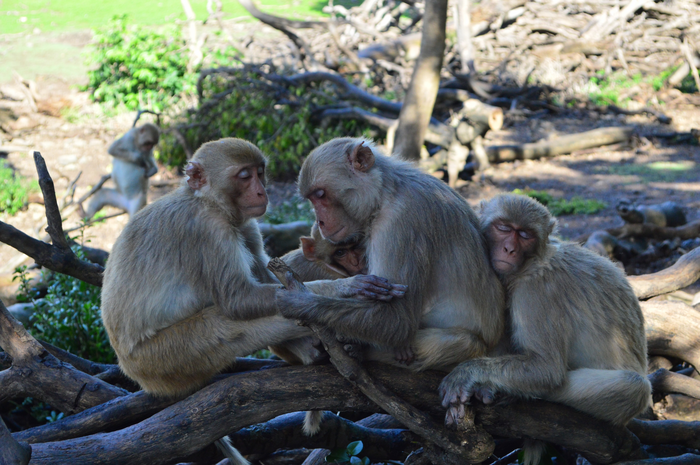
Rhesus macaques

Credit: Erin Siracusa

Female rhesus macaques “actively reduce” their social networks and prioritise friends and family as they get older, new research shows.

Having fewer friends in later life has been seen as harmful, including among humans.

But the new study shows female macaques become increasingly selective, focussing more on relatives and long-standing friendships.

The results show females aren’t shunned in later life – the changes are driven by the females themselves.

The research – by the University of Exeter, Arizona State University, New York University and the University of Pennsylvania – was carried out on Cayo Santiago, also known as Monkey Island, off Puerto Rico.

“This pattern of narrowing social networks with age is common in humans,” said Professor Lauren Brent, from Exeter’s Centre for Research in Animal Behaviour.

“Our study offers the most conclusive evidence to date that social selectivity is not unique to humans, and therefore might have deeper evolutionary underpinnings.”

The study used eight years of data on more than 200 macaques, seeing how the social lives of each individual changed.

By ruling out other explanations such as the death of partners, the researchers found clear evidence of social selectivity by females.

“There are many possible reasons why macaques become more socially selective with age,” said Dr Erin Siracusa, also from the University of Exeter.

“For example, the benefits of social interactions might change with time. Young macaques might benefit from a wide social group that can help them explore and find potential mates.

“For older macaques, it might be easier and safer – in terms of everything from conflict to disease transmission – to stick with family and existing friends.

“New relationships also require more mental effort, so while we see no decline in time spent socialising, older macaques might save mental energy by shrinking their network.”

Long-term monitoring of the macaques on Cayo Santiago is made possible by the Caribbean Primate Research Center, and this study was funded by the National Institute of Health.

The paper, published in the journal Proceedings of the National Academy of Sciences, is entitled: “Within-individual changes reveal increasing social selectivity with age in rhesus macaques.”


Journal

Proceedings of the National Academy of Sciences

DOI

10.1073/pnas.2209180119

Method of Research

Observational study

Subject of Research

Animals

Article Title

Within-individual changes reveal increasing social selectivity with age in rhesus macaques

Article Publication Date

29-Nov-2022

Share12Tweet8Share2ShareShareShare2

Related Posts

Florida Cane Toad: Complex Spread and Selective Evolution

Florida Cane Toad: Complex Spread and Selective Evolution

February 7, 2026
New Study Uncovers Mechanism Behind Burn Pit Particulate Matter–Induced Lung Inflammation

New Study Uncovers Mechanism Behind Burn Pit Particulate Matter–Induced Lung Inflammation

February 6, 2026

DeepBlastoid: Advancing Automated and Efficient Evaluation of Human Blastoids with Deep Learning

February 6, 2026

Navigating the Gut: The Role of Formic Acid in the Microbiome

February 6, 2026

POPULAR NEWS

  • Robotic Ureteral Reconstruction: A Novel Approach

    Robotic Ureteral Reconstruction: A Novel Approach

    82 shares
    Share 33 Tweet 21
  • Digital Privacy: Health Data Control in Incarceration

    63 shares
    Share 25 Tweet 16
  • Study Reveals Lipid Accumulation in ME/CFS Cells

    57 shares
    Share 23 Tweet 14
  • Breakthrough in RNA Research Accelerates Medical Innovations Timeline

    53 shares
    Share 21 Tweet 13

About

We bring you the latest biotechnology news from best research centers and universities around the world. Check our website.

Follow us

Recent News

Boosting Remote Healthcare: Stepped-Wedge Trial Insights

Barriers and Boosters of Seniors’ Physical Activity in Karachi

Evaluating Pediatric Emergency Care Quality in Ethiopia

Subscribe to Blog via Email

Enter your email address to subscribe to this blog and receive notifications of new posts by email.

Join 73 other subscribers
  • Contact Us

Bioengineer.org © Copyright 2023 All Rights Reserved.

Welcome Back!

Login to your account below

Forgotten Password?

Retrieve your password

Please enter your username or email address to reset your password.

Log In
No Result
View All Result
  • Homepages
    • Home Page 1
    • Home Page 2
  • News
  • National
  • Business
  • Health
  • Lifestyle
  • Science

Bioengineer.org © Copyright 2023 All Rights Reserved.