Despite the massive upheavals in the first year of the COVID-19 pandemic, deforestation globally proceeded more or less as expected from the trends established over the last 15 years, according to a recent study from researchers at the Alliance of Bioversity International and CIAT.
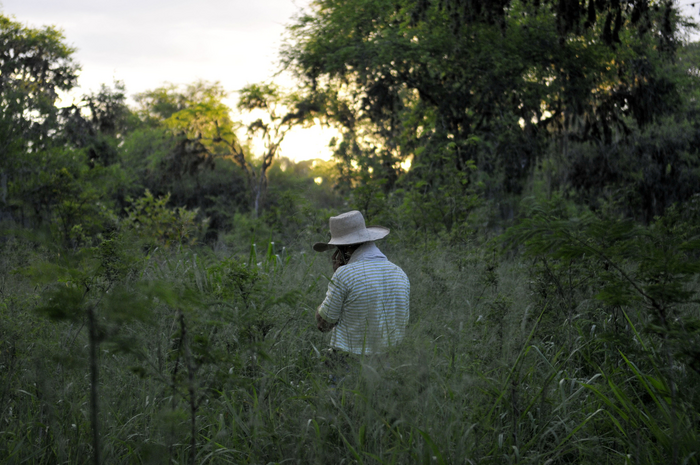
Credit: Alliance of Bioversity and CIAT / N.Palmer
Despite the massive upheavals in the first year of the COVID-19 pandemic, deforestation globally proceeded more or less as expected from the trends established over the last 15 years, according to a recent study from researchers at the Alliance of Bioversity International and CIAT.
In the paper “Has global deforestation accelerated due to the COVID-19 pandemic?” published in mid-November 2022, the researchers used historical deforestation data (2004–2019) from the Terra-i pantropical land cover change monitoring system to project expected deforestation trends for 2020.
Analysis of tree cover loss over time was used to determine whether deforestation observed in 2020 deviated from expected trajectories after the first COVID-19 cases were reported; both at the regional level for the Americas, Africa and Asia and at the country level for Brazil, Colombia, Peru, the Democratic Republic of the Congo and Indonesia.
“It was not particularly surprising to see little change,”
says Janelle Sylvester, who is the corresponding author of the study and a Research Fellow at the Alliance.
She said that deforestation rates likely did not drastically change for many reasons. For one, it is probable that the complex dynamics driving deforestation before the pandemic persisted unimpacted by the lockdowns.
“For example, illegal deforestation in areas where there was minimal state (governmental) presence before the pandemic would likely continue during lockdowns,” she said.
Moreover, she explained that “global-level macroeconomic forces related to changes in demand and supply paired with national economic stimulus packages could have balanced out economic pressures that were being placed on forests.”
Louis Reymondin, who co-leads the Digital transformation of the agri-food systems research theme for the Alliance of Bioversity International and CIAT also said that the finding wasn’t surprising, given that deforestation is heavily driven by livestock grazing and that demand for those products continued during the lockdowns in 2020.
“There were changes in food consumption habits, but usually it was towards processed foods and a reliance on industrialized agriculture,” he said, “The disruption needed to stop deforestation is about changing consumer behavior, changing the food system… and that’s something that countries and governments and scientists are trying to push forward.”
Jonathan Céspedes, the lead author of the study, an Alliance of Bioversity and CIAT research assistant during the study and now a 2nd year Phd Student at Institut Polytechnique de Paris says that his task was to evaluate deforestation and COVID-19 data in order to determine possible relationships between both variables.
“It is key to take into account that the spatial scale of this study is global; therefore, the next stage is to evaluate sub-national and local scales, where probably the results may be different,” Céspedes said.
Sylvester said that to get a genuine snapshot of the impact, more research would be required, as national economic recovery efforts in response to the pandemic may have longer-term effects on deforestation that are not captured in this study limited to 2020.
“All in all we see that deforestation trends in most countries followed their expected trajectories; however, to really understand the effects of the pandemic on deforestation we will have to look at a longer time period, say three years or more, in order to understand how national economic recovery efforts impact forest cover,” Sylvester said.
The Alliance’s Role
Sylvester explained that the previous expertise of the Alliance was key in reaching these conclusions.
“The Alliance of Bioversity and CIAT has a great team working with the Terra-i deforestation monitoring system, their expertise working with these deforestation alerts contributed immensely to this study,” Sylvester said.
Augusto Castro-Nunez, the lead supervisor and a senior scientist for low emissions food systems at the Alliance Bioversity and CIAT said that the Alliance is well-known for its many years of experience monitoring forest cover changes.
“More recently the Alliance has developed the capacities to not only monitor the changes but to understand the underlying drivers behind them,” he said, “We have been publishing on this topic for many years focusing on conflict-affected settings like Colombia and more recently, we have been studying the food system drivers of deforestation with the FAO as a partner.”
- Learn more by reading the paper.
Journal
Journal of Forestry Research
DOI
10.1007/s11676-022-01561-7
Method of Research
Survey
Article Title
Has global deforestation accelerated due to the COVID-19 pandemic?
Article Publication Date
16-Nov-2022