“Based on our findings, we propose IGF1 gene therapy to delay reproductive senescence as a potential strategy to optimize lifespan and combat age-related health problems in women.”
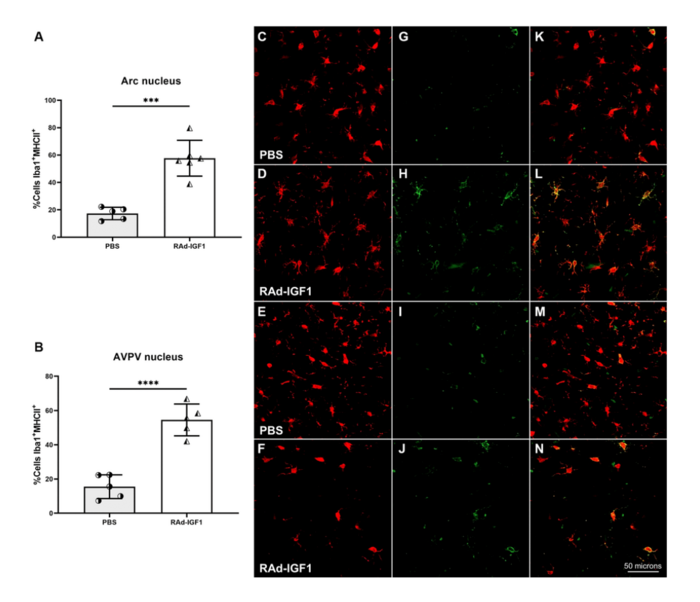
Credit: 2022 Dolcetti et al.
“Based on our findings, we propose IGF1 gene therapy to delay reproductive senescence as a potential strategy to optimize lifespan and combat age-related health problems in women.”
BUFFALO, NY- November 15, 2022 – A new research paper was published on the cover of Aging (listed as “Aging (Albany NY)” by Medline/PubMed and “Aging-US” by Web of Science) Volume 14, Issue 21, entitled, “IGF1 gene therapy in middle-aged female rats delays reproductive senescence through its effects on hypothalamic GnRH and kisspeptin neurons.”
The process of aging is the result of progressive loss of homeostasis and functional body impairment, including the central nervous system, where the hypothalamus plays a key role in regulating aging mechanisms. The consequences of aging include a chronic proinflammatory environment in the hypothalamus that leads to decreased secretion of gonadotropin-releasing hormone (GnRH) and impairs kisspeptin neuron functionality.
In this new study, researchers Franco Juan Cruz Dolcetti, Eugenia Falomir-Lockhart, Francisco Acuña, Macarena Lorena Herrera, Sofia Cervellini, Claudio Gustavo Barbeito, Daniela Grassi, Maria-Angeles Arevalo, and María José Bellini from Consejo Nacional de Investigaciones Científicas y Técnicas (UNC-CONICET), Universidad Nacional de La Plata, Autonomous University of Madrid, Instituto Cajal, and Instituto de Salud Carlos III investigated the effect of insulin-like growth factor 1 (IGF1) gene therapy on hypothalamic kisspeptin/GnRH neurons and on microglial cells, that mediate the inflammatory process related with the aging process.
“The aim of the present study is to investigate the effect of IGF1 gene therapy on estrous cycle, kisspeptin and GnRH neurons, and microglial cells in middle-aged female rats.”
The results show that IGF1 rats have higher kisspeptin expression in the anteroventral periventricular (AVPV) nucleus and higher immunoreactivity of GnRH in the arcuate nucleus and median eminence. In addition, IGF1-treated animals exhibit increased numbers of Iba1+ microglial cells and MHCII+/Iba1+ in the AVPV and arcuate nuclei. In conclusion, IGF1 gene therapy maintains kisspeptin production in the AVPV nucleus, induces GnRH release in the median eminence, and alters the number and reactivity of microglial cells in middle-aged female rats. The researchers suggest that IGF1 gene therapy may have a protective effect against reproductive decline.
“Based on our findings, we propose IGF1 gene therapy to delay reproductive senescence as a potential strategy to optimize lifespan and combat age-related health problems in women.”
DOI: https://doi.org/10.18632/aging.204360
Corresponding Authors: Maria-Angeles Arevalo, [email protected]; María José Bellini, [email protected]
Keywords: IGF1, gene therapy, reproductive senescence, GnRH, kisspeptin, microglia
Sign up for free Altmetric alerts about this article: https://aging.altmetric.com/details/email_updates?id=10.18632%2Faging.204360
About Aging-US:
Launched in 2009, Aging (Aging-US) publishes papers of general interest and biological significance in all fields of aging research and age-related diseases, including cancer—and now, with a special focus on COVID-19 vulnerability as an age-dependent syndrome. Topics in Aging go beyond traditional gerontology, including, but not limited to, cellular and molecular biology, human age-related diseases, pathology in model organisms, signal transduction pathways (e.g., p53, sirtuins, and PI-3K/AKT/mTOR, among others), and approaches to modulating these signaling pathways.
Please visit our website at www.Aging-US.com and connect with us:
- SoundCloud – https://soundcloud.com/Aging-Us
- Facebook – https://www.facebook.com/AgingUS/
- Twitter – https://twitter.com/AgingJrnl
- Instagram – https://www.instagram.com/agingjrnl/
- YouTube – https://www.youtube.com/agingus
- LinkedIn – https://www.linkedin.com/company/aging/
- Reddit – https://www.reddit.com/user/AgingUS
- Pinterest – https://www.pinterest.com/AgingUS/
For media inquiries, please contact [email protected].
Aging (Aging-US) Journal Office
6666 E. Quaker Str., Suite 1B
Orchard Park, NY 14127
Phone: 1-800-922-0957, option 1
###
Journal
Aging-US
DOI
10.18632/aging.204360
Method of Research
Experimental study
Subject of Research
Animals
Article Title
IGF1 gene therapy in middle-aged female rats delays reproductive senescence through its effects on hypothalamic GnRH and kisspeptin neurons
Article Publication Date
1-Nov-2022