• HOME
  • NEWS
  • EXPLORE
    • CAREER
      • Companies
      • Jobs
    • EVENTS
    • iGEM
      • News
      • Team
    • PHOTOS
    • VIDEO
    • WIKI
  • BLOG
  • COMMUNITY
    • FACEBOOK
    • INSTAGRAM
    • TWITTER
Tuesday, September 1, 2026
BIOENGINEER.ORG
No Result
View All Result
  • Login
  • HOME
  • NEWS
  • EXPLORE
    • CAREER
      • Companies
      • Jobs
        • Lecturer
        • PhD Studentship
        • Postdoc
        • Research Assistant
    • EVENTS
    • iGEM
      • News
      • Team
    • PHOTOS
    • VIDEO
    • WIKI
  • BLOG
  • COMMUNITY
    • FACEBOOK
    • INSTAGRAM
    • TWITTER
  • HOME
  • NEWS
  • EXPLORE
    • CAREER
      • Companies
      • Jobs
        • Lecturer
        • PhD Studentship
        • Postdoc
        • Research Assistant
    • EVENTS
    • iGEM
      • News
      • Team
    • PHOTOS
    • VIDEO
    • WIKI
  • BLOG
  • COMMUNITY
    • FACEBOOK
    • INSTAGRAM
    • TWITTER
No Result
View All Result
Bioengineer.org
No Result
View All Result
Home NEWS Science News

CIRM approves new funding to UC San Diego researchers fighting Zika virus and cancer

Bioengineer by Bioengineer
January 23, 2017
in Science News
Reading Time: 3 mins read
0
Share on FacebookShare on TwitterShare on LinkedinShare on RedditShare on Telegram
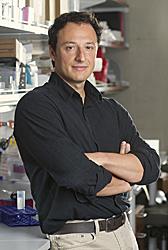
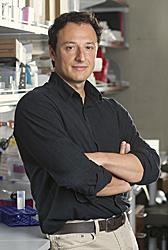
IMAGE

Credit: UC San Diego Health

The Independent Citizens Oversight Committee of the California Institute for Regenerative Medicine (CIRM) has approved a pair of $2 million awards to University of California San Diego School of Medicine researchers to advance studies of new treatments for Zika virus infections and the use of stem cell-derived natural killer (NK) cells to target ovarian cancer and other malignancies.

The Zika virus is linked to increased birth defects, most notably microcephaly — newborns with smaller than expected heads and abnormal brain development. But the virus can also impact infected adults, resulting in conditions such as Guillain-Barre syndrome, meningoencephalitis, uveitis and acute myelitis — all disorders of the immune system affecting different parts of the body.

While there is an on-going, accelerated international effort to develop a preventive Zika vaccine, researchers say the need is critical, too for pharmacological treatments of already infected individuals, including pregnant women for whom prevention is no longer an option.

"There is urgent need to move as quickly as we can into clinical trials and, hopefully, find an effective treatment," said Alysson R. Muotri, PhD, professor in the UC San Diego School of Medicine departments of Pediatrics and Cellular and Molecular Medicine and director of the UC San Diego Stem Cell Program. "This is especially true of infected mothers where a Zika infection during the first trimester of pregnancy appears to pose the greatest risk of congenital microcephaly."

In an oversight committee vote yesterday, Muotri and colleagues received a $2.1 million award to investigate anti-viral drugs developed for other infectious diseases that might also work against a Zika infection. The team already reports promising results, suggesting that some FDA-approved drugs may indeed be effective against the virus.

"Of course, these are preliminary findings in cellular and animal models," said Muotri, "but given the nature of the health crisis we are extremely encouraged. The CIRM grant represents a similar belief and hope in others. It is our plan and goal now to press ahead, to get our data vetted and validated, and to develop an effective treatment for Zika as quickly as possible."

Dan Kaufman, MD, PhD, professor of medicine in the Division of Regenerative Medicine and director of cell therapy at UC San Diego School of Medicine, and his laboratory have developed an efficient process to produce NK cells from induced human pluripotent stem cells (iPSCs).

"NK cells are part of the normal immune system and are known to kill certain tumors and virally-infected cells," said Kaufman. "Here, we are using the advantages of iPSCs to make NK cells with improved anti-cancer activity."

The CIRM committee awarded Kaufman and colleagues a $2.1 million grant to create an "off-the-shelf immunotherapy" using NK cells to treat refractory or resistant tumors, such as ovarian cancer. "Unlike current immunotherapies produced on a patient-specific basis, iPSC-derived immune cells can be targeted to tumors with high specificity, no off-target effects and without need for patient matching," said Kaufman, who is collaborating with Karl Willert, PhD, associate professor in the Department of Cellular and Molecular Medicine at UC San Diego School of Medicine.

Another aspect of Kaufman's approved proposal is to optimize the ability of iPSC-derived NK cells to kill leukemia cells. Kaufman and colleagues will conduct animal studies with the goal of translating findings to clinical therapies for cancers that would otherwise prove lethal.

CIRM was created in 2004 by California voters with $3 billion in funding support to accelerate stem cell research and treatments. Since 2004, UC San Diego researchers have received at least 90 CIRM awards, totaling more than $169 million.

###

Media Contact

Scott LaFee
[email protected]
858-249-0456
@UCSanDiego

http://www.ucsd.edu

############

Story Source: Materials provided by Scienmag

Share12Tweet8Share2ShareShareShare2

Related Posts

β-Sitosterol from Ipomoea carnea Jacq. As a promising anti-inflammatory agent: Evidence from in silico modeling and in vitro validation

β-Sitosterol from Ipomoea carnea Jacq. As a promising anti-inflammatory agent: Evidence from in silico modeling and in vitro validation

August 31, 2026
Design, fabrication and characterization of a wearable Fiber Bragg grating sensor for cardiorespiratory monitoring using finger plethysmography

Design, fabrication and characterization of a wearable Fiber Bragg grating sensor for cardiorespiratory monitoring using finger plethysmography

August 31, 2026

KAIST opens the era of industrial-scale microbial foods, proposing growth strategies for the next-generation protein market

August 31, 2026

Virologist awarded $2 million NIH grant to investigate how virus-infected cells live and die

August 31, 2026
Please login to join discussion

POPULAR NEWS

  • β-Sitosterol from Ipomoea carnea Jacq. As a promising anti-inflammatory agent: Evidence from in silico modeling and in vitro validation

    29 shares
    Share 12 Tweet 7
  • Design, fabrication and characterization of a wearable Fiber Bragg grating sensor for cardiorespiratory monitoring using finger plethysmography

    29 shares
    Share 12 Tweet 7
  • KAIST opens the era of industrial-scale microbial foods, proposing growth strategies for the next-generation protein market

    29 shares
    Share 12 Tweet 7
  • Virologist awarded $2 million NIH grant to investigate how virus-infected cells live and die

    29 shares
    Share 12 Tweet 7

About

We bring you the latest biotechnology news from best research centers and universities around the world. Check our website.

Follow us

Recent News

β-Sitosterol from Ipomoea carnea Jacq. As a promising anti-inflammatory agent: Evidence from in silico modeling and in vitro validation

Design, fabrication and characterization of a wearable Fiber Bragg grating sensor for cardiorespiratory monitoring using finger plethysmography

KAIST opens the era of industrial-scale microbial foods, proposing growth strategies for the next-generation protein market

Subscribe to Blog via Email

Enter your email address to subscribe to this blog and receive notifications of new posts by email.

Join 85 other subscribers
  • Contact Us

Bioengineer.org © Copyright 2023 All Rights Reserved.

Welcome Back!

Login to your account below

Forgotten Password?

Retrieve your password

Please enter your username or email address to reset your password.

Log In
No Result
View All Result
  • Homepages
    • Home Page 1
    • Home Page 2
  • News
  • National
  • Business
  • Health
  • Lifestyle
  • Science

Bioengineer.org © Copyright 2023 All Rights Reserved.