• HOME
  • NEWS
  • EXPLORE
    • CAREER
      • Companies
      • Jobs
    • EVENTS
    • iGEM
      • News
      • Team
    • PHOTOS
    • VIDEO
    • WIKI
  • BLOG
  • COMMUNITY
    • FACEBOOK
    • INSTAGRAM
    • TWITTER
Saturday, February 7, 2026
BIOENGINEER.ORG
No Result
View All Result
  • Login
  • HOME
  • NEWS
  • EXPLORE
    • CAREER
      • Companies
      • Jobs
        • Lecturer
        • PhD Studentship
        • Postdoc
        • Research Assistant
    • EVENTS
    • iGEM
      • News
      • Team
    • PHOTOS
    • VIDEO
    • WIKI
  • BLOG
  • COMMUNITY
    • FACEBOOK
    • INSTAGRAM
    • TWITTER
  • HOME
  • NEWS
  • EXPLORE
    • CAREER
      • Companies
      • Jobs
        • Lecturer
        • PhD Studentship
        • Postdoc
        • Research Assistant
    • EVENTS
    • iGEM
      • News
      • Team
    • PHOTOS
    • VIDEO
    • WIKI
  • BLOG
  • COMMUNITY
    • FACEBOOK
    • INSTAGRAM
    • TWITTER
No Result
View All Result
Bioengineer.org
No Result
View All Result
Home NEWS Science News Biology

New insights into biology, origin of deadly stomach and esophageal cancers

Bioengineer by Bioengineer
October 27, 2022
in Biology
Reading Time: 3 mins read
0
University of Houston stem cell team: Wa Xian (left) research associate professor of biology and biochemistry and Frank McKeon, professor of biology and biochemistry and director of the Somatic Stem Cell Center at UH.
Share on FacebookShare on TwitterShare on LinkedinShare on RedditShare on Telegram

The University of Houston is leading a team of cancer researchers and experts in stem cell cloning to identify the origin of two very lethal cancers of the stomach and esophagus – esophageal adenocarcinoma (EAC) and intestinal gastric cancer (iGC). In a surprising finding, the team reports the two cancers, which arise from anatomically distinct regions of the gastrointestinal tract, have identical precursor stem cells.   
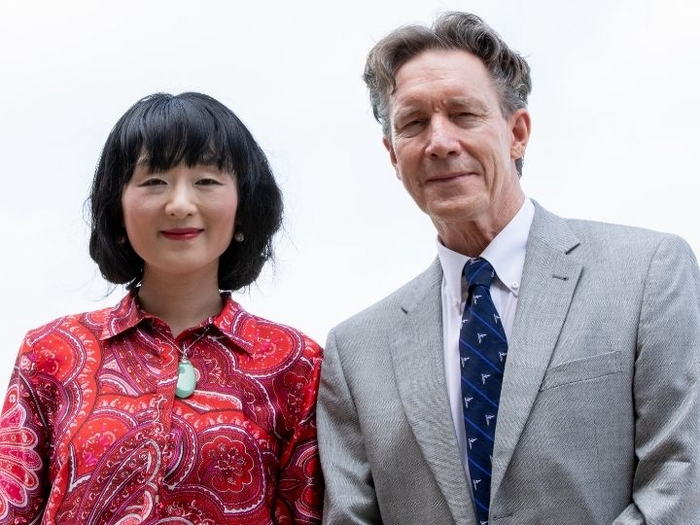
University of Houston stem cell team: Wa Xian (left) research associate professor of biology and biochemistry and Frank McKeon, professor of biology and biochemistry and director of the Somatic Stem Cell Center at UH.

Credit: University of Houston

The University of Houston is leading a team of cancer researchers and experts in stem cell cloning to identify the origin of two very lethal cancers of the stomach and esophagus – esophageal adenocarcinoma (EAC) and intestinal gastric cancer (iGC). In a surprising finding, the team reports the two cancers, which arise from anatomically distinct regions of the gastrointestinal tract, have identical precursor stem cells.   

“These ‘origin’ cells are present in all normal individuals, and yet somehow are unusually susceptible to mutational changes that start them down the path to precursor lesions for highly lethal cancers,” said Frank McKeon, professor of biology and biochemistry and director of the Somatic Stem Cell Center at UH. “We anticipate that the identification of these cells will enable drug discovery to pre-empt these cancers at their site of origin.” 

The types of lesions include high-grade dysplasia, low-grade dysplasia and earlier lesions known as Barrett’s esophagus. These common evolutionary features place both cancers into a single cluster distinct from other gastric and esophageal cancers. 

While it was widely anticipated that advances in endoscopic and ablative technologies applied to precursor lesions would spell the end of EAC and iGC, the rate of those who suffer from them has not appreciably decreased, and most patients still present with advanced disease and poor five-year survival.  

This dire clinical reality has inspired a broad effort to understand the cell-of-origin of these diseases, their earliest emergence towards pathology, as well as their detection and pharmaceutical elimination.  

McKeon is the principal investigator on a new five-year, $4.7 million grant from the National Cancer Institute to advance this work. He’s joined on the research project by Wa Xian, research associate professor of biology and biochemistry at UH, and Dr. Jaffer Ajani of MD Anderson Cancer Center. 

For over a decade, Xian has been perfecting technology for cloning stem cells and is fine tuning the technology to clone stem cells from the precursor lesions for these cancers.  

“As all these lesions are still present in patients with advanced cancer, sequencing these patient-matched stem cells shows in exquisite detail the precise mutational changes that accompanied the evolution of the cancer,” said Xian. 

Despite their emergence from disparate regions of the upper gastrointestinal tract, EAC and iGC show stunning similarities in their genetics and the precursor lesions in their evolution. 

“Our analysis has revealed the Barret’s esophagus and gastric intestinal metaplasia (GIM) stem cells are indistinguishable at the level of whole genome expression profiling down to the level of homeotic transcription factors that define cellular identity,” said McKeon.  

These markers have also enabled the cloning of the corresponding site-specific stem cells, which the team will do in both fetus and adult trials. 

“We anticipate that our studies will provide new insights into the biology and origin of these remarkably similar and widespread cancers, provide datasets essential for prospective early detection screens and yield highly selective therapeutics that eliminate the nascent lesions essential for the evolution of these cancers,” said McKeon.  


Share12Tweet8Share2ShareShareShare2

Related Posts

Florida Cane Toad: Complex Spread and Selective Evolution

Florida Cane Toad: Complex Spread and Selective Evolution

February 7, 2026
New Study Uncovers Mechanism Behind Burn Pit Particulate Matter–Induced Lung Inflammation

New Study Uncovers Mechanism Behind Burn Pit Particulate Matter–Induced Lung Inflammation

February 6, 2026

DeepBlastoid: Advancing Automated and Efficient Evaluation of Human Blastoids with Deep Learning

February 6, 2026

Navigating the Gut: The Role of Formic Acid in the Microbiome

February 6, 2026

POPULAR NEWS

  • Robotic Ureteral Reconstruction: A Novel Approach

    Robotic Ureteral Reconstruction: A Novel Approach

    82 shares
    Share 33 Tweet 21
  • Digital Privacy: Health Data Control in Incarceration

    63 shares
    Share 25 Tweet 16
  • Study Reveals Lipid Accumulation in ME/CFS Cells

    57 shares
    Share 23 Tweet 14
  • Breakthrough in RNA Research Accelerates Medical Innovations Timeline

    53 shares
    Share 21 Tweet 13

About

We bring you the latest biotechnology news from best research centers and universities around the world. Check our website.

Follow us

Recent News

Evaluating Pediatric Emergency Care Quality in Ethiopia

TPMT Expression Predictions Linked to Azathioprine Side Effects

Improving Dementia Care with Enhanced Activity Kits

Subscribe to Blog via Email

Success! An email was just sent to confirm your subscription. Please find the email now and click 'Confirm' to start subscribing.

Join 73 other subscribers
  • Contact Us

Bioengineer.org © Copyright 2023 All Rights Reserved.

Welcome Back!

Login to your account below

Forgotten Password?

Retrieve your password

Please enter your username or email address to reset your password.

Log In
No Result
View All Result
  • Homepages
    • Home Page 1
    • Home Page 2
  • News
  • National
  • Business
  • Health
  • Lifestyle
  • Science

Bioengineer.org © Copyright 2023 All Rights Reserved.