• HOME
  • NEWS
  • EXPLORE
    • CAREER
      • Companies
      • Jobs
    • EVENTS
    • iGEM
      • News
      • Team
    • PHOTOS
    • VIDEO
    • WIKI
  • BLOG
  • COMMUNITY
    • FACEBOOK
    • INSTAGRAM
    • TWITTER
Saturday, February 7, 2026
BIOENGINEER.ORG
No Result
View All Result
  • Login
  • HOME
  • NEWS
  • EXPLORE
    • CAREER
      • Companies
      • Jobs
        • Lecturer
        • PhD Studentship
        • Postdoc
        • Research Assistant
    • EVENTS
    • iGEM
      • News
      • Team
    • PHOTOS
    • VIDEO
    • WIKI
  • BLOG
  • COMMUNITY
    • FACEBOOK
    • INSTAGRAM
    • TWITTER
  • HOME
  • NEWS
  • EXPLORE
    • CAREER
      • Companies
      • Jobs
        • Lecturer
        • PhD Studentship
        • Postdoc
        • Research Assistant
    • EVENTS
    • iGEM
      • News
      • Team
    • PHOTOS
    • VIDEO
    • WIKI
  • BLOG
  • COMMUNITY
    • FACEBOOK
    • INSTAGRAM
    • TWITTER
No Result
View All Result
Bioengineer.org
No Result
View All Result
Home NEWS Science News

The role of size in development of mucosal liposome-lipopeptide vaccine

Bioengineer by Bioengineer
January 23, 2017
in Science News
Reading Time: 2 mins read
0
Share on FacebookShare on TwitterShare on LinkedinShare on RedditShare on Telegram
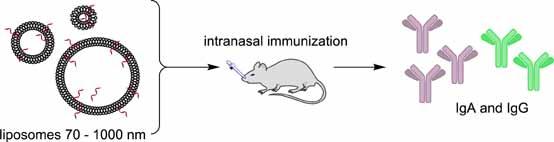
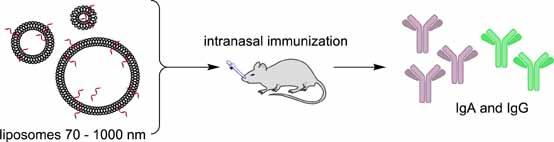
IMAGE

Credit: Khairunnisa A. Ghaffar et al , Bentham Science Publishers

Group A Streptococcus (GAS), or Streptococcus pyogenes is an exclusivel y human Gram-positive pathogenic bacteria. A delay in treatment of GAS infection often lead to severe diseases such as rheumatic heart disease which attributes to hundreds of thousands deaths annually. For the past few decades, the quest for a commercial GAS vaccine has been futile mainly due to the presence of multiple GAS serotypes (more than 200). Currently, one of the most investigated strategies used to develop a vaccine against GAS includes the use of conserved epitopes from a major virulent factor of GAS, i.e. the M-protein. In this study, lipopeptide bearing two lipid moieties, a major B-cell GAS epitope derived from the M-protein (J14) and a universal T-helper epitope (P25) were chosen as the vaccine candidate. Cationic liposomes were used as the delivery vehicle due to their ability to adhere to the negatively charged membrane of the cells in the mucosa. As size was often reported to have an influence on immune response, liposomes of varying sizes (70 nm to 1000 nm) encapsulating the vaccine candidate were prepared. The mice were immunized intranasally with the liposomes of different sizes. Though the differences between these groups were not statistically significant, a trend was observed whereby the level of IgG production was inversely proportional to the size of liposomes.In addition, a mixture of different liposome sizes elicited the same antibody titres as the smallest liposomes. Nonetheless, all mice which were immunized with a liposome-lipopeptide delivery system elicited high levels of systemic (IgG) and mucosal antibodies (IgA), which were discernably higher than those induced with the help of commercial adjuvant (cholera toxin B subunit). Furthermore, the produced systemic antibodies were able to opsonize GAS clinical isolates.

###

For more information about the article, please visit http://benthamscience.com/journals/medicinal-chemistry/article/144080/

Reference: Ghaffar, K.; (2017). The Role of Size in Development of Mucosal Liposome-Lipopeptide Vaccine Candidates Against Group A Streptococcus, DOI: 10.2174/1573406412666160720093138

Media Contact

Faizan ul Haq
[email protected]
@BenthamScienceP

http://benthamscience.com/

############

Story Source: Materials provided by Scienmag

Share12Tweet8Share2ShareShareShare2

Related Posts

Evaluating Pediatric Emergency Care Quality in Ethiopia

February 7, 2026

TPMT Expression Predictions Linked to Azathioprine Side Effects

February 7, 2026

Improving Dementia Care with Enhanced Activity Kits

February 7, 2026

Decoding Prostate Cancer Origins via snFLARE-seq, mxFRIZNGRND

February 7, 2026
Please login to join discussion

POPULAR NEWS

  • Robotic Ureteral Reconstruction: A Novel Approach

    Robotic Ureteral Reconstruction: A Novel Approach

    82 shares
    Share 33 Tweet 21
  • Digital Privacy: Health Data Control in Incarceration

    63 shares
    Share 25 Tweet 16
  • Study Reveals Lipid Accumulation in ME/CFS Cells

    57 shares
    Share 23 Tweet 14
  • Breakthrough in RNA Research Accelerates Medical Innovations Timeline

    53 shares
    Share 21 Tweet 13

About

We bring you the latest biotechnology news from best research centers and universities around the world. Check our website.

Follow us

Recent News

Evaluating Pediatric Emergency Care Quality in Ethiopia

TPMT Expression Predictions Linked to Azathioprine Side Effects

Improving Dementia Care with Enhanced Activity Kits

Subscribe to Blog via Email

Enter your email address to subscribe to this blog and receive notifications of new posts by email.

Join 73 other subscribers
  • Contact Us

Bioengineer.org © Copyright 2023 All Rights Reserved.

Welcome Back!

Login to your account below

Forgotten Password?

Retrieve your password

Please enter your username or email address to reset your password.

Log In
No Result
View All Result
  • Homepages
    • Home Page 1
    • Home Page 2
  • News
  • National
  • Business
  • Health
  • Lifestyle
  • Science

Bioengineer.org © Copyright 2023 All Rights Reserved.