• HOME
  • NEWS
  • EXPLORE
    • CAREER
      • Companies
      • Jobs
    • EVENTS
    • iGEM
      • News
      • Team
    • PHOTOS
    • VIDEO
    • WIKI
  • BLOG
  • COMMUNITY
    • FACEBOOK
    • INSTAGRAM
    • TWITTER
Sunday, October 4, 2026
BIOENGINEER.ORG
No Result
View All Result
  • Login
  • HOME
  • NEWS
  • EXPLORE
    • CAREER
      • Companies
      • Jobs
        • Lecturer
        • PhD Studentship
        • Postdoc
        • Research Assistant
    • EVENTS
    • iGEM
      • News
      • Team
    • PHOTOS
    • VIDEO
    • WIKI
  • BLOG
  • COMMUNITY
    • FACEBOOK
    • INSTAGRAM
    • TWITTER
No Result
View All Result
Bioengineer.org
No Result
View All Result
Home NEWS Science News

Julia M. Gohlke earns NASA grant to study how extreme weather impacts health

Bioengineer by Bioengineer
October 12, 2022
in Science News
Reading Time: 3 mins read
0
Julia Gohlke, associate professor in the Department of Population Health Sciences
Share on FacebookShare on TwitterShare on LinkedinShare on RedditShare on Telegram

Julia M. Gohlke, associate professor of environmental health in the Department of Population Sciences at the Virginia-Maryland College of Veterinary Medicine, has been awarded a $1 million grant from NASA. She will work alongside co-principal investigators Ryan Calder, assistant professor of environmental health and policy at the college; Samarth Swarup of the University of Virginia; and Benjamin Zaitchik of Johns Hopkins University.  
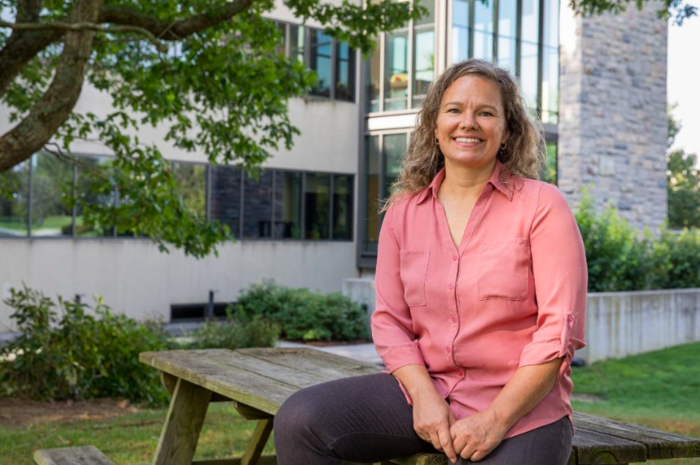
Julia Gohlke, associate professor in the Department of Population Health Sciences

Credit: Credit: Virginia Tech

Julia M. Gohlke, associate professor of environmental health in the Department of Population Sciences at the Virginia-Maryland College of Veterinary Medicine, has been awarded a $1 million grant from NASA. She will work alongside co-principal investigators Ryan Calder, assistant professor of environmental health and policy at the college; Samarth Swarup of the University of Virginia; and Benjamin Zaitchik of Johns Hopkins University.  

With this grant, Gohlke will improve the ways that government agencies estimate damage caused by extreme weather events.  

“I’m really excited about the applied aspects of this grant. I’ve worked on the epidemiology side, figuring out the detrimental health impacts of these extreme weather events, and I’m really excited about translating that into a policy framework that I know that the U.S. government is actually using,” said Gohlke.  

The government performs benefit-cost analysis to ensure that its disaster-relief spending after an extreme weather event has the greatest impact. That analysis is based on many factors, including damages to infrastructure. Gohlke and her team will take health studies and assign standardized costs to the results, calculating the health damages of flooding, heat waves, and extreme cold.

Current analyses don’t fully take into account health damages, which means that total damages are underestimated and Americans may not be receiving the support they need to fully recover from extreme weather events. Gohlke uses mold as an example: If a family gets sick because their houses are full of mold after a flood, the government’s damage estimate would not include the damage to their health. With improved methods of estimation, experts can make better informed decisions about disaster relief spending and more.  

These calculations are used in the formation of policy, and agencies such as the U.S. Environmental Protection Agency (EPA) use such data to write regulations. Better health damage accuracy also will change the way the government calculates the cost of climate change. This information will be of particular use to the National Oceanic and Atmospheric Administration’s list of billion-dollar weather and climate disasters and the EPA’s Social Cost of Carbon (SC-CO2) calculations.  

In addition to calculating overall cost, the research team will examine damages at the census tract level to see who is hardest hit by these events.  

“When you think about flooding and hurricanes, coastal communities are obviously going to be hit a lot harder than inland, but the opposite may be true for extreme heat events. So we’re looking at the distributional cost too — who are the winners and losers for each one of these extreme weather events?” said Gohlke.  

Through this grant, Gohlke will expand upon a previous NASA grant that examined emergency room visits after Hurricane Harvey.  

The veterinary college is dedicated to One Health, the philosophy that human health, animal health, and environmental health are inextricably linked and interdependent. The program emphasizes and encourages interdisciplinary collaboration within this framework. 



Share12Tweet8Share2ShareShareShare2

Related Posts

New Study Examines How Dedicated Dermatology Textbooks Represent Skin of Colour

New Study Examines How Dedicated Dermatology Textbooks Represent Skin of Colour

October 4, 2026
Adding Immunotherapy to Chemo and Bevacizumab Extends Survival in Recurrent Cervical Cancer

Adding Immunotherapy to Chemo and Bevacizumab Extends Survival in Recurrent Cervical Cancer

October 4, 2026

Forskolin Extract Boosts Gut Hormone GLP-1 and Strengthens Intestinal Barrier in Cell Study

October 4, 2026

Empathy, Not Mood, Drives Helping in Autistic Children, Study Finds

October 4, 2026

POPULAR NEWS

  • Alloys That Shrink Their Own Grains: New PIX Mechanism Refines Metals With Heat Alone

    Alloys That Shrink Their Own Grains: New PIX Mechanism Refines Metals With Heat Alone

    29 shares
    Share 12 Tweet 7
  • Endurance Exercise Reshapes the Liver in Males and Females Through Distinct Molecular Routes

    29 shares
    Share 12 Tweet 7
  • Single Transcription Factor PU.1 Rapidly Converts Fibroblasts into Macrophage-Lineage Cells

    29 shares
    Share 12 Tweet 7
  • New Scale Measures How Ready Nurse Educators Really Are for the AI Era

    29 shares
    Share 12 Tweet 7

About

We bring you the latest biotechnology news from best research centers and universities around the world. Check our website.

Follow us

Recent News

Alloys That Shrink Their Own Grains: New PIX Mechanism Refines Metals With Heat Alone

Endurance Exercise Reshapes the Liver in Males and Females Through Distinct Molecular Routes

Single Transcription Factor PU.1 Rapidly Converts Fibroblasts into Macrophage-Lineage Cells

Subscribe to Blog via Email

Success! An email was just sent to confirm your subscription. Please find the email now and click 'Confirm' to start subscribing.

Join 85 other subscribers
  • Contact Us

Bioengineer.org © Copyright 2023 All Rights Reserved.

Welcome Back!

Login to your account below

Forgotten Password?

Retrieve your password

Please enter your username or email address to reset your password.

Log In
No Result
View All Result
  • Homepages
    • Home Page 1
    • Home Page 2
  • News
  • National
  • Business
  • Health
  • Lifestyle
  • Science

Bioengineer.org © Copyright 2023 All Rights Reserved.