

• HOME
  • NEWS
  • EXPLORE
    • CAREER
      • Companies
      • Jobs
    • EVENTS
    • iGEM
      • News
      • Team
    • PHOTOS
    • VIDEO
    • WIKI
  • BLOG
  • COMMUNITY
    • FACEBOOK
    • INSTAGRAM
    • TWITTER
Saturday, February 7, 2026
BIOENGINEER.ORG
No Result
View All Result
  • Login
  • HOME
  • NEWS
  • EXPLORE
    • CAREER
      • Companies
      • Jobs
        • Lecturer
        • PhD Studentship
        • Postdoc
        • Research Assistant
    • EVENTS
    • iGEM
      • News
      • Team
    • PHOTOS
    • VIDEO
    • WIKI
  • BLOG
  • COMMUNITY
    • FACEBOOK
    • INSTAGRAM
    • TWITTER
  • HOME
  • NEWS
  • EXPLORE
    • CAREER
      • Companies
      • Jobs
        • Lecturer
        • PhD Studentship
        • Postdoc
        • Research Assistant
    • EVENTS
    • iGEM
      • News
      • Team
    • PHOTOS
    • VIDEO
    • WIKI
  • BLOG
  • COMMUNITY
    • FACEBOOK
    • INSTAGRAM
    • TWITTER
No Result
View All Result
Bioengineer.org
No Result
View All Result
Home NEWS Science News Biology

Sustainable fishing plan for Caribbean spiny lobsters

Bioengineer by Bioengineer
October 12, 2022
in Biology
Reading Time: 2 mins read
0
Spiny lobster
Share on FacebookShare on TwitterShare on LinkedinShare on RedditShare on Telegram

A new project will help to ensure sustainable fishing and aquaculture (fish farming) of Caribbean spiny lobsters.
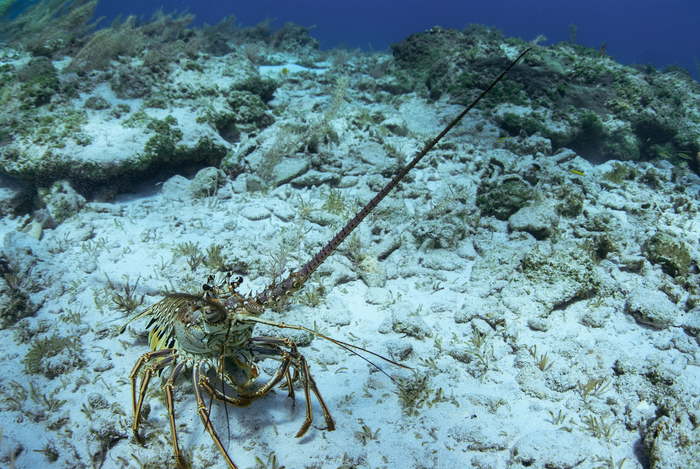
Spiny lobster

Credit: Michael Bowleg

A new project will help to ensure sustainable fishing and aquaculture (fish farming) of Caribbean spiny lobsters.

Through a series of ground-breaking innovations, researchers at the University of Exeter are seeking to improve the management and conservation of this iconic species, which through fishing is worth $90 million per year to the economy in The Bahamas.

As part of this two-year project, researchers will firstly build a “genetic tool” that will enable analysis of lobster population genetics and connectivity.

Working with local fishers, the team will then trial the latest aquaculture technology for sustainably farming lobster in The Bahamas and across the wider Caribbean.

Finally, this project will work with key government stakeholders in The Bahamas to devise a policy for future sustainable exploitation of this critically important organism.

The project has received a $250,000 (£215,000) financial support for its close to two-year pilot in The Bahamas after being selected as one of 10 new innovators for the UNDP Ocean Innovation Challenge call for innovative sustainable fisheries and aquaculture solutions.

The team brings together key global expertise, working with the UK’s National Lobster Hatchery and the Cape Eleuthera Institute (CEI) at The Island School in The Bahamas, to ensure this seafood sector has a bright and sustainable future.

“The Caribbean spiny lobster fishery is economically and ecologically important, but 36% of all lobsters caught at present are unregulated,” said Dr Robert Ellis, from the University of Exeter.

“From studying other spiny lobster species globally, we know that when they are over-fished their numbers crash, having dramatic effects on the ecosystems they are part of.

“We will develop a new genetic tool based on population structure data for Caribbean spiny lobster and its connectivity across the region, contributing to the critical sustainable management of wild stocks and stock enhancement programmes.

“These innovations will create a multi-disciplinary and participatory approach to enhancing the sustainable exploitation of this fishery, using The Bahamas as a model of best practice.”

The University of Exeter will also engage with fishing communities and policymakers to raise their awareness of the importance of this fishery, the conservation challenges it faces, and the need to sustain science- and aquaculture-based solutions to ensure long-term ecological and socio-economic benefits to The Bahamas and the Caribbean.

”In The Bahamas we produce about 2,400 tonnes of spiny lobster annually but this is entirely based on wild-caught fisheries. This project will not only help sustainably manage that fishery but will help lay the groundwork for a novel aquaculture approach to growing this sector,” Dr Nick Higgs, from The Island School at CEI.


Share12Tweet8Share2ShareShareShare2

Related Posts

Florida Cane Toad: Complex Spread and Selective Evolution

Florida Cane Toad: Complex Spread and Selective Evolution

February 7, 2026
New Study Uncovers Mechanism Behind Burn Pit Particulate Matter–Induced Lung Inflammation

New Study Uncovers Mechanism Behind Burn Pit Particulate Matter–Induced Lung Inflammation

February 6, 2026

DeepBlastoid: Advancing Automated and Efficient Evaluation of Human Blastoids with Deep Learning

February 6, 2026

Navigating the Gut: The Role of Formic Acid in the Microbiome

February 6, 2026

POPULAR NEWS

  • Robotic Ureteral Reconstruction: A Novel Approach

    Robotic Ureteral Reconstruction: A Novel Approach

    82 shares
    Share 33 Tweet 21
  • Digital Privacy: Health Data Control in Incarceration

    63 shares
    Share 25 Tweet 16
  • Study Reveals Lipid Accumulation in ME/CFS Cells

    57 shares
    Share 23 Tweet 14
  • Breakthrough in RNA Research Accelerates Medical Innovations Timeline

    53 shares
    Share 21 Tweet 13

About

We bring you the latest biotechnology news from best research centers and universities around the world. Check our website.

Follow us

Recent News

TPMT Expression Predictions Linked to Azathioprine Side Effects

Improving Dementia Care with Enhanced Activity Kits

Decoding Prostate Cancer Origins via snFLARE-seq, mxFRIZNGRND

Subscribe to Blog via Email

Enter your email address to subscribe to this blog and receive notifications of new posts by email.

Join 73 other subscribers
  • Contact Us

Bioengineer.org © Copyright 2023 All Rights Reserved.

Welcome Back!

Login to your account below

Forgotten Password?

Retrieve your password

Please enter your username or email address to reset your password.

Log In
No Result
View All Result
  • Homepages
    • Home Page 1
    • Home Page 2
  • News
  • National
  • Business
  • Health
  • Lifestyle
  • Science

Bioengineer.org © Copyright 2023 All Rights Reserved.