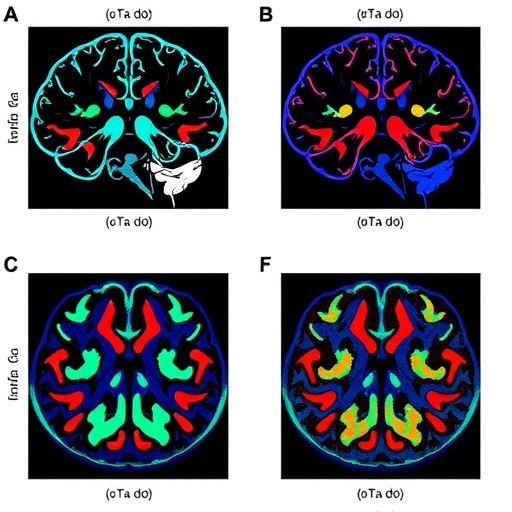
Leesburg, VA, September 28, 2022—According to an open-access Editor’s Choice article in ARRS’ American Journal of Roentgenology (AJR), third-trimester fetuses with in utero opioid exposure exhibited multiple smaller 2D biometric measurements of the brain, as well as altered fetal physiology, on investigational MRI.
Credit: ARRS/AJR
Leesburg, VA, September 28, 2022—According to an open-access Editor’s Choice article in ARRS’ American Journal of Roentgenology (AJR), third-trimester fetuses with in utero opioid exposure exhibited multiple smaller 2D biometric measurements of the brain, as well as altered fetal physiology, on investigational MRI.
Noting the scarcity of imaging literature evaluating prenatal opioid exposure on brain development, “our findings demonstrate the impact of prenatal opioid exposure on fetal brain development, which may in turn affect postnatal clinical outcomes,” wrote first author Usha D. Nagaraj, MD, from Cincinnati Children’s Hospital Medical Center in Ohio.
Nagaraj and colleagues’ prospective multicenter case-control study included 65 women (mean age, 29 years) in their third trimester of pregnancy who underwent fetal MRI from July 1, 2020 through December 31, 2021 at three U.S. academic medical centers: Cincinnati Children’s Hospital Medical Center, Arkansas Children’s Hospital, and the University of North Carolina at Chapel Hill. A total of 28 fetuses (mean gestational age, 32.3 weeks)
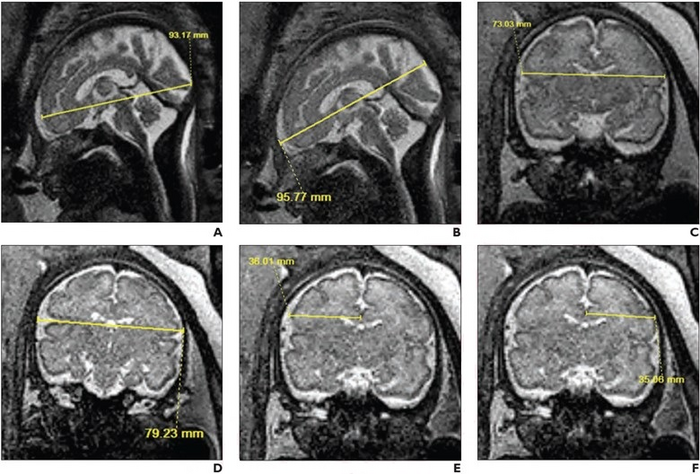
were classified as opioid-exposed, while 37 fetuses (mean gestational age, 31.9 weeks) were unexposed in utero. Fourteen 2D biometric measurements of the fetal brain were manually assessed and used to derive four indices.
When adjusting for gestational age, fetal sex, and nicotine exposure, 7 of the 14 2D biometric measurements—cerebral fronto-occipital diameter, bone biparietal diameter, brain biparietal diameter, corpus callosum length, vermis height, anterior-posterior pons measurement, and transverse cerebellar diameter—were significantly smaller in opioid-exposed fetuses than in unexposed fetuses, as measured on fetal MRI.
“In addition,” the authors of this AJR article concluded, “fetuses with prenatal opioid exposure had increased frequencies of breech presentation and of increased amniotic fluid volume.”
An electronic supplement to this AJR article is available here.
North America’s first radiological society, the American Roentgen Ray Society (ARRS) remains dedicated to the advancement of medicine through the profession of medical imaging and its allied sciences. An international forum for progress in radiology since the discovery of the x-ray, ARRS maintains its mission of improving health through a community committed to advancing knowledge and skills with the world’s longest continuously published radiology journal—American Journal of Roentgenology—the ARRS Annual Meeting, InPractice magazine, topical symposia, myriad multimedia educational materials, as well as awarding scholarships via The Roentgen Fund®.
MEDIA CONTACT:
Logan K. Young, PIO
44211 Slatestone Court
Leesburg, VA 20176
703-858-4332
Journal
American Journal of Roentgenology
DOI
10.2214/AJR.22.28357
Method of Research
Imaging analysis
Subject of Research
People
Article Title
MRI Findings in Third-Trimester Opioid-Exposed Fetuses With Focus on Brain Measurements: A Prospective Multicenter Case-Control Study
Article Publication Date
28-Sep-2022
COI Statement
N/A