• HOME
  • NEWS
  • EXPLORE
    • CAREER
      • Companies
      • Jobs
    • EVENTS
    • iGEM
      • News
      • Team
    • PHOTOS
    • VIDEO
    • WIKI
  • BLOG
  • COMMUNITY
    • FACEBOOK
    • INSTAGRAM
    • TWITTER
Saturday, February 7, 2026
BIOENGINEER.ORG
No Result
View All Result
  • Login
  • HOME
  • NEWS
  • EXPLORE
    • CAREER
      • Companies
      • Jobs
        • Lecturer
        • PhD Studentship
        • Postdoc
        • Research Assistant
    • EVENTS
    • iGEM
      • News
      • Team
    • PHOTOS
    • VIDEO
    • WIKI
  • BLOG
  • COMMUNITY
    • FACEBOOK
    • INSTAGRAM
    • TWITTER
  • HOME
  • NEWS
  • EXPLORE
    • CAREER
      • Companies
      • Jobs
        • Lecturer
        • PhD Studentship
        • Postdoc
        • Research Assistant
    • EVENTS
    • iGEM
      • News
      • Team
    • PHOTOS
    • VIDEO
    • WIKI
  • BLOG
  • COMMUNITY
    • FACEBOOK
    • INSTAGRAM
    • TWITTER
No Result
View All Result
Bioengineer.org
No Result
View All Result
Home NEWS Science News Biology

The long and short of a supergene for efficient pollination

Bioengineer by Bioengineer
September 9, 2022
in Biology
Reading Time: 3 mins read
0
Pollinator
Share on FacebookShare on TwitterShare on LinkedinShare on RedditShare on Telegram

Scientists have solved the century-old mystery of a supergene that causes efficient cross-pollination in flowers. The results show that sequence length variation at the DNA level is important for the evolution of two forms of flowers that differ in the length of their sexual organs. The study is published today in Current Biology.
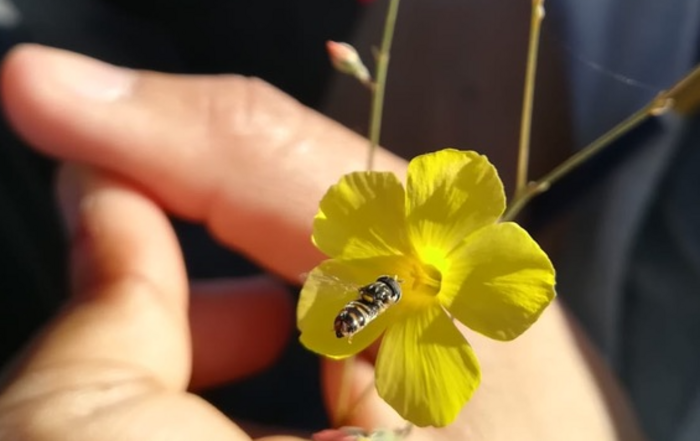
Pollinator

Credit: Juanita Gutiérrez-Valencia

Scientists have solved the century-old mystery of a supergene that causes efficient cross-pollination in flowers. The results show that sequence length variation at the DNA level is important for the evolution of two forms of flowers that differ in the length of their sexual organs. The study is published today in Current Biology.

Gardeners and botanists have known since the 1500s that some plant species have two forms of flowers that differ reciprocally in the length of their male and female sexual organs. Darwin first proposed that such distylous flowers promoted efficient cross-pollination by insect pollinators. Early geneticists showed that the two forms of flowers were controlled by a single chromosomal region likely harboring a cluster of genes, a supergene. But until recently this supergene had never been sequenced.

Now, researchers at Stockholm University, together with partners at Uppsala University, Durham University, University of Granada, and University of Seville, have solved the mystery of the supergene. They studied a system where already Darwin described distyly, wild flaxseed species, Linum, and used modern DNA sequencing methods to identify the supergene.

Surprisingly, they found that the supergene responsible for differing lengths of male and female sexual organs itself varied in length. Specifically, the dominant form of the supergene contained about 260 000 base pairs of DNA that were missing from the recessive form. The 260 000 base pair stretch of DNA harbored several genes likely to cause length variation in sexual organs.

”These results were really surprising to us, because a similar genetic makeup of the supergene that governs distyly has previously been identified in another system, primroses, where it evolved completely independently,” said Tanja Slotte, Professor in Ecological Genomics at Stockholm University and senior author of the study.

”Not only has evolution repeatedly led to similar variation in the flowers of primroses and flaxseed species, it has also relied on a similar genetic solution to achieve this feat,” said Juanita Gutiérrez-Valencia, PhD student at Stockholm University and first author of the study.

These findings provide new insights into the exceptional power of evolution to find convergent solutions to widespread adaptive challenges such as the need for flowering plants to be cross-pollinated.

”Distyly is ultimately a mechanism for efficient cross-pollination. Understanding pollination mechanisms is particularly important today given climate change and challenges faced by both plant and insect pollinator populations,” said Professor Tanja Slotte.


Journal

Current Biology

DOI

10.1016/j.cub.2022.08.042

Method of Research

Experimental study

Subject of Research

Cells

Article Title

Genomic analyses of the Linum distyly supergene reveal convergent evolution at the molecular level

Article Publication Date

9-Sep-2022

Share12Tweet8Share2ShareShareShare2

Related Posts

Florida Cane Toad: Complex Spread and Selective Evolution

Florida Cane Toad: Complex Spread and Selective Evolution

February 7, 2026
New Study Uncovers Mechanism Behind Burn Pit Particulate Matter–Induced Lung Inflammation

New Study Uncovers Mechanism Behind Burn Pit Particulate Matter–Induced Lung Inflammation

February 6, 2026

DeepBlastoid: Advancing Automated and Efficient Evaluation of Human Blastoids with Deep Learning

February 6, 2026

Navigating the Gut: The Role of Formic Acid in the Microbiome

February 6, 2026

POPULAR NEWS

  • Robotic Ureteral Reconstruction: A Novel Approach

    Robotic Ureteral Reconstruction: A Novel Approach

    82 shares
    Share 33 Tweet 21
  • Digital Privacy: Health Data Control in Incarceration

    63 shares
    Share 25 Tweet 16
  • Study Reveals Lipid Accumulation in ME/CFS Cells

    57 shares
    Share 23 Tweet 14
  • Breakthrough in RNA Research Accelerates Medical Innovations Timeline

    53 shares
    Share 21 Tweet 13

About

We bring you the latest biotechnology news from best research centers and universities around the world. Check our website.

Follow us

Recent News

Phage-Antibiotic Combo Beats Resistant Peritoneal Infection

Boosting Remote Healthcare: Stepped-Wedge Trial Insights

Barriers and Boosters of Seniors’ Physical Activity in Karachi

Subscribe to Blog via Email

Enter your email address to subscribe to this blog and receive notifications of new posts by email.

Join 73 other subscribers
  • Contact Us

Bioengineer.org © Copyright 2023 All Rights Reserved.

Welcome Back!

Login to your account below

Forgotten Password?

Retrieve your password

Please enter your username or email address to reset your password.

Log In
No Result
View All Result
  • Homepages
    • Home Page 1
    • Home Page 2
  • News
  • National
  • Business
  • Health
  • Lifestyle
  • Science

Bioengineer.org © Copyright 2023 All Rights Reserved.