• HOME
  • NEWS
  • EXPLORE
    • CAREER
      • Companies
      • Jobs
    • EVENTS
    • iGEM
      • News
      • Team
    • PHOTOS
    • VIDEO
    • WIKI
  • BLOG
  • COMMUNITY
    • FACEBOOK
    • INSTAGRAM
    • TWITTER
Saturday, February 7, 2026
BIOENGINEER.ORG
No Result
View All Result
  • Login
  • HOME
  • NEWS
  • EXPLORE
    • CAREER
      • Companies
      • Jobs
        • Lecturer
        • PhD Studentship
        • Postdoc
        • Research Assistant
    • EVENTS
    • iGEM
      • News
      • Team
    • PHOTOS
    • VIDEO
    • WIKI
  • BLOG
  • COMMUNITY
    • FACEBOOK
    • INSTAGRAM
    • TWITTER
  • HOME
  • NEWS
  • EXPLORE
    • CAREER
      • Companies
      • Jobs
        • Lecturer
        • PhD Studentship
        • Postdoc
        • Research Assistant
    • EVENTS
    • iGEM
      • News
      • Team
    • PHOTOS
    • VIDEO
    • WIKI
  • BLOG
  • COMMUNITY
    • FACEBOOK
    • INSTAGRAM
    • TWITTER
No Result
View All Result
Bioengineer.org
No Result
View All Result
Home NEWS Science News

Artificial fingertip that ‘feels’ wins international robotics competition

Bioengineer by Bioengineer
January 18, 2017
in Science News
Reading Time: 2 mins read
0
Share on FacebookShare on TwitterShare on LinkedinShare on RedditShare on Telegram

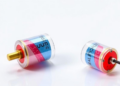
An open-source 3D-printed fingertip that can 'feel' in a similar way to the human sense of touch has won an international Soft Robotics competition for its contribution to soft robotics research.

Pushing the boundaries of soft robotics, the open-source tactile fingertip, known as TacTip, is a 3D-printed tactile sensor that has been developed by the Tactile Robotics Team from Bristol Robotics Laboratory (BRL).

The fingertip meets the need for a cheap, robust, versatile tactile sensor to give robots an artificial sense of touch. The sensor has a unique design in which a webcam is mounted inside a 3D-printed soft fingertip to track internal pins that act like touch receptors inside our own fingertips, making it cheap to build and highly customisable.

Dr Nathan Lepora, Senior Lecturer in Robotics at the University of Bristol and BRL and leader of the Tactile Robotics Team, said: "An artificial sense of touch is the key for enabling future robots to have human-like dexterity. Applications of artificial touch span from the future robotization of manufacturing, food production and healthcare, to prosthetic hands that restore a sense of touch."

Benjamin Ward-Cherrier, PhD student at BRL, added: "TacTip is a cheap artificial fingertip that anyone can build and customise with a 3D-printer, opening up the field of tactile robotics to many more researchers."

Over 80 teams entered the 2016 Soft Robotics competition hosted by Soft Robotics Toolkit. The competition, which is in its second year, aims to develop and showcase novel robots and fundamental research related to soft robotics.

The competition was divided into three categories. The first category was for the most significant contribution to fundamental research in soft robotics. The second was a design competition for college level students and enthusiasts to develop novel robots using tools found on Soft Robotics Toolkit's website and the final category was a design competition for high school students also designing novel, soft robots.

Open TacTip was developed at BRL, a collaboration between the University of Bristol and the University of the West of England (UWE Bristol), by a team of researchers in Tactile Robotics. The open TacTip entry to the soft robotics competition was made by Benjamin Ward-Cherrier, Maria-Elena Giannaccini and Nick Pestell on behalf of the Tactile Robotics Team.

###

Media Contact

Joanne Fryer
[email protected]
44-011-733-17276
@BristolUni

http://www.bristol.ac.uk

############

Story Source: Materials provided by Scienmag
Share12Tweet8Share2ShareShareShare2

Related Posts

Evaluating Pediatric Emergency Care Quality in Ethiopia

February 7, 2026

TPMT Expression Predictions Linked to Azathioprine Side Effects

February 7, 2026

Improving Dementia Care with Enhanced Activity Kits

February 7, 2026

Decoding Prostate Cancer Origins via snFLARE-seq, mxFRIZNGRND

February 7, 2026
Please login to join discussion

POPULAR NEWS

  • Robotic Ureteral Reconstruction: A Novel Approach

    Robotic Ureteral Reconstruction: A Novel Approach

    82 shares
    Share 33 Tweet 21
  • Digital Privacy: Health Data Control in Incarceration

    63 shares
    Share 25 Tweet 16
  • Study Reveals Lipid Accumulation in ME/CFS Cells

    57 shares
    Share 23 Tweet 14
  • Breakthrough in RNA Research Accelerates Medical Innovations Timeline

    53 shares
    Share 21 Tweet 13

About

We bring you the latest biotechnology news from best research centers and universities around the world. Check our website.

Follow us

Recent News

Evaluating Pediatric Emergency Care Quality in Ethiopia

TPMT Expression Predictions Linked to Azathioprine Side Effects

Improving Dementia Care with Enhanced Activity Kits

Subscribe to Blog via Email

Enter your email address to subscribe to this blog and receive notifications of new posts by email.

Join 73 other subscribers
  • Contact Us

Bioengineer.org © Copyright 2023 All Rights Reserved.

Welcome Back!

Login to your account below

Forgotten Password?

Retrieve your password

Please enter your username or email address to reset your password.

Log In
No Result
View All Result
  • Homepages
    • Home Page 1
    • Home Page 2
  • News
  • National
  • Business
  • Health
  • Lifestyle
  • Science

Bioengineer.org © Copyright 2023 All Rights Reserved.