A new analysis of mentoring relationships in academic research finds that gender inequities in the resources available to women mentors in the life sciences appear to disproportionately affect the subsequent careers of women trainees. Leah Schwartz and colleagues at Oregon Health and Science University present these findings on September 8th in the open-access journal PLOS Biology.
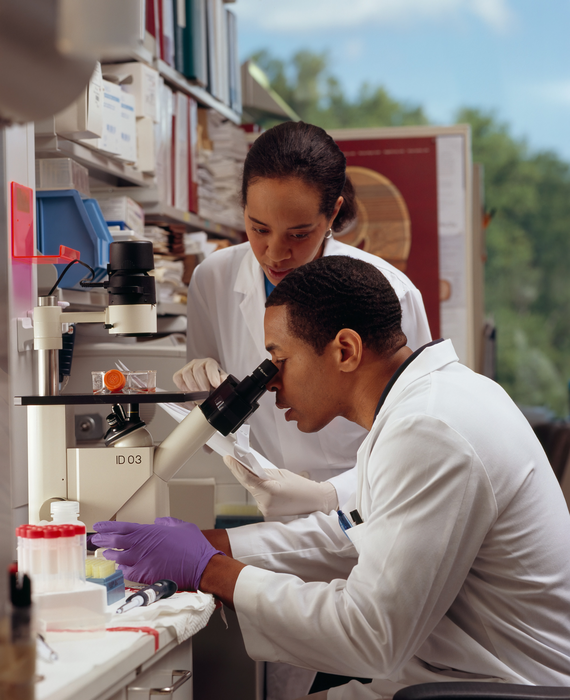
Credit: National Cancer Institute, Unsplash (CC0, https://creativecommons.org/publicdomain/zero/1.0/)
A new analysis of mentoring relationships in academic research finds that gender inequities in the resources available to women mentors in the life sciences appear to disproportionately affect the subsequent careers of women trainees. Leah Schwartz and colleagues at Oregon Health and Science University present these findings on September 8th in the open-access journal PLOS Biology.
While the proportion of women in graduate training programs is increasing, there is a disproportionate tendency for women to leave academic research instead of advancing to positions in which they become mentors themselves. A general tendency exists in PhD and postdoctoral programs for women to mentor women and for men to mentor men. However, prior research has produced mixed findings on whether there are any beneficial or detrimental effects of same-gender versus mixed-gender mentoring.
To surface new insights, Schwartz and colleagues evaluated the outcomes of PhD and postdoctoral mentoring relationships in the life sciences for a total of 11,112 mentors and 26,420 trainees.
The researchers found that trainees with women mentors were less likely to become academic mentors themselves than trainees with men mentors. However, that disparity was substantially reduced when the researchers statistically accounted for factors known to be affected by institutional gender bias, including funding, citation rate, and reputation of the mentor’s institution. This result suggests that, since mentors tend to have trainees of the same gender, gender disparities in resources available to mentors may disproportionately affect women trainees.
The researchers also found that a mentor’s status is mostly unrelated to whether they tend to work with trainees of the same gender. However, mentors with outstanding distinctions—such as being a Nobel Prize recipient or a member of the National Academy of Sciences—were more likely to have men trainees, potentially further contributing to lower representation of women in academic mentorship positions.
These findings suggest that structural inequities in the resources available to women mentors may indirectly affect their trainees. The researchers propose that one strategy to address this issue could be to try to boost the number of women trainees among mentors with outstanding distinctions.
Coauthor Dr. David adds, “We found that graduate and postdoctoral trainees of women mentors in bioscience are less likely than trainees of men to go on to independent research careers. When we took into account markers of mentor status, such as how widely their work is cited, this discrepancy was substantially reduced, suggesting that it results in part from gender disparities in the recognition that mentors receive from their colleagues.”
#####
In your coverage, please use this URL to provide access to the freely available paper in PLOS Biology: http://journals.plos.org/plosbiology/article?id=10.1371/journal.pbio.3001771
Citation: Schwartz LP, Liénard JF, David SV (2022) Impact of gender on the formation and outcome of formal mentoring relationships in the life sciences. PLoS Biol 20(9): e3001771. https://doi.org/10.1371/journal.pbio.3001771
Author Countries: United States
Funding: This work was supported by National Science Foundation Award 1933675 (S.V.D.), https://www.nsf.gov/awardsearch/showAward?AWD_ID=1933675. The funders had no role in study design, data collection and analysis, decision to publish, or preparation of the manuscript.
Journal
PLoS Biology
DOI
10.1371/journal.pbio.3001771
Method of Research
Observational study
Subject of Research
People
COI Statement
Competing interests: The authors have declared that no competing interests exist.