A team led by University of Minnesota Twin Cities biomedical engineers has developed a universally accessible application that can simulate complex molecular interactions, which will allow researchers to design better treatments for diseases like cancer and COVID-19.
Credit: iStock
A team led by University of Minnesota Twin Cities biomedical engineers has developed a universally accessible application that can simulate complex molecular interactions, which will allow researchers to design better treatments for diseases like cancer and COVID-19.
The paper builds upon a study the researchers published in 2019. Now, they’ve expanded the technology to simulate even more complex molecular interactions, made the application easy for non-experts to use, and applied their findings to shed light on how the SARS-CoV-2 virus infects the body.
The study is published in Nature Communications, a peer-reviewed, open access scientific journal. The app, called MVsim, is freely available to other researchers on GitHub.
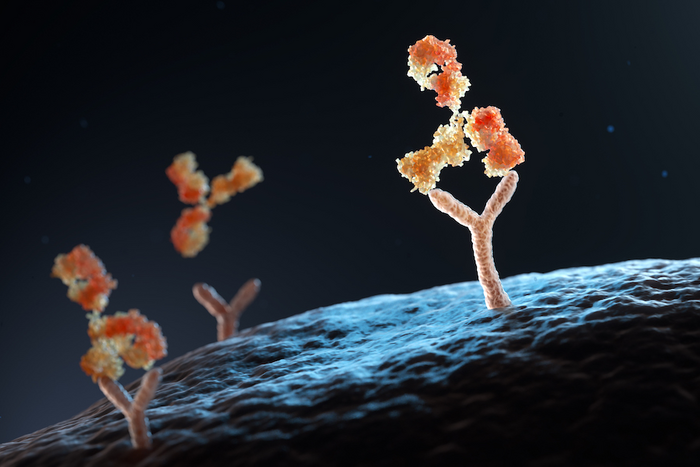
The simulator predicts the strength, speed, and selectivity of multivalent interactions, which involve molecules that have multiple binding sites and can be used to develop medicines for diseases, particularly cancer and COVID-19.
“Multivalent interactions are really important in natural biological systems, and they are now starting to be creatively exploited for creating new therapeutic drugs that leverage their unique binding properties,” said Casim Sarkar, senior author of the paper and a professor in the University of Minnesota Department of Biomedical Engineering.
“With multivalent drugs, you can, in principle, target cells very specifically in a way that’s not possible with standard, monovalent drugs, but there are many variables to consider in their design and much of the work in the field to date has been done through experimental trial and error,” Sarkar added. “Now, using MVsim, we’re able to make good predictions that can be used to more rationally design such therapeutics.”
Many cancer drugs not only bind to tumor cells but also to cells they aren’t meant to target, which often creates unwanted side effects for the patient. By optimizing the specificity of multivalent interactions using MVsim, researchers can design drugs that more specifically target the cells in a tumor while minimizing binding to other cells in the body.
Another example is the SARS-CoV-2 virus. Scientists know that the virus is evolving to better infect our cells and evade our immune systems, but the molecular mechanisms behind how the virus does this is relatively unknown. Using their MVsim technology, the University of Minnesota researchers were able to explore this process more in depth, uncovering the rates at which individual binding domains within the virus’s multivalent spike protein switch between a cell-infecting state and an immune-evading state.
“We essentially have a computational microscope that allows us to look under the hood and see what multivalent proteins such as the SARS-CoV-2 spike protein are doing at a molecular level,” Sarkar explained. “This level of molecular detail is hard to capture with a physical experiment. One of the real powers of MVsim is that we can not only learn more about how these systems work but we can also use this tool to design new multivalent interactions for diseases like cancer and COVID-19.”
The researchers have already identified potential ways to limit the infectivity of current and future SARS-CoV-2 variants, which they plan to test soon.
The research was funded by the National Institutes of Health and a COVID-19 Rapid Response Grant from the University of Minnesota’s Institute for Engineering in Medicine.
In addition to Sarkar, the research team included researchers Bence Bruncsics from the Budapest University of Technology and Economics and Wesley Errington from the University of Minnesota Department of Biomedical Engineering.
Journal
Nature Communications
DOI
10.1038/s41467-022-32496-6
Method of Research
Computational simulation/modeling
Article Title
MVsim is a toolset for quantifying and designing multivalent interactions
Article Publication Date
6-Sep-2022