The risk of children being orphaned per COVID-19 death is highest in the poorest countries and those where people of reproductive age have the highest rates of non-communicable diseases, according to a new study published this week in the open-access journal PLOS Global Public Health by Callum Lowe of Australian National University and colleagues.
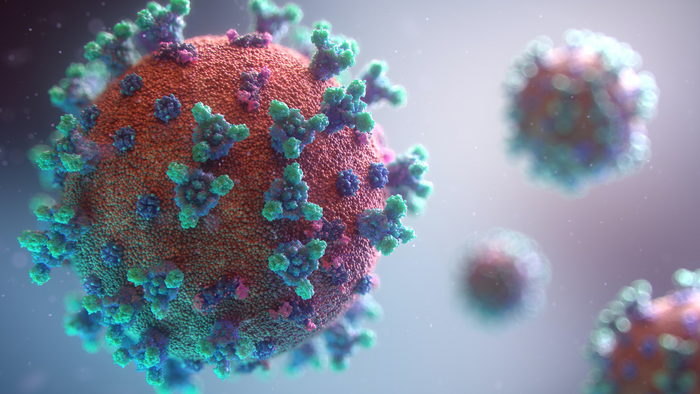
Credit: Fusion Medical Animation, Unsplash, CC0 (https://creativecommons.org/publicdomain/zero/1.0/)
The risk of children being orphaned per COVID-19 death is highest in the poorest countries and those where people of reproductive age have the highest rates of non-communicable diseases, according to a new study published this week in the open-access journal PLOS Global Public Health by Callum Lowe of Australian National University and colleagues.
Due to the higher COVID-19 mortality risk among adults than children, and the propensity of the SARS-CoV-2 virus to quickly spread throughout a household, there is the possibility that children will survive a COVID-19 infection while their parents or caregivers will not. In this study, the researchers used a previously developed COVID-19 orphanhood calculator to predict the total orphans per COVID-19 death for 139 countries. The calculator integrated information on fertility rates and pandemic mortality by age and sex. Information on other factors, including vaccine coverage and sociodemographics was also available at the country level.
The team found that the risk of orphaned children (those who have lost at least one of their parents or caregivers) was much higher in countries below median GDP per capita (1.56 orphans per COVID-19 death) compared to countries above median GDP (0.09 orphans per death). The increased risk of orphans was specifically associated with greater poverty prevalence (B = 2.32, p<0.01), lower GDP per capita (B = -0.23, p<0.05), and a higher proportion of people with non-communicative diseases who are between the ages of 15 and 49 (B = 1.46, p<0.0001). In almost all global regions, it was also associated with lower vaccination coverage.
The authors conclude that due to pre-existing health and vaccine coverage inequity, more children will suffer the loss of their parents due to COVID-19 in poorer countries.
The authors add: “COVID-19 has spread to almost every country on the globe, but the risk of children being orphaned due to COVID-19 is higher in poorer countries. Inequity in access to COVID-19 vaccines will bolster this issue further.”
#####
In your coverage please use this URL to provide access to the freely available article in PLOS Global Public Health: https://journals.plos.org/globalpublichealth/article?id=10.1371/journal.pgph.0000317
Citation: Lowe C, Rachmawati L, Richardson A, Kelly M (2022) COVID-19 orphans—Global patterns associated with the hidden pandemic. PLOS Glob Public Health 2(8): e0000317. https://doi.org/10.1371/journal.pgph.0000317
Author Countries: Australia, Indonesia
Funding: The authors received no specific funding for this work.
Journal
PLOS Global Public Health
DOI
10.1371/journal.pgph.0000317
Method of Research
Observational study
Subject of Research
People
Article Title
COVID-19 orphans—Global patterns associated with the hidden pandemic
Article Publication Date
31-Aug-2022
COI Statement
The authors have declared that no competing interests exist.