Whether it’s a night of sleep deprivation, natural sleep variation, or just a single hour of sleep lost for a whole society, research by Eti Ben Simon, Matthew Walker, and colleagues at the University of California, Berkeley, USA shows people withdraw their decision to help others in need after sleep loss. The study, publishing August 23rd in the open-access journal PLOS Biology, shows that this behavior is associated with reduced activity in the prosocial cognitive network of the brain.
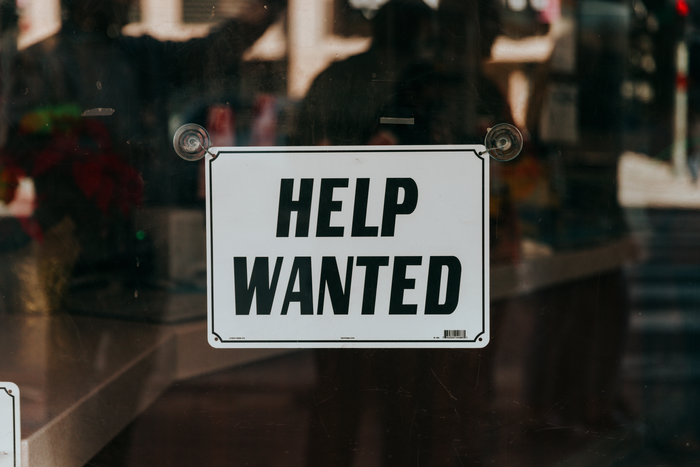
Credit: Nathan Dumlao, Unsplash (CC0, https://creativecommons.org/publicdomain/zero/1.0/)
Whether it’s a night of sleep deprivation, natural sleep variation, or just a single hour of sleep lost for a whole society, research by Eti Ben Simon, Matthew Walker, and colleagues at the University of California, Berkeley, USA shows people withdraw their decision to help others in need after sleep loss. The study, publishing August 23rd in the open-access journal PLOS Biology, shows that this behavior is associated with reduced activity in the prosocial cognitive network of the brain.
Our willingness to help others is fundamental to human society. Replicated across three different experiments, the researchers examined how sleep loss affects this essential human behavior. First, individual willingness to help others and brain activity were assessed through a self-reported altruism questionnaire after a night of normal sleep and after a night of sleep deprivation, and these individuals had their brain activity assessed using fMRI imaging. Second, a group of people was given the altruism questionnaire after keeping sleep diaries evaluating sleep quality and quantity. Third, donations in the United States were determined in the weeks before and after losing an hour of sleep due to Daylight Saving Time.
The fMRI showed that sleep deprivation dampened activity in the social cognition brain network known to be more active during pro-social behaviors. Overall, this impairment in prosocial brain activity was associated with less self-reported desire to help others in the first two experiments. It was also associated with less actual monetary help in the third experiment, which found a 10% drop in donation amounts after the loss of an hour of sleep.
As many societies report reductions in sleep, understanding how this influences our willingness to help others is becoming more important. The study indicates that altruistic acts, such as drives to help victims of natural disasters or war, can be hampered by even minor reductions in a society’s sleep. On the flip side, asking people for help or timing donation drives to periods of adequate sleep could make them more effective.
Walker adds, “Helping is a core, fundamental feature of humankind. This new research demonstrates that a lack of sleep degrades the very fabric of human society itself. How we operate as a social species — and we are a social species — seems profoundly dependent on how much sleep we are getting.”
#####
In your coverage, please use this URL to provide access to the freely available paper in PLOS Biology: http://journals.plos.org/plosbiology/article?id=10.1371/journal.pbio.3001733
Citation: Ben Simon E, Vallat R, Rossi A, Walker MP (2022) Sleep loss leads to the withdrawal of human helping across individuals, groups, and large-scale societies. PLoS Biol 20(8): e3001733. https://doi.org/10.1371/journal.pbio.3001733
Author Countries: United States of America
Funding: This work was supported by University of California, Berkeley funds awarded to MPW. The funders had no role in study design, data collection and analysis, decision to publish, or preparation of the manuscript.
Journal
PLoS Biology
DOI
10.1371/journal.pbio.3001733
Method of Research
Observational study
Subject of Research
People
COI Statement
The authors have declared that no competing interests exist.