• HOME
  • NEWS
  • EXPLORE
    • CAREER
      • Companies
      • Jobs
    • EVENTS
    • iGEM
      • News
      • Team
    • PHOTOS
    • VIDEO
    • WIKI
  • BLOG
  • COMMUNITY
    • FACEBOOK
    • INSTAGRAM
    • TWITTER
Saturday, February 7, 2026
BIOENGINEER.ORG
No Result
View All Result
  • Login
  • HOME
  • NEWS
  • EXPLORE
    • CAREER
      • Companies
      • Jobs
        • Lecturer
        • PhD Studentship
        • Postdoc
        • Research Assistant
    • EVENTS
    • iGEM
      • News
      • Team
    • PHOTOS
    • VIDEO
    • WIKI
  • BLOG
  • COMMUNITY
    • FACEBOOK
    • INSTAGRAM
    • TWITTER
  • HOME
  • NEWS
  • EXPLORE
    • CAREER
      • Companies
      • Jobs
        • Lecturer
        • PhD Studentship
        • Postdoc
        • Research Assistant
    • EVENTS
    • iGEM
      • News
      • Team
    • PHOTOS
    • VIDEO
    • WIKI
  • BLOG
  • COMMUNITY
    • FACEBOOK
    • INSTAGRAM
    • TWITTER
No Result
View All Result
Bioengineer.org
No Result
View All Result
Home NEWS Science News Biology

Could blood marker predict the risk of osteoporotic hip fracture in men?

Bioengineer by Bioengineer
August 17, 2022
in Biology
Reading Time: 2 mins read
0
CXCL9 predicts the risk of osteoporotic hip fracture in a prospective cohort of Chinese men article image
Share on FacebookShare on TwitterShare on LinkedinShare on RedditShare on Telegram

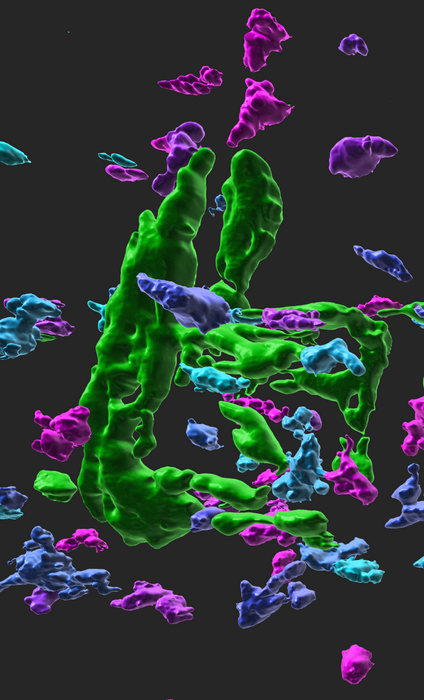
Bone health requires a balanced activity of various bone cell types including bone-forming osteoblasts and bone-resorbing osteoclasts. Osteoporosis occurs when osteoclasts dominate without adequate bone formation to compensate. In new research published in the Journal of Bone and Mineral Research, elevated blood levels of a certain chemokine, or small signaling protein, that promotes osteoclast formation were linked with a higher risk of hip fracture in men.
CXCL9 predicts the risk of osteoporotic hip fracture in a prospective cohort of Chinese men article image

Credit: Delivery mode and risk of gastrointestinal disease in the offspring
Christine Hellsing, Anne K. Örtqvist, Eva Hagel, Carmen Mesas-Burgos, Ulf O. Gustafsson, Anna Löf Granström
First published: 04 August 2022
https://doi.org/10.1111/aogs.14427

Bone health requires a balanced activity of various bone cell types including bone-forming osteoblasts and bone-resorbing osteoclasts. Osteoporosis occurs when osteoclasts dominate without adequate bone formation to compensate. In new research published in the Journal of Bone and Mineral Research, elevated blood levels of a certain chemokine, or small signaling protein, that promotes osteoclast formation were linked with a higher risk of hip fracture in men.

The study included 55 men and 119 women who had experienced a hip fracture an average of 6.3 years after their blood was collected. The participants were matched individually to controls who did not develop hip fractures.

Investigators observed higher blood levels of the chemokine CXCL9 in the pre-fracture blood samples of men with subsequent hip fractures compared with their non-fracture controls. No such difference was seen women.

“The unexpected difference in the results between men and women in our study may be explained by how changes in sex hormone levels during aging could influence the level and effects of CXCL9 differently in older men and women,” explained corresponding author Woon-Puay Koh, MBBS, PhD, from the National University of Singapore (NUS).

“Our findings open the exciting possibility that early interventions targeting CXCL9 or CXCL9-CXCR3 signalling could be beneficial in preventing hip fractures in older men,” added co-corresponding author Christoph Winkler, PhD, also from NUS.


Journal

Journal of Bone and Mineral Research

DOI

10.1002/jbmr.4646

Article Title

CXCL9 predicts the risk of osteoporotic hip fracture in a prospective cohort of Chinese men

Article Publication Date

17-Aug-2022

Share12Tweet8Share2ShareShareShare2

Related Posts

Florida Cane Toad: Complex Spread and Selective Evolution

Florida Cane Toad: Complex Spread and Selective Evolution

February 7, 2026
New Study Uncovers Mechanism Behind Burn Pit Particulate Matter–Induced Lung Inflammation

New Study Uncovers Mechanism Behind Burn Pit Particulate Matter–Induced Lung Inflammation

February 6, 2026

DeepBlastoid: Advancing Automated and Efficient Evaluation of Human Blastoids with Deep Learning

February 6, 2026

Navigating the Gut: The Role of Formic Acid in the Microbiome

February 6, 2026

POPULAR NEWS

  • Robotic Ureteral Reconstruction: A Novel Approach

    Robotic Ureteral Reconstruction: A Novel Approach

    82 shares
    Share 33 Tweet 21
  • Digital Privacy: Health Data Control in Incarceration

    63 shares
    Share 25 Tweet 16
  • Study Reveals Lipid Accumulation in ME/CFS Cells

    57 shares
    Share 23 Tweet 14
  • Breakthrough in RNA Research Accelerates Medical Innovations Timeline

    53 shares
    Share 21 Tweet 13

About

We bring you the latest biotechnology news from best research centers and universities around the world. Check our website.

Follow us

Recent News

Evaluating Pediatric Emergency Care Quality in Ethiopia

TPMT Expression Predictions Linked to Azathioprine Side Effects

Improving Dementia Care with Enhanced Activity Kits

Subscribe to Blog via Email

Enter your email address to subscribe to this blog and receive notifications of new posts by email.

Join 73 other subscribers
  • Contact Us

Bioengineer.org © Copyright 2023 All Rights Reserved.

Welcome Back!

Login to your account below

Forgotten Password?

Retrieve your password

Please enter your username or email address to reset your password.

Log In
No Result
View All Result
  • Homepages
    • Home Page 1
    • Home Page 2
  • News
  • National
  • Business
  • Health
  • Lifestyle
  • Science

Bioengineer.org © Copyright 2023 All Rights Reserved.