• HOME
  • NEWS
  • EXPLORE
    • CAREER
      • Companies
      • Jobs
    • EVENTS
    • iGEM
      • News
      • Team
    • PHOTOS
    • VIDEO
    • WIKI
  • BLOG
  • COMMUNITY
    • FACEBOOK
    • INSTAGRAM
    • TWITTER
Saturday, February 7, 2026
BIOENGINEER.ORG
No Result
View All Result
  • Login
  • HOME
  • NEWS
  • EXPLORE
    • CAREER
      • Companies
      • Jobs
        • Lecturer
        • PhD Studentship
        • Postdoc
        • Research Assistant
    • EVENTS
    • iGEM
      • News
      • Team
    • PHOTOS
    • VIDEO
    • WIKI
  • BLOG
  • COMMUNITY
    • FACEBOOK
    • INSTAGRAM
    • TWITTER
  • HOME
  • NEWS
  • EXPLORE
    • CAREER
      • Companies
      • Jobs
        • Lecturer
        • PhD Studentship
        • Postdoc
        • Research Assistant
    • EVENTS
    • iGEM
      • News
      • Team
    • PHOTOS
    • VIDEO
    • WIKI
  • BLOG
  • COMMUNITY
    • FACEBOOK
    • INSTAGRAM
    • TWITTER
No Result
View All Result
Bioengineer.org
No Result
View All Result
Home NEWS Science News

Research method predicts a region’s likelihood of having fish with toxic levels of methylmercury

Bioengineer by Bioengineer
August 17, 2022
in Science News
Reading Time: 2 mins read
0
Effect of Land Cover on Ecoregion-Scale Spatial Patterns of Mercury Contamination of Largemouth Bass in the Southeastern US article
Share on FacebookShare on TwitterShare on LinkedinShare on RedditShare on Telegram

Consuming methylmercury-contaminated fish poses a hazard to human health. New research published in Environmental Toxicology and Chemistry may help environmental resource management officials predict which regions are likely to have fish with high concentrations of this toxin, without the need for extensive testing.
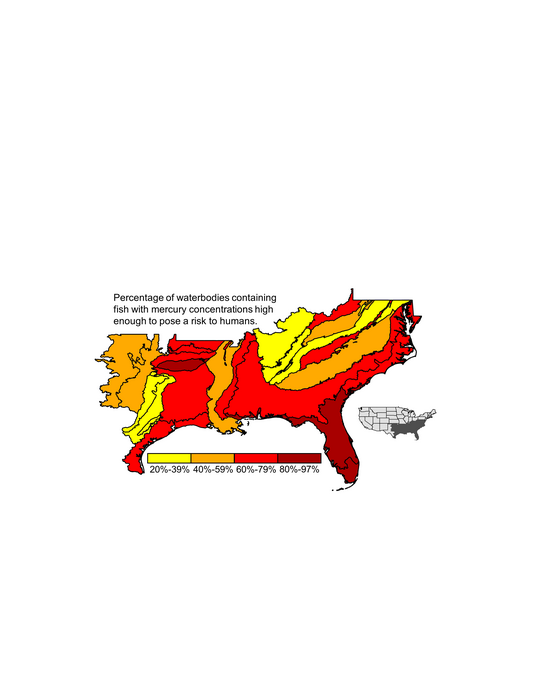
Effect of Land Cover on Ecoregion-Scale Spatial Patterns of Mercury Contamination of Largemouth Bass in the Southeastern US article

Credit: Effect of Land Cover on Ecoregion-Scale Spatial Patterns of Mercury Contamination of Largemouth Bass in the Southeastern US
Chumchal, M. et al
First published: 17 August 2022
https://onlinelibrary.wiley.com/doi/10.1002/etc.5426

Consuming methylmercury-contaminated fish poses a hazard to human health. New research published in Environmental Toxicology and Chemistry may help environmental resource management officials predict which regions are likely to have fish with high concentrations of this toxin, without the need for extensive testing.

Investigators found that 72% of the variance in average concentrations of methylmercury in largemouth bass between regions of the Southeastern U.S. could be explained by the percent coverage of land by evergreen forests, emergent herbaceous wetlands, and pasture/hay.

The scientists explain that inorganic mercury from the atmosphere is deposited across the landscape, but that land cover determines how much of this inorganic mercury will be transported to freshwater systems and converted to methylmercury in aquatic environments.

“Our study suggests that monitoring efforts should focus on ecoregions with land cover types that increase the ‘sensitivity’ of water bodies to atmospheric mercury deposition,” said lead author Ray Drenner, PhD, of Texas Christian University. “We hope our study helps resource managers tasked with issuing fish consumption advisories for mercury.”


Journal

Environmental Toxicology and Chemistry

DOI

10.1002/etc.5426

Article Title

Effect of Land Cover on Ecoregion-Scale Spatial Patterns of Mercury Contamination of Largemouth Bass in the Southeastern US

Article Publication Date

17-Aug-2022

Share12Tweet8Share2ShareShareShare2

Related Posts

Digital Health Perspectives from Baltic Sea Experts

February 7, 2026
Florida Cane Toad: Complex Spread and Selective Evolution

Florida Cane Toad: Complex Spread and Selective Evolution

February 7, 2026

Exploring Decision-Making in Dementia Caregivers’ Mobility

February 7, 2026

Succinate Receptor 1 Limits Blood Cell Formation, Leukemia

February 7, 2026

POPULAR NEWS

  • Robotic Ureteral Reconstruction: A Novel Approach

    Robotic Ureteral Reconstruction: A Novel Approach

    82 shares
    Share 33 Tweet 21
  • Digital Privacy: Health Data Control in Incarceration

    63 shares
    Share 25 Tweet 16
  • Study Reveals Lipid Accumulation in ME/CFS Cells

    57 shares
    Share 23 Tweet 14
  • Breakthrough in RNA Research Accelerates Medical Innovations Timeline

    53 shares
    Share 21 Tweet 13

About

We bring you the latest biotechnology news from best research centers and universities around the world. Check our website.

Follow us

Recent News

Digital Health Perspectives from Baltic Sea Experts

Florida Cane Toad: Complex Spread and Selective Evolution

Exploring Decision-Making in Dementia Caregivers’ Mobility

Subscribe to Blog via Email

Enter your email address to subscribe to this blog and receive notifications of new posts by email.

Join 73 other subscribers
  • Contact Us

Bioengineer.org © Copyright 2023 All Rights Reserved.

Welcome Back!

Login to your account below

Forgotten Password?

Retrieve your password

Please enter your username or email address to reset your password.

Log In
No Result
View All Result
  • Homepages
    • Home Page 1
    • Home Page 2
  • News
  • National
  • Business
  • Health
  • Lifestyle
  • Science

Bioengineer.org © Copyright 2023 All Rights Reserved.