Credit: National Geographic Kids
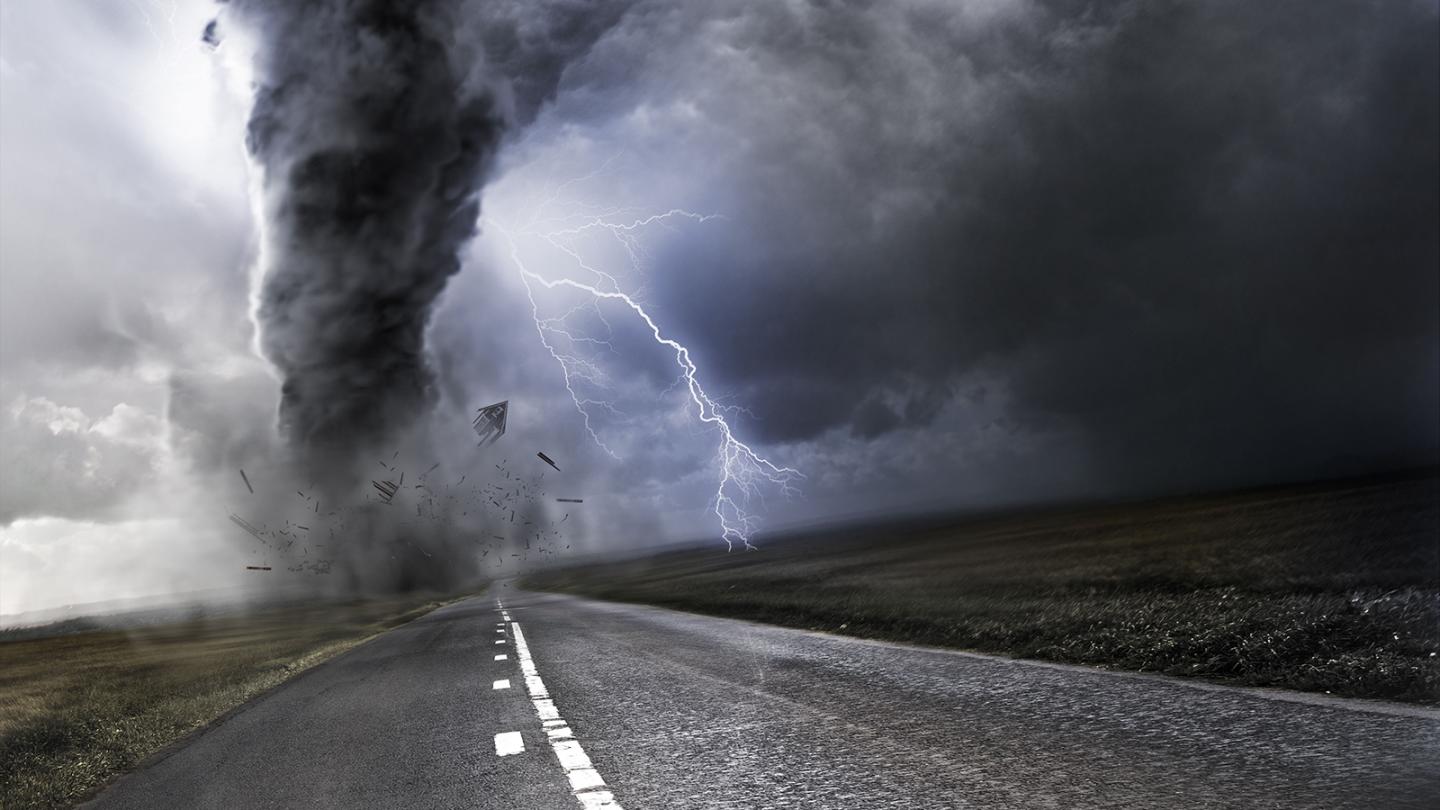
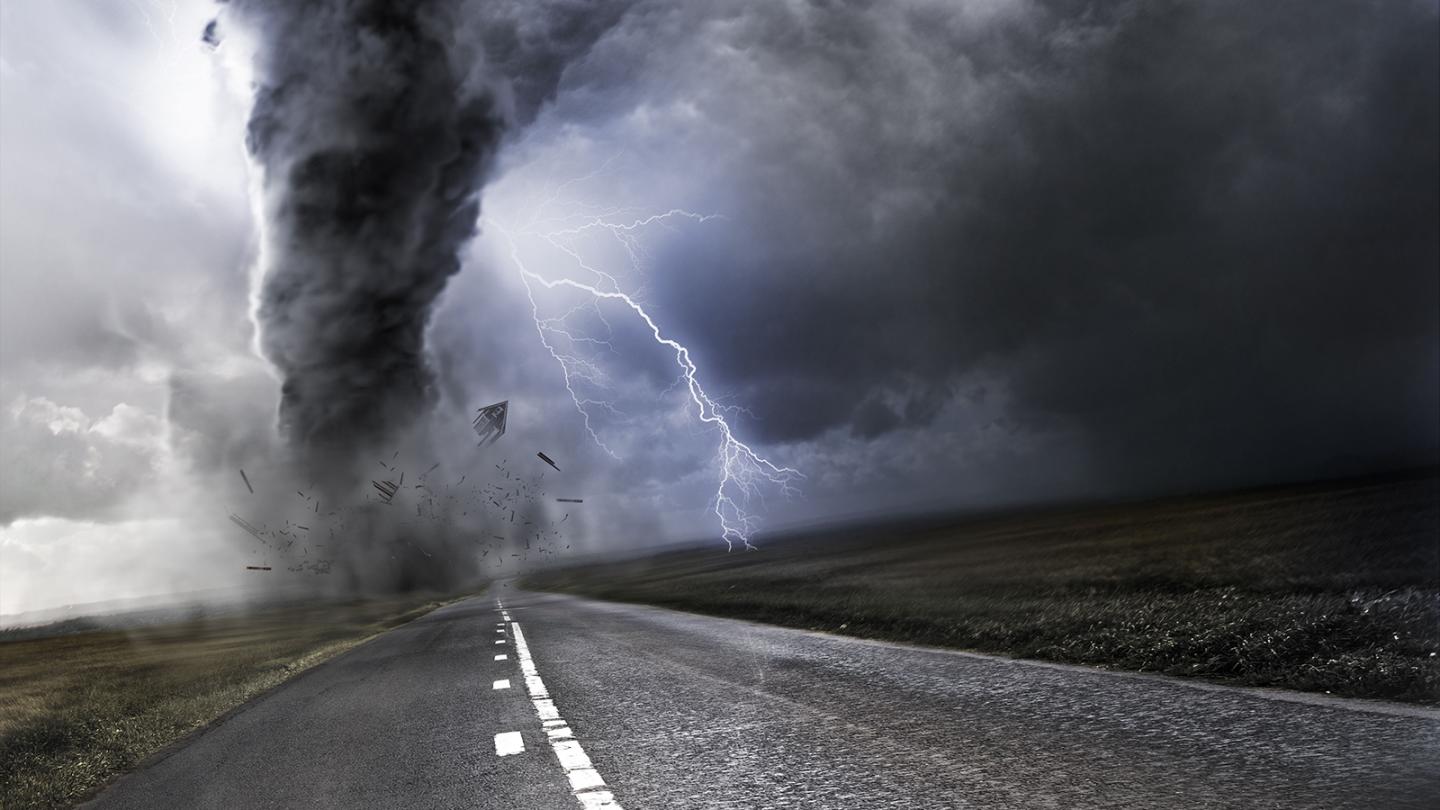
Montreal, January 17, 2018 — With winter upon us in full force, outdoor temperatures are plummeting. But inside an intense tornado, it's always chilly — no matter the time of year. A new study from Concordia proves why that's the case.
In an article forthcoming in the Journal of Aircraftof the American Institute of Aeronautics and Astronautics, mechanical engineering professor Georgios Vatistas looks into the case of a violent tornado that touched down in 1955 in Scottsbluff, Nebraska.
During the storm, three broadcasters from the mobile unit of a local radio station were reporting live on the scene and had to take shelter in the basement of a stone building. There, as the tornado's funnel passed overhead, they reported strange climatic changes. The temperature dropped from a mid-summer average, down to chilly, until the broadcasters were actually cold. They also found it difficult to breathe.
For 61 years, the cause of these phenomena remained unexplained. Enter Vatistas — a leading expert on the topic — who was able to formulate an analytical approach that allowed him to construct a new mathematical model of a turbulent compressible vortex.
To do this, he expanded on his previous theoretical developments on vortices to include the effects of turbulence and density variation.
"Using this new advanced approach, we were able to identify the cause of the temperature drop inside vortices for the first time ever," says Vatistas, who conducted the study with recent Concordia master's students Badwal Gurpreet Singh (MASc 14) and Rahul Rampal (MASc 14).
"As air pockets move from the outer periphery of the vortex toward its centre, the pockets expand, thereby bringing the temperature and density down."
In the case of Scottsbluff, Vatistas and his team found that the temperature inside the tornado would have dropped from a comfortably warm background temperature of 27o C to a chilly 12o C. And at the tornado's centre, the researchers estimated the air density would have been 20 per cent lower than what's found at high altitudes.
"That's what's known as the 'death zone,' at 8,000 metres in altitude, beyond which mountaineers should not climb without breathing assistance gear," Vatistas explains.
That's why the reporters in Scottsbluff reported feeling deprived of oxygen. Luckily, the tornado passed quickly, and they avoided asphyxiation.
"It's my hope that this important finding will help researchers better understand the many mysterious manifestations associated with violent atmospheric vortices like tornados and waterspouts."
The study will also help engineers improve the operation of refrigeration vortex tubes, which are often used in the cooling of cutting tools during machining, various electronic components, hot melts, gas samples and heat seals.
###
Related links:
Cited study
Department of Mechanical Engineering
Georgios Vatistas
Media contact:
Cléa Desjardins
Senior advisor, media relations
University Communications Services
Concordia University
Phone: 514-848-2424, ext. 5068
Email: [email protected]
Web: http://www.concordia.ca/now/media-relations
Twitter: @CleaDesjardins
Media Contact
Cléa Desjardins
[email protected]
514-909-2999
@ConcordiaUnews
http://www.concordia.ca
############
Story Source: Materials provided by Scienmag