An online database developed at the University of Sussex which documents pollinator-plant interactions, could help the public understand how to plant for pollinators and support biodiversity.
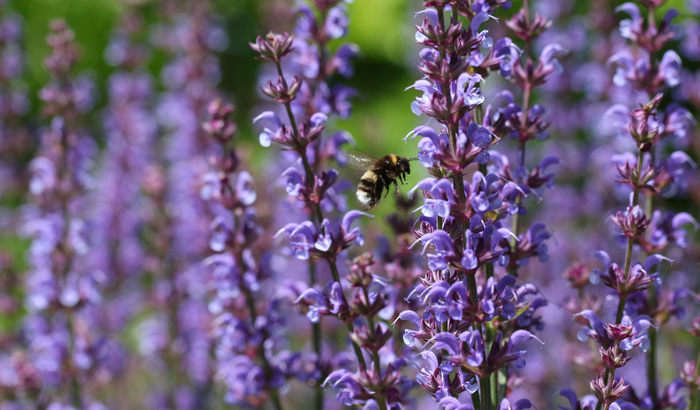
Credit: Marta Rossi
An online database developed at the University of Sussex which documents pollinator-plant interactions, could help the public understand how to plant for pollinators and support biodiversity.
Remarkably little is known about the flower preferences of many pollinator species, or which insects pollinate which flower species and how these interactions change in space and time.
To address this knowledge gap, Sussex researchers have created one of the world’s first online, open access, pollinator-plant interaction database. The dataset currently contains more than 300,000 interactions and unites disparate publications and datasets from the scientific literature and monitoring groups. These include records from almost 2,000 pollinator species and over 1,000 plant species.
Dubbed ‘The Database of Pollinator Interactions’ or ‘DoPI’, it was constructed by Dr Nicholas Balfour, Dr Maria Clara Castellanos, Prof Dave Goulson, Prof Andrew Philippides and Dr Chris Johnson, with financial support from the British Beekeepers Association and the Eva Crane Trust. A new paper, published in the journal Ecology, outlines the database and how it works.
Dr Nicholas Balfour, researcher at the University of Sussex within the School of Life Sciences, said: “Our database summarises a wealth of information on plant-pollinator interactions that were previously buried in the scientific literature. This unique resource can be used to answer fundamental ecological questions on pollination interactions, as well as applied questions in conservation practice.”
“We hope the public can use the database to help them select pollinator friendly species to plant in their gardens and importantly, which plants not to “weed”. One of the things that stands out from the data so far is that many common garden weeds are associated with a great diversity of pollinator species.”
“This resource would not have been possible without the data kindly shared by researchers and citizen scientists, and the hard work of the 11 undergraduate, masters and PhD students that painstakingly entered it all.”
The importance of flower-insect interactions in maintaining global biodiversity, ecosystem resilience and agricultural output is well established. However, significant concerns remain about pollinator and plant populations declines and shrinking distributions. For example, more than 40 British bee, wasp and butterfly species have become extinct in the last two centuries. While potential causes have been identified, the long-term decline of flowers in our landscapes is considered by experts to be a key factor.
Prof Dave Goulson said: “We intend that DoPI will continue to grow over time, as new records are gathered and added, providing a live resource for anyone interested in pollinators or insect-pollinated flowers.
“Insect populations are declining rapidly, and we urgently need to take action. This database helps show where to begin when it comes to everyday planting for pollinators.”
By combining a large volume of information in a single repository, DoPI can be used to answer fundamental ecological questions on the dynamics of pollination interactions in space and time, as well as applied questions in conservation practice. The researchers hope the database will be a useful tool not only for researchers, but also for conservationists, funding agencies, governmental departments, beekeepers, agronomists and eager gardeners.
Dr Maria Clara Castellanos said: “DoPI is a remarkable resource that will make an impact at both applied and academic levels. It is so unique that researchers from Canada and the US have already contacted us for collaborations to create similar databases in their regions”
The database can be accessed at www.dopi.org.uk.
Journal
Ecology
Article Title
DoPI: The Database of Pollinator Interactions
Article Publication Date
26-Jun-2022