


Even common infections can come with acute or lingering cognitive symptoms; one of the best-known examples is “COVID fog.” In a review published on July 21 in the journal Trends in Ecology & Evolution, cognitive and disease ecologists discuss how infection-associated decline in learning, memory, or decision making can affect how well animals, such as birds and bees, adapt to urbanization or climate change.
“Cognitive impairment could contribute to population declines, particularly for species that rely heavily on learning and memory for foraging or other important functions,” say the authors, including professors Dana Hawley (@HawleyDana) and Kendra Sewall (@Sewall_lab) of Virginia Tech and Anne Leonard (@LeonardLabUNR) of the University of Nevada. “Impaired cognitive performance could compromise the ability of some animals to exploit urbanized and other rapidly changing habitats, where problem solving may be particularly important.”
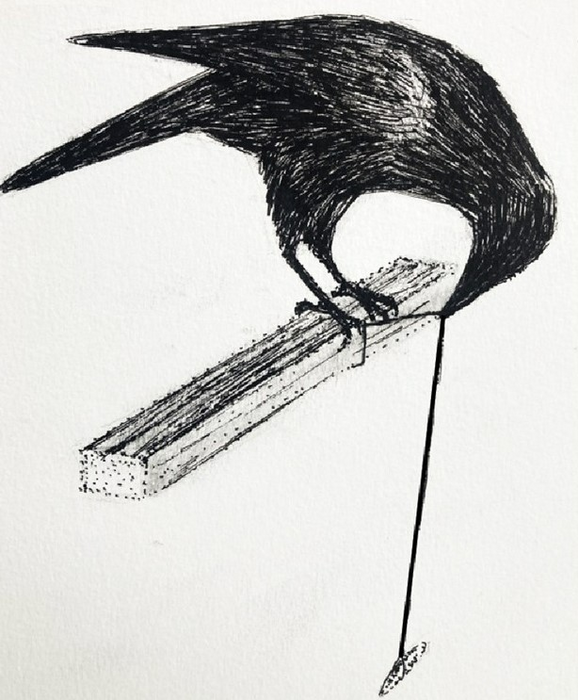
Credit: Trends in Ecology & Evolution/Townsend et al.
Even common infections can come with acute or lingering cognitive symptoms; one of the best-known examples is “COVID fog.” In a review published on July 21 in the journal Trends in Ecology & Evolution, cognitive and disease ecologists discuss how infection-associated decline in learning, memory, or decision making can affect how well animals, such as birds and bees, adapt to urbanization or climate change.
“Cognitive impairment could contribute to population declines, particularly for species that rely heavily on learning and memory for foraging or other important functions,” say the authors, including professors Dana Hawley (@HawleyDana) and Kendra Sewall (@Sewall_lab) of Virginia Tech and Anne Leonard (@LeonardLabUNR) of the University of Nevada. “Impaired cognitive performance could compromise the ability of some animals to exploit urbanized and other rapidly changing habitats, where problem solving may be particularly important.”
The impact of disease on cognitive abilities can vary widely from animal to animal, depending on the animal’s survival strategy and how the pathogen or parasite manifests in the body. For example, social animals such as ants and humans might miss out on learning opportunities because of avoiding high-risk areas or individuals, a behavior termed “landscape of disgust.”
Infections early in life could also make animals more susceptible. For example, young canaries that are infected with Plasmodium when they are learning songs might have a reduced song repertoire and complexity as adults. Impairment might also arise indirectly as a result of malnutrition or from the animal’s own immune response.
“One challenge in all studies of cognitive ecology is the scarcity of comparable data across taxa,” say the authors. “Understanding how infection affects specific cognitive abilities will require research across a wider breadth of hosts and pathogens, targeting analogous aspects of cognition (e.g., spatial learning; problem solving; general versus specialized cognitive abilities), and standardizing experimental paradigms to the extent possible.”
###
Trends in Ecology & Evolution, Townsend et al. “Infectious disease and cognition in wild populations” https://www.cell.com/trends/ecology-evolution/fulltext/S0169-5347(22)00138-0
Trends in Ecology & Evolution (@Trends_Ecol_Evo), published by Cell Press, is a monthly review journal that contains polished, concise, and readable reviews and opinions in all areas of ecology and evolutionary science. It aims to keep scientists informed of new developments and ideas across the full range of ecology and evolutionary biology—from the pure to the applied and from molecular to global. Visit: http://www.cell.com/trends/ecology-evolution. To receive Cell Press media alerts, please contact [email protected].
Journal
Trends in Ecology & Evolution
DOI
10.1016/j.tree.2022.06.005
Method of Research
Literature review
Subject of Research
Animals
Article Title
Infectious disease and cognition in wild populations
Article Publication Date
21-Jul-2022

