



COLUMBIA, Mo. — As new Omicron subvariants of COVID-19 continue to sweep across the United States, researchers at the University of Missouri have identified specific mutations within the virus’ spike protein that help Omicron subvariants evade existing antibodies humans have from either vaccines or previous COVID-19 infections. These mutations help explain why some people are continuing to test positive for the coronavirus, which, like most viruses, continues to evolve.
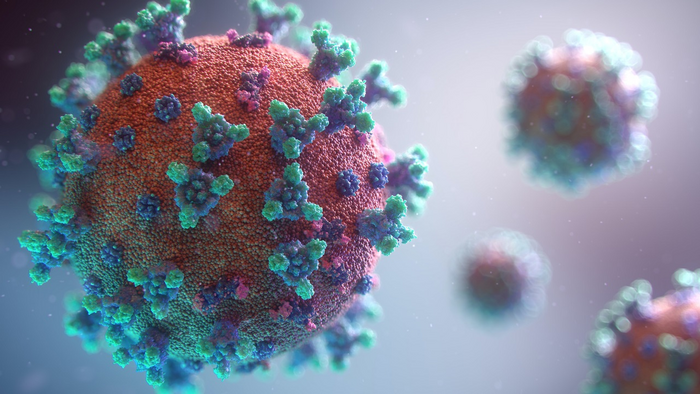
Credit: University of Missouri
COLUMBIA, Mo. — As new Omicron subvariants of COVID-19 continue to sweep across the United States, researchers at the University of Missouri have identified specific mutations within the virus’ spike protein that help Omicron subvariants evade existing antibodies humans have from either vaccines or previous COVID-19 infections. These mutations help explain why some people are continuing to test positive for the coronavirus, which, like most viruses, continues to evolve.
The findings can help developers of COVID-19 treatments and vaccines consider which parts of the virus to target going forward to produce the most effective outcomes.
Kamlendra Singh, a professor in the MU College of Veterinary Medicine and Christopher S. Bond Life Sciences Center principal investigator, collaborated with Saathvik Kannan from Hickman High School in Columbia and MU undergraduate student Austin Spratt, to analyze protein sequences from more than 10 million Omicron-related coronavirus samples collected since November 2021 from around the world. Singh, Kannan and Spratt have worked together to analyze protein sequences from COVID-19 samples since 2020, including the identification of specific mutations for both Delta and Omicron variants.
“Throughout the pandemic, the virus has continued to get smarter and smarter. Even with vaccines, it continues to find new ways to mutate and evade existing antibodies,” Singh said. “Omicron now has more than 130 sublineages, and they have been here for quite a while. We are now just finally able to detect them and differentiate among them with this research. Previous variants, including Alpha, Beta, Gamma and Delta, contributed to many of the mutations occurring now with these Omicron variants. So our research shows how the virus has evolved over time with new mutations.”
Singh said that as the pandemic progresses, new variants and their sublineages will continue to evolve going forward. Additionally, investigators are beginning to see individuals infected with a combination of two variants, such as Delta and Omicron variants simultaneously.
“Vaccinated individuals or those that have previously tested positive may have the antibodies for one variant but not necessarily for any of the other variants,” Singh said. “The various mutations may seem like only subtle differences, but they are very important.”
Singh said that similar to the influenza virus, the coronavirus is likely never going to vanish from society, but new vaccines can be developed to target the virus’ most up-to-date version. However, with how rapidly the coronavirus has been mutating, the vaccines may become less effective over time.
“The ultimate solution going forward will likely be the development of small molecule, antiviral drugs that target parts of the virus that do not mutate,” Singh said. “While there is no vaccine for HIV, there are very effective antiviral drugs that help those infected live a healthy life, so hopefully the same can be true with COVID-19.”
Recently, Singh, who has tested positive for COVID-19 multiple times himself, helped develop CoroQuil-Zn, a supplement that can be taken while infected with COVID-19 to help reduce one’s viral load. The supplement, which is currently being used by patients in India, southeast Asia and Great Britain, is awaiting FDA approval for use in the United States.
“I am proud of my team’s efforts, as we have identified specific mutations for various variants throughout the pandemic, and it feels good to be contributing to research that is assisting with the situation,” Singh said. “We will continue to help out, as there will surely be new variants in the future.”
“Complex mutation pattern of omicron BA.2: Evading antibodies without losing receptor interactions” was recently published in the International Journal of Molecular Sciences. Funding for the study was provided by the National Institute of Allergy and Infectious Diseases, the National Strategic Research Institute at the University of Nebraska, and the Christopher S. Bond Life Sciences Center.
Journal
International Journal of Molecular Sciences
DOI
10.3390/ijms23105534
Method of Research
Meta-analysis
Subject of Research
People
Article Title
“Complex mutation pattern of omicron BA.2: Evading antibodies without losing receptor interactions”
Article Publication Date
16-May-2022