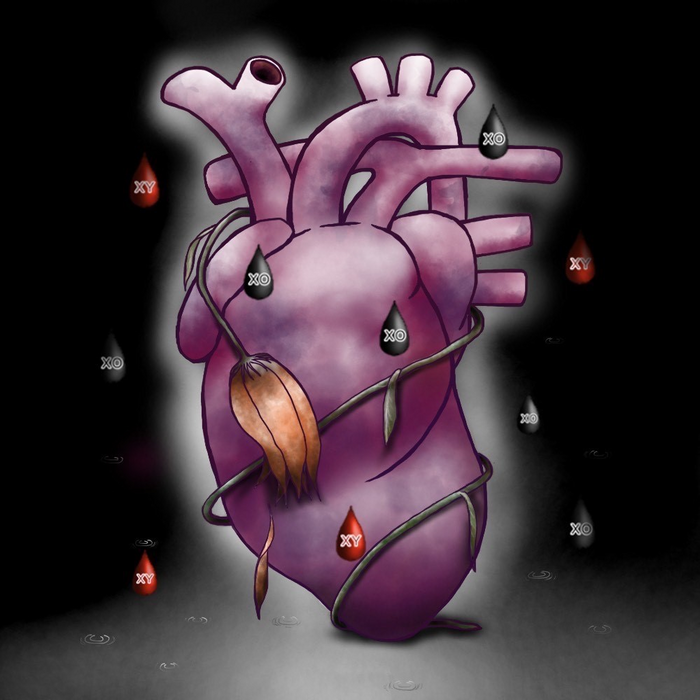
Humans have X and Y sex chromosomes, with the XY combination being male and XX being female. However, as men age, they lose their Y chromosome, primarily in blood cells. This is called mosaic loss of Y chromosome in blood (mLOY). Hematopoietic mLOY is known to increase with age and tobacco use; it is detectable in 40% of 70-year-old men and 57% of 93-year-old men, depending on the method of measurement. Men with mLOY are found to live shorter lives than men without mLOY, and they are thought to be more prone to Alzheimer’s disease, solid tumors such as prostate and colon cancer, and heart attacks, as well as strokes.
Credit: Soichi Sano, OMU
Humans have X and Y sex chromosomes, with the XY combination being male and XX being female. However, as men age, they lose their Y chromosome, primarily in blood cells. This is called mosaic loss of Y chromosome in blood (mLOY). Hematopoietic mLOY is known to increase with age and tobacco use; it is detectable in 40% of 70-year-old men and 57% of 93-year-old men, depending on the method of measurement. Men with mLOY are found to live shorter lives than men without mLOY, and they are thought to be more prone to Alzheimer’s disease, solid tumors such as prostate and colon cancer, and heart attacks, as well as strokes.
A research group led by Dr. Soichi Sano, a specially appointed lecturer in the Department of Cardiovascular Medicine, Graduate School of Medicine, Osaka Metropolitan University, analyzed data from UK Biobank participants to determine the statistical relationship between mLOY and heart failure. The results showed that a 1% increase in the rate of mLOY resulted in a 1.0054-fold increase in mortality from cardiovascular disease. Furthermore, for mLOY>40% (meaning that the percentage of cells without the Y chromosome is greater than 40%), the mortality rate due to cardiovascular disease is 1.31 times higher, and within this category, the hypertensive heart disease rate is 3.48 times higher, the heart failure rate is 1.76 times higher (the congestive heart failure rate is 2.42 times higher), and the aortic aneurysm and dissection rate is 2.76 times higher.
However, since this analysis cannot determine whether mLOY is a direct cause of cardiovascular disease, the research team conducted experiments in mice to verify any causal relationship between the two. Results of an experiment during which mice developed heart failure showed that mice in which only blood cells had lost the Y chromosome (mLOY mice) experienced worse heart failure than mice transplanted with hematopoietic stem cells from which the Y chromosome was not removed (control mice). This result proves the causal relationship between mLOY and heart failure.
Subsequently, the team hypothesized that the excessive activation of fibroblasts observed in the mLOY mouse model of heart failure was due to some blood cells that did not have the Y chromosome acting on fibroblasts, so they then investigated the differences in the function of blood cells with and without the Y chromosome. In heart failure, leukocytes collect in the damaged heart, which leads to inflammation and fibrosis. Hence, the researchers removed hearts from each of the mLOY and control mice that had heart failure, separated the cells using an enzyme, and collected the leukocytes accumulated in the hearts. Then, they analyzed the differences in properties of leukocytes with and without the Y chromosome.
The experiment results showed that among cardiac macrophages, a type of immune cell classified as white blood cells, those without the Y chromosome produced more substances that acted on and activated fibroblasts than did normal macrophages. These results suggest that cardiac macrophages without the Y chromosome promote fibrosis.
The team also investigated how fibroblast activation by mLOY macrophages affects the pathogenesis of heart failure. The results revealed a mechanism by which mLOY macrophages are involved in the overproduction of TGFβ1, a key effector molecule in the fibrosis process, and activate fibroblasts. This finding suggests that mLOY has a significant effect on the exacerbation of heart failure.
“Tissue fibrosis is associated significantly with severe heart failure, pulmonary fibrosis, and renal failure, which are major causes of death in the elderly,” concluded Dr. Sano. “In this study, we found that mLOY promotes fibrosis in not only the heart but also other organs, including the lungs and kidneys. Currently, clinical trials using antifibrotic agents are being conducted to treat fibrosis-related diseases such as heart failure, idiopathic interstitial pneumonia, and cancer. Understanding the mLOY status of patients could allow the detection of high-risk groups for certain diseases, contributing to better treatment decisions in the future.”
Regarding future research, Dr. Sano elaborated, “There are only a limited number of genes present on the Y chromosome, most of which are expressed only in germ cells, and only a few of which are expressed in blood cells. Our future studies aim to clarify which genes deleted by mLOY are associated with worsening heart failure and fibrosis.”
###
About OMU
Osaka Metropolitan University is a new public university established by a merger between Osaka City University and Osaka Prefecture University in April 2022. For more science news, see https://www.upc-osaka.ac.jp/new-univ/en-research/, and follow @OsakaMetUniv_en, or search #OMUScience.
Journal
Science
DOI
10.1126/science.abn3100
Method of Research
Experimental study
Subject of Research
Animals
Article Title
Hematopoietic Loss of Y Chromosome Leads to Cardiac Fibrosis and Heart Failure Mortality
Article Publication Date
14-Jul-2022