Although treatments for depression exist, sometimes these treatments don’t work for many who use them. Furthermore, women experience higher rates of depression than men, yet the cause for this difference is unknown, making their illnesses, at times, more complicated to treat.
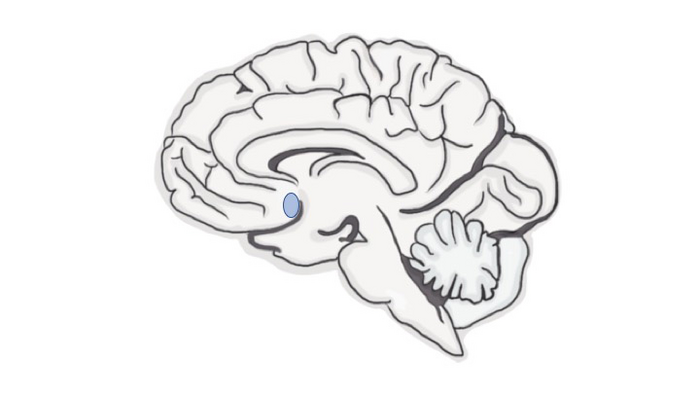
Credit: UC Davis
Although treatments for depression exist, sometimes these treatments don’t work for many who use them. Furthermore, women experience higher rates of depression than men, yet the cause for this difference is unknown, making their illnesses, at times, more complicated to treat.
University of California, Davis, researchers teamed up with scientists from Mt. Sinai Hospital, Princeton University, and Laval University, Quebec, to try to understand how a specific part of the brain, the nucleus accumbens, is affected during depression. The nucleus accumbens is important for motivation, response to rewarding experiences and social interactions — all of which are affected by depression.
Previous analyses within the nucleus accumbens showed that different genes were turned on or off in women, but not in men diagnosed with depression. These changes could have caused symptoms of depression, or alternatively, the experience of being depressed could have changed the brain. To differentiate between these possibilities, the researchers studied mice that had experienced negative social interactions, which induce stronger depression-related behavior in females than males.
“These high-throughput analyses are very informative for understanding long-lasting effects of stress on the brain. In our rodent model, negative social interactions changed gene expression patterns in female mice that mirrored patterns observed in women with depression,” said Alexia Williams, a doctoral researcher and recent UC Davis graduate who designed and led these studies. “This is exciting because women are understudied in this field, and this finding allowed me to focus my attention on the relevance of these data for women’s health.”
The study “Comparative transcriptional analyses in the nucleus accumbens identifies RGS2 as a key mediator of depression-related behavior,” was published this month in the journal Biological Psychiatry.
After identifying similar molecular changes in the brains of mice and humans, researchers chose one gene, regulator of g protein signaling-2, or Rgs2, to manipulate. This gene controls the expression of a protein that regulates neurotransmitter receptors that are targeted by antidepressant medications such as Prozac and Zoloft. “In humans, less stable versions of the Rgs2 protein are associated with increased risk of depression, so we were curious to see whether increasing Rgs2 in the nucleus accumbens could reduce depression-related behaviors,” said Brian Trainor, UC Davis professor of psychology and senior author on the study. He is also an affiliated faculty member with the Center for Neuroscience and directs the Behavioral Neuroendocrinology Lab at UC Davis.
When the researchers experimentally increased Rgs2 protein in the nucleus accumbens of the mice, they effectively reversed the effects of stress on these female mice, noting that social approach and preferences for preferred foods increased to levels observed in females that did not experience any stress.
“These results highlight a molecular mechanism contributing to the lack of motivation often observed in depressed patients. Reduced function of proteins like Rgs2 may contribute to symptoms that are difficult to treat in those struggling with mental illnesses,” Williams said.
Findings from basic science studies such as this one may guide the development of pharmacotherapies to effectively treat individuals suffering from depression, the researchers said.
“Our hope is that by doing studies such as these, which focus on elucidating mechanisms of specific symptoms of complex mental illnesses, we will bring science one step closer to developing new treatments for those in need,” said Williams.
In addition to Trainor and Williams, co-authors include, from Princeton University, Catherine Peña; from Icahn School of Medicine at Mount Sinai, Randal Serafini, Anne Ruiz, Venetia Zachariou and Eric Nestler; from Laval University, Benoit Labonte; from Massachusetts General Hospital, Rachel Neve; and Stephanie Ramos-Maciel, Abigail Laman-Maharg, Evelyn Ordoñez-Sanchez, Monica Britton, Blyther Durbin-Johnson, Matt Settles, Rebecca Hao, Sae Yokoyama, Christine Xu, Pei Luo, Tjien Dwyer, Shanu Bhela and Alexis Black, all UC Davis researchers.
Journal
Biological Psychiatry
DOI
10.1016/j.biopsych.2022.06.030
Method of Research
Randomized controlled/clinical trial
Subject of Research
Animals
Article Title
Comparative transcriptional analyses in the nucleus accumbens identifies RGS2 as a key mediator of depression-related behavior
Article Publication Date
5-Jul-2022