Being able to recognize our own voice is a critical factor for our sense of control over our speech, according to a study by researchers at the University of Tokyo. If people think they hear someone else’s voice when they speak, they do not strongly feel that they caused the sound. This could be a clue to understanding the experience of people who live with auditory hallucinations and could help to improve online communication and virtual reality experiences.
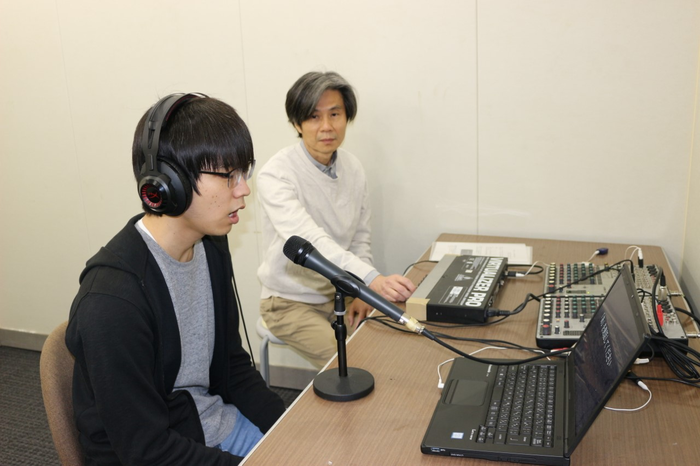
Credit: 2022 Hiroshi Imamizu, The University of Tokyo.
Being able to recognize our own voice is a critical factor for our sense of control over our speech, according to a study by researchers at the University of Tokyo. If people think they hear someone else’s voice when they speak, they do not strongly feel that they caused the sound. This could be a clue to understanding the experience of people who live with auditory hallucinations and could help to improve online communication and virtual reality experiences.
Have you ever heard a playback of your voice and been surprised by how you sounded? Part of our self-image is based on how we think we sound when we speak. This contributes to our sense of agency, or sense of control, over our actions, i.e., “I saw a result, therefore I felt that I did the action; my voice was heard, therefore I felt that I spoke.”
A dysfunctional sense of agency over speech may be a cause of auditory hallucinations. This is a common symptom of schizophrenia, a mental illness characterized by distortions of reality which affects how a person thinks, feels and acts. People with auditory hallucinations may hear voices when they are alone or not speaking, and may find it difficult to identify their own voice when they do. Although some experiments have looked into people’s sense of agency over their movements, until now sense of agency over speech has not been extensively studied.
Then-Project Researcher Ryu Ohata and Professor Hiroshi Imamizu, from the Graduate School of Humanities and Sociology at the University of Tokyo, and their team, recruited healthy volunteers in Japan to help them investigate this through two linked psychological experiments. The volunteers spoke simple sounds and then reacted to hearing a playback of their voices under different conditions — normal, with a raised pitch, with a lowered pitch, and after various time delays.
“This research investigated the significance of self-voice in the sense of agency, which previous studies have never sought out,” said Ohata. “Our results demonstrate that hearing one’s own voice is a critical factor to increased self-agency over speech. In other words, we do not strongly feel that ‘I’ am generating the speech if we hear someone else’s voice as an outcome of the speech. Our study provides empirical evidence of the tight link between the sense of agency and self-voice identity.”
In previous studies, the longer the delay in the outcome of a person’s action — such as pushing a button and seeing a result — the less likely the person felt they had caused the action. However, in this study, the team found that the volunteers’ sense of agency remained strong when they heard their normal voice played back, regardless of the time delay. The strength of the connection started to vary when the pitch of the voice was changed.
Understanding this close connection between recognizing our own voice and feeling a sense of agency may help to better understand and support people with auditory hallucinations who experience a disconnect in this link. It could also help to improve our experiences online, where the voice we hear when speaking might be different to usual.
“Recently, social interaction in the virtual environment is becoming more popular, especially after the COVID-19 pandemic broke out” said Ohata. “If users embody avatars with a totally different appearance, it might be possible that these users cannot experience strong self-agency over speech if they hear a voice that doesn’t match their image of the character. This could result in a less comfortable experience for them and less effective communication online with others.”
The team’s next step will be to look at how different social situations change people’s sense of agency. According to Ohata, “One idea is to measure the strength of people’s sense of agency when they tell a lie. We expect that people might feel less agency in telling a lie than a truth, because they want to avoid the responsibility of this action.”
Perhaps this will help us to understand why people voice misinformation, and how we might better identify and respond to it.
Journal
Psychological Science
DOI
10.1177/09567976211068880
Method of Research
Experimental study
Subject of Research
People
Article Title
I Hear My Voice; Therefore I Spoke: The Sense of Agency Over Speech Is Enhanced by Hearing One’s Own Voice
Article Publication Date
5-Jul-2022