Tokyo, Japan – Despite significant and stunning advances in vaccine technology, the COVID-19 global pandemic is not over. A key challenge in limiting the spread of severe acute respiratory syndrome coronavirus 2 (SARS-CoV-2) is identifying infected individuals. Now, investigators from Japan have developed a new antibody-based method for the rapid and reliable detection of SARS-CoV-2 that does not require a blood sample.
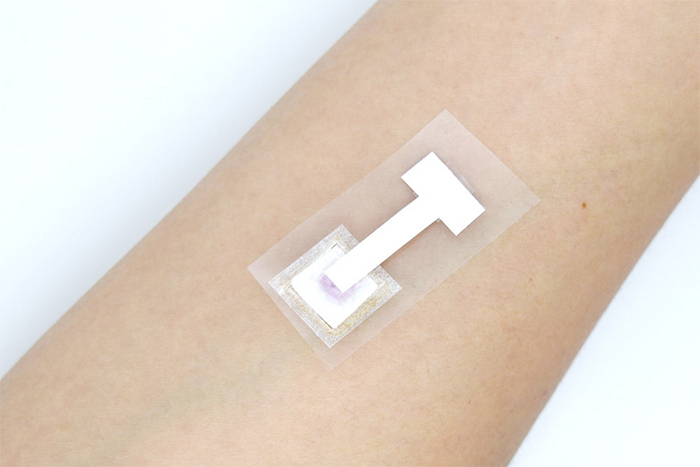
Credit: Institute of Industrial Science, The University of Tokyo
Tokyo, Japan – Despite significant and stunning advances in vaccine technology, the COVID-19 global pandemic is not over. A key challenge in limiting the spread of severe acute respiratory syndrome coronavirus 2 (SARS-CoV-2) is identifying infected individuals. Now, investigators from Japan have developed a new antibody-based method for the rapid and reliable detection of SARS-CoV-2 that does not require a blood sample.
The ineffective identification of SARS-CoV-2-infected individuals has severely limited the global response to the COVID-19 pandemic, and the high rate of asymptomatic infections (16%–38%) has exacerbated this situation. The predominant detection method to date collects samples by swabbing the nose and throat. However, the application of this method is limited by its long detection time (4–6 hours), high cost, and requirement for specialized equipment and medical personnel, particularly in resource-limited countries.
An alternative and complementary method for the confirmation of COVID-19 infection involves the detection of SARS-CoV-2-specific antibodies. Testing strips based on gold nanoparticles are currently in widespread use for point-of-care testing in many countries. They produce sensitive and reliable results within 10–20 minutes, but they require blood samples collected via a finger prick using a lancing device. This is painful and increases the risk of infection or cross-contamination, and the used kit components present a potential biohazard risk.
Lead author Leilei Bao from the Institute of Industrial Science, The University of Tokyo, explains: “To develop a minimally invasive detection assay that would avoid these drawbacks, we explored the idea of sampling and testing the interstitial fluid (ISF), which is located in the epidermis and dermis layers of human skin. Although the antibody levels in the ISF are approximately15%–25% of those in blood, it was still feasible that anti-SARS-CoV-2 IgM/IgG antibodies could be detected and that ISF could act as a direct substitute for blood sampling.”
After demonstrating that ISF could be suitable for antibody detection, the researchers developed an innovative approach to both sample and test the ISF. “First, we developed biodegradable porous microneedles made of polylactic acid that draws up the ISF from human skin,” explains Beomjoon Kim, senior author. “Then, we constructed a paper-based immunoassay biosensor for the detection of SARS-CoV-2-specific antibodies.” By integrating these two elements, the researchers created a compact patch capable of on-site detection of the antibodies within 3 minutes (result from in vitro tests).
This novel detection device has great potential for the rapid screening of COVID-19 and many other infectious diseases that is safe and acceptable to patients. It holds promise for use in many countries regardless of their wealth, which is a key aim for the global management of infectious disease.
###
The article, “Anti SARS CoV 2 IgM/IgG antibodies detection using a patch sensor containing porous microneedles and a paper based immunoassay,” was published in Scientific Reports at DOI: https://doi.org/10.1038/s41598-022-14725-6
About Institute of Industrial Science, The University of Tokyo
The Institute of Industrial Science, The University of Tokyo (UTokyo-IIS) is one of the largest university-attached research institutes in Japan. Over 120 research laboratories, each headed by a faculty member, comprise UTokyo-IIS, which has more than 1,200 members (approximately 400 staff and 800 students) actively engaged in education and research. Its activities cover almost all areas of engineering. Since its foundation in 1949, UTokyo-IIS has worked to bridge the huge gaps that exist between academic disciplines and real-world applications.
Journal
Scientific Reports
DOI
10.1038/s41598-022-14725-6
Article Title
Anti SARS CoV 2 IgM/IgG antibodies detection using a patch sensor containing porous microneedles and a paper based immunoassay
Article Publication Date
1-Jul-2022