• HOME
  • NEWS
  • EXPLORE
    • CAREER
      • Companies
      • Jobs
    • EVENTS
    • iGEM
      • News
      • Team
    • PHOTOS
    • VIDEO
    • WIKI
  • BLOG
  • COMMUNITY
    • FACEBOOK
    • INSTAGRAM
    • TWITTER
Saturday, February 7, 2026
BIOENGINEER.ORG
No Result
View All Result
  • Login
  • HOME
  • NEWS
  • EXPLORE
    • CAREER
      • Companies
      • Jobs
        • Lecturer
        • PhD Studentship
        • Postdoc
        • Research Assistant
    • EVENTS
    • iGEM
      • News
      • Team
    • PHOTOS
    • VIDEO
    • WIKI
  • BLOG
  • COMMUNITY
    • FACEBOOK
    • INSTAGRAM
    • TWITTER
  • HOME
  • NEWS
  • EXPLORE
    • CAREER
      • Companies
      • Jobs
        • Lecturer
        • PhD Studentship
        • Postdoc
        • Research Assistant
    • EVENTS
    • iGEM
      • News
      • Team
    • PHOTOS
    • VIDEO
    • WIKI
  • BLOG
  • COMMUNITY
    • FACEBOOK
    • INSTAGRAM
    • TWITTER
No Result
View All Result
Bioengineer.org
No Result
View All Result
Home NEWS Science News Health

Bacteria’s shapeshifting behaviour clue to new treatments for urinary tract infections

Bioengineer by Bioengineer
June 28, 2022
in Health
Reading Time: 3 mins read
0
UPEC filaments after UTI
Share on FacebookShare on TwitterShare on LinkedinShare on RedditShare on Telegram

Urinary tract infections are both very common and potentially very dangerous. More than half of all Australian women will suffer from a UTI in their lifetime, and nearly one in three women will have an infection requiring treatment with antibiotics before the age of 24.
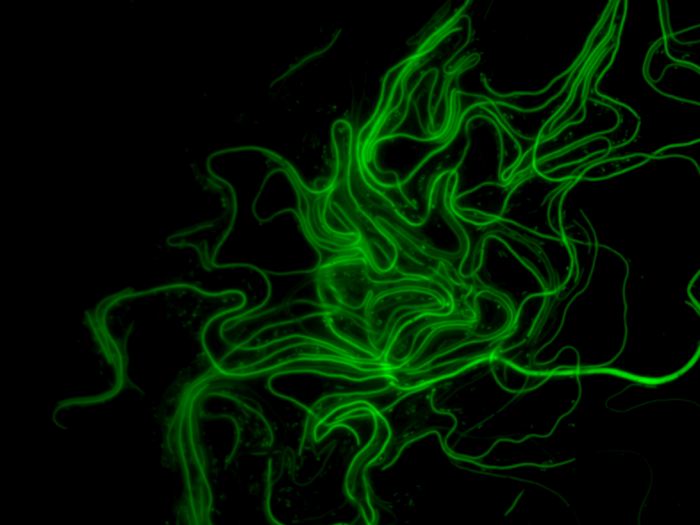
UPEC filaments after UTI

Credit: Australian Institute for Microbiology and Infection, University of Technology Sydney

Urinary tract infections are both very common and potentially very dangerous. More than half of all Australian women will suffer from a UTI in their lifetime, and nearly one in three women will have an infection requiring treatment with antibiotics before the age of 24.

Around 80 per cent of UTIs are caused by uropathogenic E. coli (UPEC), which is increasingly resistant to antibiotics. E. coli-related death due to antimicrobial resistance is the leading cause of bacterial fatalities worldwide.

In a bid to aid discovery of new treatment options, researchers at the University of Technology Sydney (UTS) are using state-of-the-art microscopy to pinpoint how these bacteria spread and multiply.

Dr Bill Söderström and Associate Professor Iain Duggin, of the Australian Institute for Microbiology and Infection at UTS, said their latest research examined the shapeshifting behaviour of UPEC. During a UTI infection cycle, the bacteria form spaghetti-like filaments hundreds of times their normal lengths before reverting to their original form.

The study, which is published in Nature Communications, used a human bladder cell infection model to generate the filaments, and look at their reversal back to rod shape.

“While we don’t fully understand why they do this extreme lifestyle make-over, we know they must revert to their original size before they can reinfect new bladder cells,” Dr Söderström said.

“We used advanced microscopy to follow two key cell division proteins and their localisation dynamics during reversal. We found that the normal rules for regulation of cell division in bacteria does not fully apply in filaments,” Dr Söderström said.

“By giving the first clues into how the reversal of filamentation is regulated during infection, we may be laying the foundation for identifying new ways to combat UTIs.” 

Associate Professor Duggin said the long filaments formed by the bacteria appeared to break open the infected human cells, through a previously unknown mechanism called infection-related filamentation (IRF).

“The devastating eruption of these bacteria from the cells of the bladder that they invade probably contributes to the extensive damage and pain experienced during a UTI,” Associate Professor Duggin said.

“Our goal is to identify why and how the bacteria do this remarkable feat in the hope of enabling alternative treatments or preventions.”


Journal

Nature Communications

DOI

10.1038/s41467-022-31378-1

Method of Research

Experimental study

Subject of Research

Cells

Article Title

Assembly dynamics of FtsZ and DamX during infection-related filamentation and division in uropathogenic E. coli

Article Publication Date

25-Jun-2022

COI Statement

The authors declare no competing interests.
Share12Tweet8Share2ShareShareShare2

Related Posts

TPMT Expression Predictions Linked to Azathioprine Side Effects

February 7, 2026

Improving Dementia Care with Enhanced Activity Kits

February 7, 2026

Decoding Prostate Cancer Origins via snFLARE-seq, mxFRIZNGRND

February 7, 2026

Digital Health Perspectives from Baltic Sea Experts

February 7, 2026

POPULAR NEWS

  • Robotic Ureteral Reconstruction: A Novel Approach

    Robotic Ureteral Reconstruction: A Novel Approach

    82 shares
    Share 33 Tweet 21
  • Digital Privacy: Health Data Control in Incarceration

    63 shares
    Share 25 Tweet 16
  • Study Reveals Lipid Accumulation in ME/CFS Cells

    57 shares
    Share 23 Tweet 14
  • Breakthrough in RNA Research Accelerates Medical Innovations Timeline

    53 shares
    Share 21 Tweet 13

About

We bring you the latest biotechnology news from best research centers and universities around the world. Check our website.

Follow us

Recent News

TPMT Expression Predictions Linked to Azathioprine Side Effects

Improving Dementia Care with Enhanced Activity Kits

Decoding Prostate Cancer Origins via snFLARE-seq, mxFRIZNGRND

Subscribe to Blog via Email

Enter your email address to subscribe to this blog and receive notifications of new posts by email.

Join 73 other subscribers
  • Contact Us

Bioengineer.org © Copyright 2023 All Rights Reserved.

Welcome Back!

Login to your account below

Forgotten Password?

Retrieve your password

Please enter your username or email address to reset your password.

Log In
No Result
View All Result
  • Homepages
    • Home Page 1
    • Home Page 2
  • News
  • National
  • Business
  • Health
  • Lifestyle
  • Science

Bioengineer.org © Copyright 2023 All Rights Reserved.