Maya Rajasekharan, Senior Advisor, Strategic Program Development at the Alliance of Bioversity International and the International Center for Tropical Agriculture (CIAT), says that food is the single greatest determinant of human health and disease over the course of one’s life, and yet a comprehensive understanding of the composition of what we eat remains unknown. What’s more, unlocking biochemical profiles and bioactive compounds in food opens up new opportunities for human health, sustainable agriculture and better nutrition.
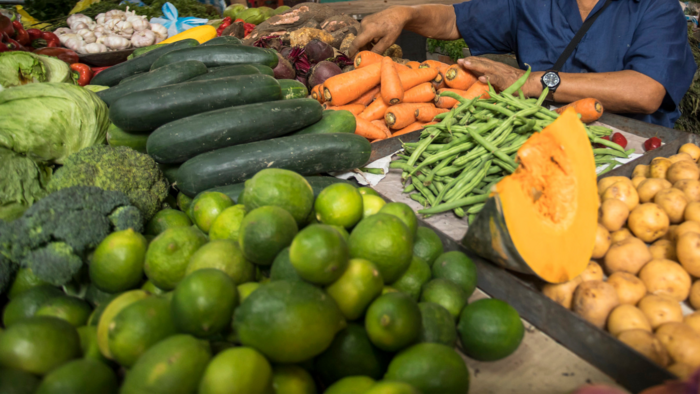
Credit: Alliance of Bioversity and CIAT / Juan Pablo Marin García
Maya Rajasekharan, Senior Advisor, Strategic Program Development at the Alliance of Bioversity International and the International Center for Tropical Agriculture (CIAT), says that food is the single greatest determinant of human health and disease over the course of one’s life, and yet a comprehensive understanding of the composition of what we eat remains unknown. What’s more, unlocking biochemical profiles and bioactive compounds in food opens up new opportunities for human health, sustainable agriculture and better nutrition.
There are over 26,000 distinct, definable biochemicals in food, but food composition databases and research are focused only on about 150 of those, so there’s still a lot of “nutritional dark matter” that composes the food we eat every day.
In the paper, Foodomics: A Data-Driven Approach to Revolutionize Nutrition and Sustainable Diets, published in May 2022, researchers outline the potential of “Foodomics,” the application of omics-technology to characterize and quantify biomolecules to improve wellbeing.
Foodomics is the discipline of studying food and nutrition through the application of advanced omics technologies like genomics, transcriptomics, proteomics, and metabolomics.
They also outline the underpinnings and first fruits of the Periodic Table of Food Initiative, which aims to develop and use low-cost mass spectrometry kits, cloud-based analytical tools, and a public, quantitative and qualitative analysis database of the most important foods around the world.
“Today, targeted analysis of a complete set of nutrients in a food is an expensive undertaking, with costs as high as US$ 50,000 for regulatory assays,” Rajasekharan said, “New analytical technologies can drive down the cost of analysis, the same way as the cost of genomic analysis dropped with advanced technologies.”
Lower cost foodomics tools will open up new opportunities including democratization of technologies for wider use around the world.
“Creating the next generation of a global comprehensive food composition database will open up new research fields linking agriculture, nutrition and health,” Rajasekharan said.
Collaboration with the American Heart Association
Dr Selena Ahmed, Global Director of the Periodic Table of Food Initiative for the American Heart Association, and the lead author of the paper, said that the paper itself offers a vision for the role of foodomics as a data-driven approach to offer solutions to food system challenges.
Ahmed says the American Heart Association is collaborating with the Alliance to lead the management of the PTFI, which aims to comprehensively evaluate what is in food using robust and standardized analytical methods.
“The AHA brings its expertise in human health with a focus on preventative lifestyle solutions informed by rigorous science and AHA’s expertise complements that of the Alliance of Bioversity and CIAT as a leader in agricultural research.” she says, adding that the AHA and Alliance partnership represents an innovative collaboration that breaks down traditional silos– the kind needed to develop transformative solutions to our broken food systems.
“While the past 100 years of agricultural history have focused on yields and calories, foodomics is enabling a focus on crop quality and food quality based on food composition,”
Ahmed says, “Access to this food quality is essential for supporting nutrition security, particularly in the most vulnerable communities globally that face food insecurity and health disparities.”
- Learn more by reading the paper
- Or visit the Periodic Table of Food Initiative website
Journal
Frontiers in Nutrition
DOI
10.3389/fnut.2022.874312
Method of Research
Content analysis
Article Title
Foodomics: A Data-Driven Approach to Revolutionize Nutrition and Sustainable Diets
Article Publication Date
3-May-2022