BATON ROUGE, Louisiana – Pennington Biomedical Research Center faculty members Steven B. Heymsfield, M.D., and Justin C. Brown, Ph.D., are members of a team led by the Rutgers Cancer Institute of New Jersey, Weill Cornell Medicine and Cold Spring Harbor Laboratory that have secured $25 million to take on the challenge of cachexia, the debilitating wasting condition responsible for up to 30 percent of cancer deaths.
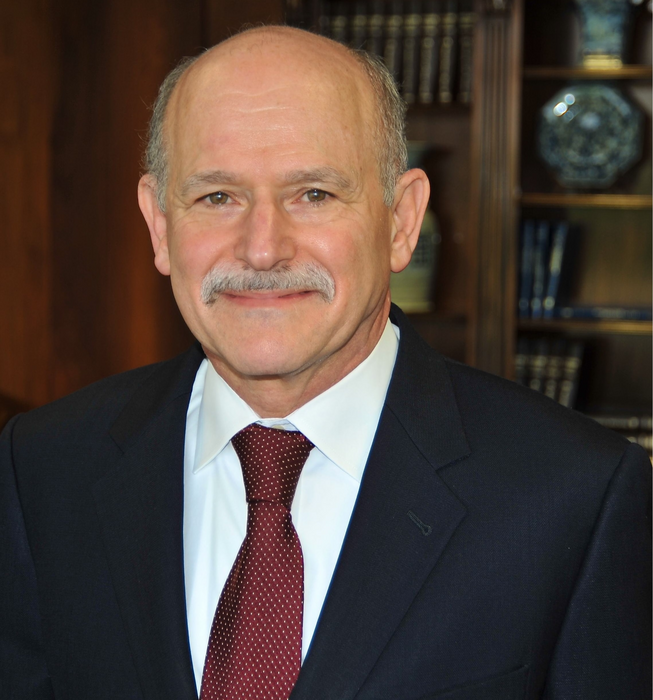
Credit: Pennington Biomedical Research Center
BATON ROUGE, Louisiana – Pennington Biomedical Research Center faculty members Steven B. Heymsfield, M.D., and Justin C. Brown, Ph.D., are members of a team led by the Rutgers Cancer Institute of New Jersey, Weill Cornell Medicine and Cold Spring Harbor Laboratory that have secured $25 million to take on the challenge of cachexia, the debilitating wasting condition responsible for up to 30 percent of cancer deaths.
The funding comes from Cancer Grand Challenges, a global funding platform supported by Cancer Research UK and the US National Cancer Institute. Cancer Grand Challenges has brought together a community of diverse, global teams to think differently and take on some of cancer’s toughest challenges
“Cachexia, the inexorable loss in body weight and muscle mass seen in many cancers, contributes to adverse outcomes. However, its underlying mechanisms are poorly understood. Discovering causative mechanisms of cachexia may lead to treatments and preventions that improve the course of some common forms of cancer,” said Dr. Heymsfield, the Pennington Lead Investigator on the team, and Professor and Director of Pennington Biomedical’s Body Composition & Metabolism Laboratory. “Scientists are driven to discover the root causes of disease and being part of this team and the Cancer Grand Challenge project fulfills that dream.”
“Cancer Grand Challenges provides a unique opportunity to tackle complex issues like cachexia that would have been impossible before now. It’s a very exciting time to be in cancer research, and we’re excited to be part of this international team of researchers,” said Dr. Brown, Assistant Professor and Director of Pennington Biomedical’s Cancer Metabolism Program.
The Cancer Cachexia Action Network (CANCAN) team unites clinicians, advocates, and scientists with expertise in cancer, metabolism, neuroendocrine function, immunology and more, across 14 institutions in the US and the UK, aiming to build the world’s first virtual institute with a mission to solve cancer cachexia. The team is led by Rutgers Cancer Institute of New Jersey’s Eileen White, Weill Cornell Medicine’s Marcus DaSilva Goncalves and Cold Spring Harbor Laboratory’s Tobias Janowitz. Although cachexia is a major clinical problem, it is poorly understood and there are no effective therapies for people who experience it. The team plans to build a deep understanding of what causes cachexia and develop novel treatments to intervene – which could transform people’s quality of life and ultimately survival.
The CANCAN team is one of four new teams to receive Cancer Grand Challenges funding. The diverse, global teams will divide a total of $100 million to take on some of the toughest challenges in cancer research.
“Cancer is a global issue that needs to be met with global collaboration. This investment in team science encourages diverse thinking to problems like cachexia that have long hindered research progress,” said David Scott, Ph.D., Director of Cancer Grand Challenges, Cancer Research UK. “Cancer Grand Challenges provides the multidisciplinary teams the time, space, and funding to foster innovation and a transformative approach. CANCAN is one of 4 newly funded teams joining a scientific community addressing unmet clinical needs across cancer research.”
“Finding answers to the big questions in science requires the kind of innovative approach that Cancer Grand Challenges exemplifies. We are excited about the discoveries this cutting-edge research will produce, such as how inflammation affects appetite. The findings are expected to have important implications for treating cancer and the disease of obesity, which has been linked to more than a dozen deadly cancers,” said John Kirwan, Ph.D., Professor and Executive Director of Pennington Biomedical.
###
About Cancer Grand Challenges
Cancer Grand Challenges supports a global community of diverse, world-class research teams with awards of £20m/$25m to come together, think differently and take on cancer’s toughest challenges. These are the obstacles that continue to impede progress and no one scientist, institution or country will be able to solve them alone. Cancer Grand Challenges teams are empowered to rise above the traditional boundaries of geography and discipline.
Founded by the two largest funders of cancer research in the world – Cancer Research UK and the National Cancer Institute, part of the National Institutes of Health in the US – Cancer Grand Challenges aims to make the progress against cancer we urgently need. Cancer Grand Challenges currently supports more than 700 researchers and advocates across 10 countries, representing 11 teams that are supported to take on 10 of the toughest challenges in cancer research. Find out more at cancergrandchallenges.org/new-teams-2022
About the Pennington Biomedical Research Center
The Pennington Biomedical Research Center is at the forefront of medical discovery as it relates to understanding the triggers of obesity, diabetes, cardiovascular disease, cancer, and dementia. The Center conducts basic, clinical, and population research and architected the “Obecity, USA” awareness and advocacy campaign to help solve the obesity epidemic by 2040. The Center is affiliated with Louisiana State University. The research enterprise at Pennington Biomedical includes over 450 employees within a network of 40 clinics and research laboratories, and 13 highly specialized core service facilities. Its scientists and physician/scientists are supported by research trainees, lab technicians, nurses, dietitians, and other support personnel. Pennington Biomedical is located in state-of-the-art research facilities on a 222-acre campus in Baton Rouge, Louisiana. For more information, see http://www.pbrc.edu.