• HOME
  • NEWS
  • EXPLORE
    • CAREER
      • Companies
      • Jobs
    • EVENTS
    • iGEM
      • News
      • Team
    • PHOTOS
    • VIDEO
    • WIKI
  • BLOG
  • COMMUNITY
    • FACEBOOK
    • INSTAGRAM
    • TWITTER
Saturday, February 7, 2026
BIOENGINEER.ORG
No Result
View All Result
  • Login
  • HOME
  • NEWS
  • EXPLORE
    • CAREER
      • Companies
      • Jobs
        • Lecturer
        • PhD Studentship
        • Postdoc
        • Research Assistant
    • EVENTS
    • iGEM
      • News
      • Team
    • PHOTOS
    • VIDEO
    • WIKI
  • BLOG
  • COMMUNITY
    • FACEBOOK
    • INSTAGRAM
    • TWITTER
  • HOME
  • NEWS
  • EXPLORE
    • CAREER
      • Companies
      • Jobs
        • Lecturer
        • PhD Studentship
        • Postdoc
        • Research Assistant
    • EVENTS
    • iGEM
      • News
      • Team
    • PHOTOS
    • VIDEO
    • WIKI
  • BLOG
  • COMMUNITY
    • FACEBOOK
    • INSTAGRAM
    • TWITTER
No Result
View All Result
Bioengineer.org
No Result
View All Result
Home NEWS Science News Biology

Chronic pain in Gulf War veterans linked to brain structure changes

Bioengineer by Bioengineer
June 13, 2022
in Biology
Reading Time: 2 mins read
0
Chronic Pain in Gulf War Veterans Linked to Brain Structure Changes
Share on FacebookShare on TwitterShare on LinkedinShare on RedditShare on Telegram

The brains of Gulf War Veterans with chronic pain possess larger pain processing regions and smaller pain regulation regions compared to their healthy peers, according to new research published in JNeurosci.
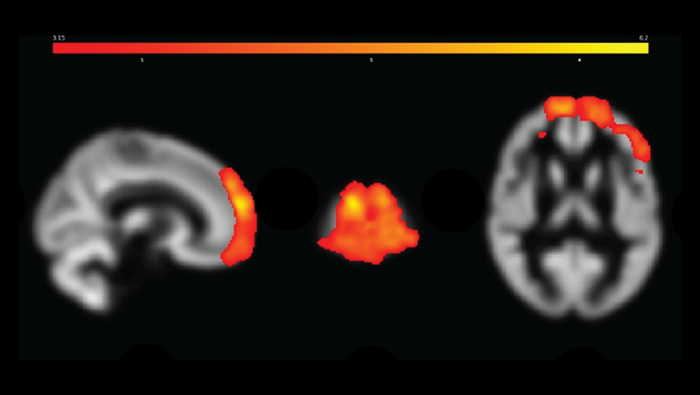
Chronic Pain in Gulf War Veterans Linked to Brain Structure Changes

Credit: Ninneman et al., JNeurosci 2022

The brains of Gulf War Veterans with chronic pain possess larger pain processing regions and smaller pain regulation regions compared to their healthy peers, according to new research published in JNeurosci.

Over one third of Gulf War Veterans experience widespread, chronic pain linked to a condition called Gulf War Illness. The underlying cause of the pain is poorly understood, preventing the development of effective treatments. Ninneman et al. analyzed the brains of Gulf War Veterans with and without pain using MRI. The participants also completed questionaries about their pain symptoms, fatigue, and mood.

Those with chronic pain displayed smaller left and right insular cortices, two brain areas involved in regulating pain. They also had larger areas of the frontal cortex, specifically in regions involved in pain sensitivity and emotional regulation. The structural changes were more pronounced in people with worse pain, but there was no relationship with fatigue or mood. These results indicate the chronic pain from Gulf War Illness may stem from changes in how the central nervous system processes pain, rather than with issues with nerves or pain receptors.

###

Paper title: Pain, but not Physical Activity, is Associated with Gray Matter Volume Differences in Gulf War Veterans with Chronic Pain

Please contact [email protected] for the full-text PDF and to join SfN’s journals media list.

About JNeurosci

JNeurosci, the Society for Neuroscience’s first journal, was launched in 1981 as a means to communicate the findings of the highest quality neuroscience research to the growing field. Today, the journal remains committed to publishing cutting-edge neuroscience that will have an immediate and lasting scientific impact, while responding to authors’ changing publishing needs, representing breadth of the field and diversity in authorship.

About The Society for Neuroscience

The Society for Neuroscience is the world’s largest organization of scientists and physicians devoted to understanding the brain and nervous system. The nonprofit organization, founded in 1969, now has nearly 37,000 members in more than 90 countries and over 130 chapters worldwide.


Journal

JNeurosci

DOI

10.1523/JNEUROSCI.2394-21.2022

Method of Research

Observational study

Subject of Research

People

Article Title

Pain, but not Physical Activity, is Associated with Gray Matter Volume Differences in Gulf War Veterans with Chronic Pain

Article Publication Date

13-Jun-2022

COI Statement

The authors have no conflict of interest to declare. This work is supported by the Department of Veterans Affairs (Grant #561-00436, IO1 CX000383, IO1 CX001329 and IK2 CX001679). The contents do not represent the views of the U.S. Department of Veteran Affairs or the United States Government.


Share12Tweet8Share2ShareShareShare2

Related Posts

Florida Cane Toad: Complex Spread and Selective Evolution

Florida Cane Toad: Complex Spread and Selective Evolution

February 7, 2026
New Study Uncovers Mechanism Behind Burn Pit Particulate Matter–Induced Lung Inflammation

New Study Uncovers Mechanism Behind Burn Pit Particulate Matter–Induced Lung Inflammation

February 6, 2026

DeepBlastoid: Advancing Automated and Efficient Evaluation of Human Blastoids with Deep Learning

February 6, 2026

Navigating the Gut: The Role of Formic Acid in the Microbiome

February 6, 2026

POPULAR NEWS

  • Robotic Ureteral Reconstruction: A Novel Approach

    Robotic Ureteral Reconstruction: A Novel Approach

    82 shares
    Share 33 Tweet 21
  • Digital Privacy: Health Data Control in Incarceration

    63 shares
    Share 25 Tweet 16
  • Study Reveals Lipid Accumulation in ME/CFS Cells

    57 shares
    Share 23 Tweet 14
  • Breakthrough in RNA Research Accelerates Medical Innovations Timeline

    53 shares
    Share 21 Tweet 13

About

We bring you the latest biotechnology news from best research centers and universities around the world. Check our website.

Follow us

Recent News

Evaluating Pediatric Emergency Care Quality in Ethiopia

TPMT Expression Predictions Linked to Azathioprine Side Effects

Improving Dementia Care with Enhanced Activity Kits

Subscribe to Blog via Email

Success! An email was just sent to confirm your subscription. Please find the email now and click 'Confirm' to start subscribing.

Join 73 other subscribers
  • Contact Us

Bioengineer.org © Copyright 2023 All Rights Reserved.

Welcome Back!

Login to your account below

Forgotten Password?

Retrieve your password

Please enter your username or email address to reset your password.

Log In
No Result
View All Result
  • Homepages
    • Home Page 1
    • Home Page 2
  • News
  • National
  • Business
  • Health
  • Lifestyle
  • Science

Bioengineer.org © Copyright 2023 All Rights Reserved.