A comparison of four COVID-19 vaccinations shows that messenger RNA (mRNA) vaccines — Pfizer-BioNTech and Moderna — perform better against the World Health Organization’s variants of concern (VOCs) than viral vector vaccines — AstraZeneca and J&J/Janssen. Although they all effectively prevent severe disease by VOCs, the research, publishing May 17th in the open access journal PLOS Medicine, suggests that people receiving a viral vector vaccine are more vulnerable to infection by new variants.
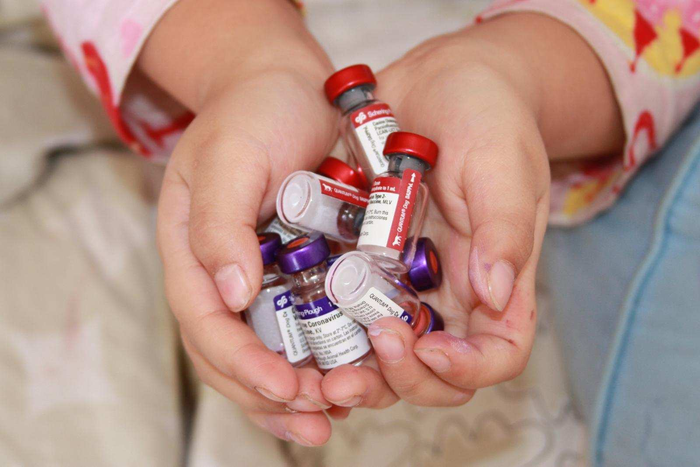
Credit: Carlos Reusser Monsalvez, Flickr (CC0, https://creativecommons.org/publicdomain/zero/1.0/)
A comparison of four COVID-19 vaccinations shows that messenger RNA (mRNA) vaccines — Pfizer-BioNTech and Moderna — perform better against the World Health Organization’s variants of concern (VOCs) than viral vector vaccines — AstraZeneca and J&J/Janssen. Although they all effectively prevent severe disease by VOCs, the research, publishing May 17th in the open access journal PLOS Medicine, suggests that people receiving a viral vector vaccine are more vulnerable to infection by new variants.
By March 2022, COVID-19 had caused over 450 million confirmed infections and six million reported deaths. The first vaccines approved in the US and Europe that protect against serious infection are Pfizer-BioNTech and Moderna, which deliver genetic code, known as mRNA, to the bodies’ cells, whereas Oxford/AstraZeneca and J&J/Janssen are viral vector vaccines that use a modified version of a different virus — a vector — to deliver instructions to our cells. Three vaccines are delivered as two separate injections a few weeks apart, and J&J/Janssen as a single dose.
Marit J. van Gils at the University of Amsterdam, Netherlands, and colleagues, took blood samples from 165 healthcare workers, three and four weeks after first and second vaccination respectively, and for J&J/Janssen at four to five and eight weeks after vaccination. Samples were collected before, and four weeks after a Pfizer-BioNTech booster.
Four weeks after the initial two doses, antibody responses to the original SARS-CoV-2 viral strain were highest in recipients of Moderna, followed closely by Pfizer-BioNTech, and were substantially lower in those who received viral vector vaccines. Tested against the VOCs – Alpha, Beta, Gamma, Delta and Omicron – neutralizing antibodies were higher in the mRNA vaccine recipients compared to those who had viral vector vaccines. The ability to neutralize VOCs was reduced in all vaccine groups, with the greatest reduction against Omicron. The Pfizer-BioNTech booster increased antibody responses in all groups with substantial improvement against VOCs, including Omicron.
The researchers caution that their AstraZeneca group was significantly older, because of safety concerns for the vaccine in younger age groups. As immune responses tend to weaken with age, this could affect the results. This group was also smaller because the Dutch government halted use for a period.
van Gils concludes, “Four COVID-19 vaccines induce substantially different antibody responses.”
#####
In your coverage, please use this URL to provide access to the freely available paper in PLOS Medicine:
http://journals.plos.org/plosmedicine/article?id=10.1371/journal.pmed.1003991
Citation: van Gils MJ, Lavell A, van der Straten K, Appelman B, Bontjer I, Poniman M, et al. (2022) Antibody responses against SARS-CoV-2 variants induced by four different SARS-CoV-2 vaccines in health care workers in the Netherlands: A prospective cohort study. PLoS Med 19(5): e1003991. https://doi.org/10.1371/journal.pmed.1003991
Author Countries: The Netherlands, United States
Funding: This work was supported by the Netherlands Organization for Scientific Research (NWO) ZonMw (Vici grant no. 91818627 to R.W.S., S3 study, grant agreement no. 10430022010023 to M.K.B.; RECoVERED, grant agreement no. 10150062010002 to M.D.d.J.), by the Bill & Melinda Gates Foundation (grant no. INV002022 and INV008818 to R.W.S. and INV-024617 to M.J.v.G.), by Amsterdam UMC through the AMC Fellowship (to M.J.v.G.) and the Corona Research Fund (to M.K.B.), and by the European Union’s Horizon 2020 program (RECoVER, grant no. 101003589 to M.D.d.J). The funders had no role in study design, data collection and analysis, decision to publish, or preparation of the manuscript.
Journal
PLoS Medicine
DOI
10.1371/journal.pmed.1003991
Method of Research
Observational study
Subject of Research
People
COI Statement
Competing interests: I have read the journal’s policy and the authors of this manuscript have the following competing interests: Amsterdam UMC filed a patent application on SARS-CoV-2 monoclonal antibodies including the ones used in this manuscript.