A team of international researchers has discovered a way to produce higher quality wheat. The scientists from the University of Adelaide and the UK’s John Innes Centre have identified a genetic driver that improves yield traits in wheat, which unexpectedly can also lead to increasing protein content by up to 25 per cent.
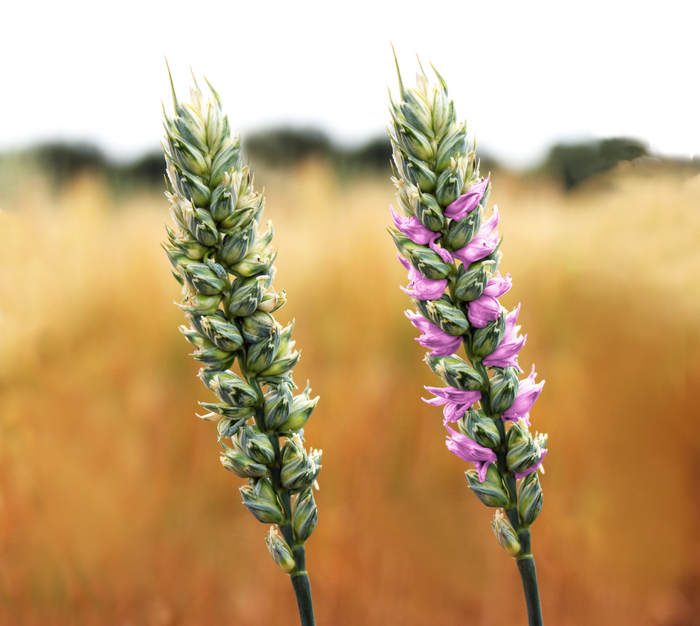
Credit: University of Adelaide
A team of international researchers has discovered a way to produce higher quality wheat. The scientists from the University of Adelaide and the UK’s John Innes Centre have identified a genetic driver that improves yield traits in wheat, which unexpectedly can also lead to increasing protein content by up to 25 per cent.
“Little is known about the mechanism behind drivers of yields and protein content in wheat production,” said the University of Adelaide’s Dr Scott Boden, School of Agriculture, Food and Wine who led the research.
“Discovering a gene that controls these two factors has the potential to help generate new wheat varieties that produce higher quality grain.
“As wheat accounts for nearly 20 per cent of protein consumed worldwide, the impact of this research can significantly benefit society by providing grains with a higher protein content, which could therefore help produce more nutritious food, such as bread and breakfast cereals.”
The work is the first known example where a forward-genetics screen of a mutant population has been used to identify a gene that controls reproductive development in wheat and insights from this research has the potential to help improve the nutritional and economic value of wheat.
“The genetic variation we identified provides a 15-25 per cent increase in protein content for plants grown in the field. These varieties also produce extra spikelets, known as paired spikelets,” said Dr Boden.
“We have not yet detected an increase in yield with the extra spikelets, but we hope a yield increase might come in elite varieties grown by farmers.
“The increase in protein content occurs without the trade-off of a reduced yield so this discovery has even better potential to provide economic benefit to breeders and growers than just the increased nutritional value by itself.
“Aside from the important outcome of this work for the future of wheat breeding, the research itself is of immense value to the scientific community as it provides an elegant example of new capabilities that are available to wheat research.”
The team expects that the new wheat varieties will be available to breeders in 2–3 years’ time, which could then translate to benefits for farmers in 7–10 years’ time.
The team’s findings were published in the journal Science Advances.
This project was funded by the Royal Society (UK), the Biological and Biotechnology Sciences Research Council (UK), the Australian Research Council (ARC), the South Australian Grain Industry Trust (SAGIT) and the University of Adelaide’s Waite Research Institute.
Journal
Science Advances
DOI
10.1126/sciadv.abn5907
Method of Research
Commentary/editorial
Subject of Research
Not applicable
Article Title
MicroRNA-resistant alleles of HOMEOBOX DOMAIN-2 modify inflorescence branching and increase grain protein content of wheat
Article Publication Date
11-May-2022