HAMILTON, May 4, 2022 — McMaster University researchers who study the dynamics of infectious disease transmission have investigated the population-level consequences of a potentially significant––and unobvious––benefit of wearing masks.
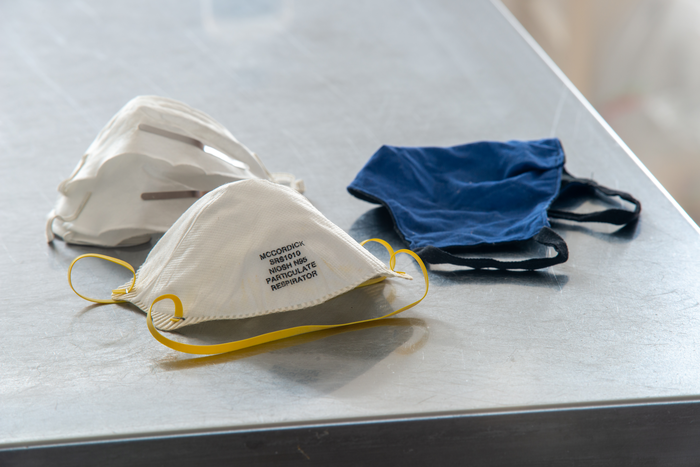
Credit: McMaster University, Hamilton, Ontario, Canada
HAMILTON, May 4, 2022 — McMaster University researchers who study the dynamics of infectious disease transmission have investigated the population-level consequences of a potentially significant––and unobvious––benefit of wearing masks.
For the study, the researchers developed a model to investigate COVID-19 “variolation”––an incidental but potentially beneficial form of immunization achieved by inhaling smaller doses of the virus than would be inhaled without a mask.
A form of variolation was deliberately used in the 18th century to control smallpox. It involved infecting a healthy individual with small doses of the live virus taken from a dried scab or pustule of a person infected with smallpox. Variolated individuals often experienced far less severe disease than those who were infected naturally, but nevertheless were immune to further infection.
Early in the COVID-19 pandemic, it was suggested that people who were infected while masked might experience mild illness and could be considered “variolated”.
The new mathematical model allows researchers to estimate the potential impact of this effect on the population as a whole.
“If the variolation effect is strong, then the number of severe cases, and consequently pressure on health-care systems, could be substantially reduced if most people wear masks –– even if masks don’t prevent them from being infected,” says senior author David Earn, Faculty of Science Research Chair in Mathematical Epidemiology and Professor of Mathematics at McMaster and Canada’s Global Nexus for Pandemics & Biological Threats.
The model suggests effective masking could drastically slow the spread of COVID-19, reduce the magnitude of the pandemic peak by “flattening the curve,” and reduce the prevalence of severe cases from that point forward.
“Our qualitative findings are that the value of masking is under-appreciated in a public health context, especially as COVID-19 transitions from pandemic to endemic, and we should think twice about getting rid of mask mandates,” says Zachary Levine, lead author of the study and a former undergraduate in the Arts and Science programme at McMaster. Levine is now a graduate student at the Weizmann Institute of Science in Israel.
“As we prepare for the next pandemic, understanding how different infection control strategies could affect disease dynamics could help us understand which policies are worth pursuing,” he says.
The results of this research are potentially applicable to any respiratory infection that is transmitted by inhaling infectious particles. For future COVID variants or other infectious diseases, the model can be used to study how increasing the proportion of mild cases affects the overall dynamics of disease spread.
“If wearing a mask protects you in addition to those in the room around you, it could also have significant impacts for everyone who may not be in the room,” says Levine.
The study was published online in the Journal of the Royal Society Interface.
-30-
Journal
Journal of The Royal Society Interface
Article Publication Date
4-May-2022