


Over time, using antidepressants is not associated with significantly better health-related quality of life, compared to people with depression who do not take the drugs. These are the findings of a new study published this week in the open-access journal PLOS ONE by Omar Almohammed of King Saud University, Saudi Arabia, and colleagues.
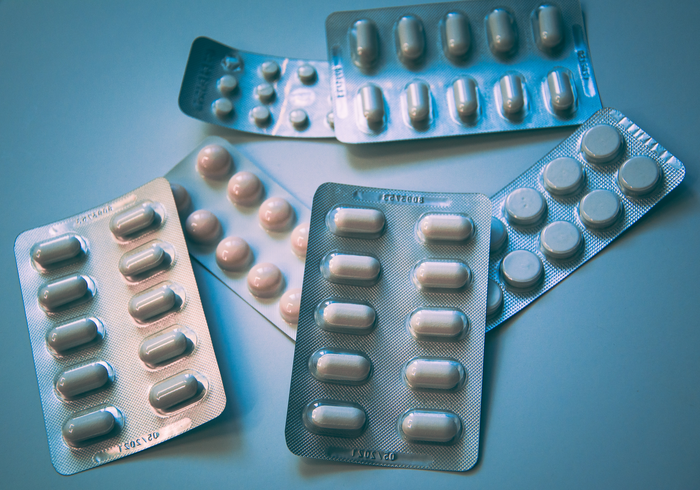
Credit: Christine Sandu, Unsplash, CC0 (https://creativecommons.org/publicdomain/zero/1.0/)
Over time, using antidepressants is not associated with significantly better health-related quality of life, compared to people with depression who do not take the drugs. These are the findings of a new study published this week in the open-access journal PLOS ONE by Omar Almohammed of King Saud University, Saudi Arabia, and colleagues.
It is generally well known that depression disorder has a significant impact on the health-related quality of life (HRQoL) of patients. While studies have shown the efficacy of antidepressant medications for treatment of depression disorder, these medications’ effect on patients’ overall well-being and HRQoL remains controversial.
In the new study, the researchers used data from the 2005-2015 United States’ Medical Expenditures Panel Survey (MEPS), a large longitudinal study that tracks the health services that Americans use. Any person with a diagnosis of depression disorder was identified in the MEPS files. Over the duration of the study, on average there were 17.47 million adult patients diagnosed with depression each year with two years of follow-up, and 57.6% of these received treatment with antidepressant medications.
Use of antidepressants was associated with some improvement on the mental component of SF-12—the survey tracking health-related quality of life. However, when this positive change was compared to the change in group of people who were diagnosed with depressive disorder but did not take antidepressants, there was no statistically significant association of antidepressants with either the physical (p=0.9595) or mental (p=0.6405) component of SF-12. In other words, the change in quality of life seen among those on antidepressants over two years was not significantly different from that seen among those not taking the drugs.
The study was not able to separately analyze any subtypes or varying severities of depression. The authors say that future studies should investigate the use of non-pharmacological depression interventions used in combination with antidepressants.
The authors add: “Although we still need our patients with depression to continue using their antidepressant medications, long-term studies evaluating the actual impact for pharmacological and non-pharmacological interventions on these patients’ quality of life is needed. With that being said, the role of cognitive and behavioral interventions on the long term-management of depression needs to be further evaluated in an efforts to improve the ultimate goal of care for these patients; improving their overall quality of life.”
#####
In your coverage please use this URL to provide access to the freely available article in PLOS ONE: https://journals.plos.org/plosone/article?id=10.1371/journal.pone.0265928
Citation: Almohammed OA, Alsalem AA, Almangour AA, Alotaibi LH, Al Yami MS, Lai L (2022) Antidepressants and health-related quality of life (HRQoL) for patients with depression: Analysis of the medical expenditure panel survey from the United States. PLoS ONE 17(4): e0265928. https://doi.org/10.1371/journal.pone.0265928
Author Countries: Saudi Arabia, U.S.A.
Funding: Omar A. Almohammed received funding from the Researcher Supporting Project number (RSP-2021/77), King Saud University, Riyadh, Saudi Arabia, to support the publication of this article. The funding agency had no role in designing the study, conducting the analysis, interpreting the data or writing the manuscript.
Journal
PLoS ONE
DOI
10.1371/journal.pone.0265928
Method of Research
Survey
Subject of Research
People
Article Title
Antidepressants and health-related quality of life (HRQoL) for patients with depression: Analysis of the medical expenditure panel survey from the United States
Article Publication Date
20-Apr-2022
COI Statement
The authors have declared that no competing interests exist.

![Tuning Endergonic Triplet Photosensitization Enables Bicyclo[1.1.0]butane–Alkene Cycloadditions](https://bioengineer.org/wp-content/uploads/2026/08/Tuning-Endergonic-Triplet-Photosensitization-Enables-Bicyclo110butane–Alkene-Cycloadditions-120x86.jpg)
