Researchers have used sound waves to turn stem cells into bone cells, in a tissue engineering advance that could one day help patients regrow bone lost to cancer or degenerative disease.
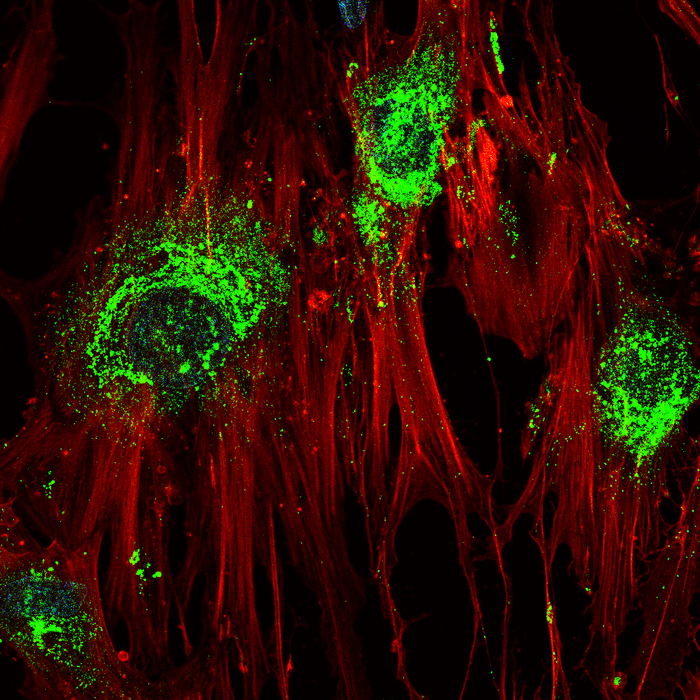
Credit: RMIT University
Researchers have used sound waves to turn stem cells into bone cells, in a tissue engineering advance that could one day help patients regrow bone lost to cancer or degenerative disease.
The innovative stem cell treatment from researchers at RMIT University in Melbourne, Australia, offers a smart way forward for overcoming some of the field’s biggest challenges, through the precision power of high-frequency sound waves.
Tissue engineering is an emerging field that aims to rebuild bone and muscle by harnessing the human body’s natural ability to heal itself.
A key challenge in regrowing bone is the need for large amounts of bone cells that will thrive and flourish once implanted in the target area.
To date, experimental processes to change adult stem cells into bone cells have used complicated and expensive equipment and have struggled with mass production, making widespread clinical application unrealistic.
Additionally, the few clinical trials attempting to regrow bone have largely used stem cells extracted from a patient’s bone marrow – a highly painful procedure.
In a new study published in the journal Small, the RMIT research team showed stem cells treated with high-frequency sound waves turned into bone cells quickly and efficiently.
Importantly, the treatment was effective on multiple types of cells including fat-derived stem cells, which are far less painful to extract from a patient.
Fast and simple
Co-lead researcher Dr Amy Gelmi said the new approach was faster and simpler than other methods.
“The sound waves cut the treatment time usually required to get stem cells to begin to turn into bone cells by several days,” said Gelmi, a Vice-Chancellor’s Research Fellow at RMIT.
“This method also doesn’t require any special ‘bone-inducing’ drugs and it’s very easy to apply to the stem cells.
“Our study found this new approach has strong potential to be used for treating the stem cells, before we either coat them onto an implant or inject them directly into the body for tissue engineering.”
The high-frequency sound waves used in the stem cell treatment were generated on a low-cost microchip device developed by RMIT.
Co-lead researcher Distinguished Professor Leslie Yeo and his team have spent over a decade researching the interaction of sound waves at frequencies above 10 MHz with different materials.
The sound wave-generating device they developed can be used to precisely manipulate cells, fluids or materials.
“We can use the sound waves to apply just the right amount of pressure in the right places to the stem cells, to trigger the change process,” Yeo said.
“Our device is cheap and simple to use, so could easily be upscaled for treating large numbers of cells simultaneously – vital for effective tissue engineering.”
The next stage in the research is investigating methods to upscale the platform, working towards the development of practical bioreactors to drive efficient stem cell differentiation.
The multi-disciplinary research, across the RMIT schools of Science and Engineering, was supported by funding through Australian Research Council Discovery Project grants.
‘Short-Duration High Frequency MegaHertz-Order Nanomechanostimulation Drives Early and Persistent Osteogenic Differentiation in Mesenchymal Stem Cells’, with first author and PhD researcher Lizebona August Ambattu, is published in Small (DOI: 10.1002/smll.20210682).
Journal
Small
DOI
10.1002/smll.20210682
Method of Research
Experimental study
Subject of Research
Cells