Stroke patients on long-term blood thinners who were given the clot-busting drug alteplase enjoyed better recoveries than those who did not receive the drug and had no increased risk of bleeding, a new study led by UTSW researchers shows. The results run counter to the common practice of withholding the clot-busting drug to these patients due to concerns over complications from bleeding.
Credit: UT Southwestern Medical Center
Stroke patients on long-term blood thinners who were given the clot-busting drug alteplase enjoyed better recoveries than those who did not receive the drug and had no increased risk of bleeding, a new study led by UTSW researchers shows. The results run counter to the common practice of withholding the clot-busting drug to these patients due to concerns over complications from bleeding.
Many patients at risk of heart attack or stroke from nonvalvular atrial fibrillation take widely used blood thinners known as non-vitamin K antagonist oral anticoagulants (NOACs) to reduce the risk of stroke. But clinicians have been hesitant to give alteplase, the only approved medical therapy for acute ischemic stroke, to patients on blood thinners who have a stroke, believing it would cause excess bleeding such as a brain hemorrhage.
Published in JAMA, the study of more than 160,000 patients – the largest of its kind – found 2,207 patients who were taking NOACs prior to having a stroke and were treated with alteplase. It found no evidence that the patients were at risk of excess bleeding. Instead, they were able to return home free of disabilities and able to ambulate and function independently.
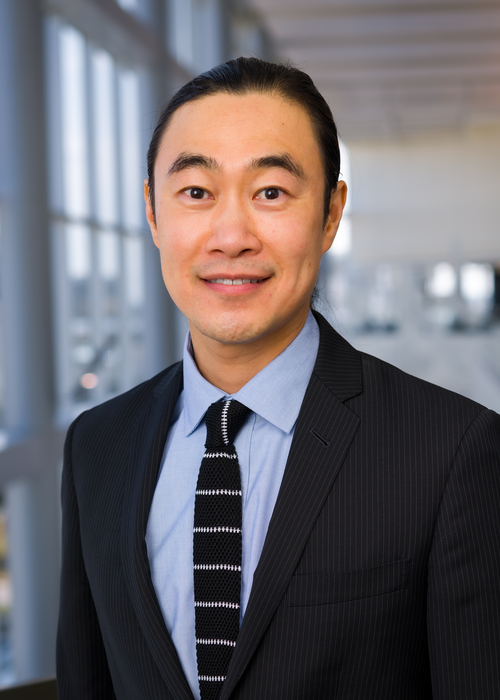
“The real risk is in not treating patients – they would otherwise be left with lifelong disability from their stroke,” said Ying Xian, M.D., Ph.D., an author of the study, Associate Professor of Neurology and Population and Data Sciences, and Section Head of Research, Stroke and Cerebrovascular Diseases.
Approved in early 2010s, NOACs such as dabigatran, rivaroxaban, apixaban, and edoxaban made up nearly 80% of new blood thinner prescriptions in 2017, and that number is believed to be higher now, Dr. Xian said. A clinical trial of alteplase in NOAC patients is unlikely, so Dr. Xian and his colleagues studied data from 163,083 patients across the United States in the American Heart Association’s Stroke Registry.
UT Southwestern is certified as an Advanced Comprehensive Stroke Center by The Joint Commission and the American Heart Association/American Stroke Association. UT Southwestern is ranked as high performing for stroke care by U.S. News and World Report, where it is ranked No.19 in the nation for Neurology and Neurosurgery.
Other UT Southwestern researchers who contributed to the study are DaiWai Olson, Ph.D., R.N., and Eric Peterson, M.D., M.P.H., Vice Provost and Senior Associate Dean for Clinical Research and Professor of Internal Medicine.
The Get With The Guidelines-Stroke (GWTG-Stroke) program is led by the American Heart Association (AHA) and the American Stroke Association (ASA). The Addressing Real-World Anticoagulant Management Issues in Stroke (ARAMIS) registry is a multicenter cohort study of acute stroke patients which is built upon the existing infrastructure of the AHA/ASA GWTG-Stroke program. Both the GWTG-Stroke program and ARAMIS study have multiple corporate sponsors as identified in the study write-up. Financial disclosures for the authors are included in the manuscript.
Dr. Peterson holds the Adelyn and Edmund M. Hoffman Distinguished Chair in Medical Science.
About UT Southwestern Medical Center
UT Southwestern, one of the nation’s premier academic medical centers, integrates pioneering biomedical research with exceptional clinical care and education. The institution’s faculty has received six Nobel Prizes, and includes 25 members of the National Academy of Sciences, 17 members of the National Academy of Medicine, and 14 Howard Hughes Medical Institute Investigators. The full-time faculty of more than 2,800 is responsible for groundbreaking medical advances and is committed to translating science-driven research quickly to new clinical treatments. UT Southwestern physicians provide care in about 80 specialties to more than 117,000 hospitalized patients, more than 360,000 emergency room cases, and oversee nearly 3 million outpatient visits a year.
Journal
JAMA