Mechanical hearts spur some regeneration in dormant parts of failing hearts, according to a UT Southwestern pilot study that shows promise for developing regenerative heart therapies.
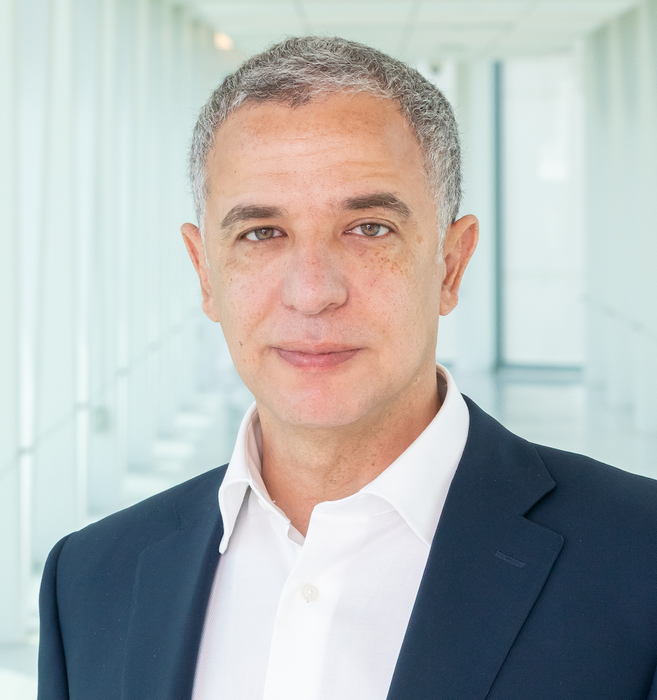
Credit: UT Southwestern Medical Center
Mechanical hearts spur some regeneration in dormant parts of failing hearts, according to a UT Southwestern pilot study that shows promise for developing regenerative heart therapies.
“This is by all accounts a small study, but it represents the first evidence that mechanical hearts, which are tried and true, approved treatments for end-stage heart failure patients, can generate new muscle tissue in the failing human heart,” said lead author Hesham Sadek, M.D., Ph.D., Professor of Internal Medicine, Biophysics and Molecular Biology.
His findings, published in the American Heart Association flagship journal Circulation, found that left ventricular assist devices (LVADs), widely accepted in cardiology as life-saving interventions, showed metabolic reactivation in myocardial areas that had little or even no activity.
“What we need to do now is replicate these results in larger studies,” Dr. Sadek said. “If this holds true in larger studies, mechanical hearts might emerge as a regenerative therapy to reverse heart failure, which is the holy grail in heart failure treatment.”
Dr. Sadek has broken extensive ground in this area of cardiology research with studies of heart regeneration in mice that were published in the journals Nature and Science. Cell reported his findings that oxygen metabolism causes DNA damage in heart cells that shuts down their ability to regenerate.
Vlad Zaha, M.D., Ph.D., Assistant Professor of Internal Medicine, co-led the study with Dr. Sadek.
“This study found evidence of regeneration in the parts of the heart that would be considered dead,” Dr. Zaha said. “It’s a promising finding that will lead to further investigations to replicate the results at larger scale, and – if confirmed – to explore potential new therapies to amplify this process in the context of LVAD support.”
The pilot study of four patients, ages 39-59, who were taking medications for heart failure measured metabolic activity by tracking a radiolabeled sugar molecule called F-fluorodeoxyglucose (FDG) in the heart. This FDG signal is considered a marker of “viable,” or alive, heart tissue.
Positron emission tomography (PET) imaging tracked FDG uptake every six months for up to 18 months. All participants exhibited some degree of increase in FDG uptake in areas of previous metabolic inactivity at their baseline, which is suggestive of possible myocardial regeneration. Among the four patients, the increase in FDG uptake from their baseline ranged from 1.87% to 23.80%.
The study was funded in large part by UT Southwestern’s Hamon Center for Regenerative Science and Medicine and the Leducq Foundation. Other UTSW researchers who contributed to the study include Mark Drazner, M.D., Pradeep Mammen, M.D., and Chao Xing, Ph.D.
Dr. Sadek holds the J. Fred Schoellkopf, Jr. Chair in Cardiology.
About UT Southwestern Medical Center
UT Southwestern, one of the nation’s premier academic medical centers, integrates pioneering biomedical research with exceptional clinical care and education. The institution’s faculty has received six Nobel Prizes, and includes 25 members of the National Academy of Sciences, 17 members of the National Academy of Medicine, and 14 Howard Hughes Medical Institute Investigators. The full-time faculty of more than 2,800 is responsible for groundbreaking medical advances and is committed to translating science-driven research quickly to new clinical treatments. UT Southwestern physicians provide care in about 80 specialties to more than 117,000 hospitalized patients, more than 360,000 emergency room cases, and oversee nearly 3 million outpatient visits a year.
Journal
Circulation