Previous studies have shown that wisdom is a personality trait underpinning mental health and well-being. Recently, researchers at University of California San Diego School of Medicine looked at gender differences relative to wisdom, using two different validated scales.
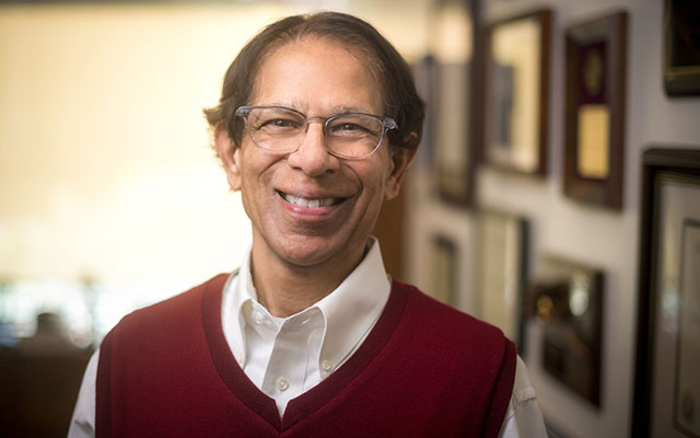
Credit: Erik Jepsen/UCPA
Previous studies have shown that wisdom is a personality trait underpinning mental health and well-being. Recently, researchers at University of California San Diego School of Medicine looked at gender differences relative to wisdom, using two different validated scales.
The study, publishing in the February 3, 2022, online edition of Frontiers in Psychology, assessed gender differences in wisdom and associated constructs, including depression, loneliness, well-being, optimism and resilience.
Six hundred and fifty-nine community-based participants, ages 27 to 103, participated in the study and completed both the San Diego Wisdom Scale (SD-WISE) and the 3-Dimensional Wisdom Scale (3D-WS).
The SD-WISE includes 24 items related to six defined components of wisdom: pro-social behaviors (empathy and compassion), emotional regulation, self-reflection, acceptance of uncertainty and diversity of perspectives, decisiveness and social advising. The 3D-WS contains 39 items covering three dimensions of wisdom: cognitive, affective or compassionate/and reflective.
The researchers found that, in general, women scored higher on compassion-related items and on self-reflection while men scored higher on cognitive-related items and on emotional regulation. Generally speaking, the total 3-D-WS score was higher in women than in men, but there was no gender difference in the total score on the SD-WISE.
In both women and men, wisdom was associated with greater mental well-being, optimism, and resilience and lower levels of depression and loneliness.
“We wanted to gain information on potential differences in wisdom between men and women that could impact well-being,” said senior author Dilip V. Jeste, MD, senior associate dean for the Center of Healthy Aging and Distinguished Professor of Psychiatry and Neurosciences at UC San Diego School of Medicine. “We found women and men have different relative strengths in wisdom, likely driven by both sociocultural and biological factors.”
“Our latest findings are only a piece of the overall puzzle. There are several paths toward achieving a wise life. People approach wisdom differently and looking at gender is one way to assess those potential differences,” said Emily Treichler, PhD, first author of the study and assistant professor in the Department of Psychiatry at UC San Diego School of Medicine and a research psychologist in the Desert Pacific Mental Illness Research, Education, and Clinical Center (MIRECC) at the VA San Diego Healthcare System.
“Having a better understanding of wisdom and how to improve it has health benefits and value for individuals and society. Other studies have shown that the levels of certain components of wisdom like empathy/compassion and emotional regulation can be increased with appropriate psycho-social and behavioral interventions. Studies such as ours may help tailor wisdom interventions to individuals based on specific characteristics.”
The researchers emphasize there were limitations of the study: It was cross-sectional rather than longitudinal. And it did not look at wisdom profiles of non-binary people or ask people whether they identify as transgender, and that should be one of the next steps.
“More work needs to be done, but we can take what we have learned and apply it to future studies to make the results applicable to different groups, with the ultimate goal of promoting healthier lives,” said Jeste.
Co-authors include: Tsung-Chin Wu and Xin Tu with UC San Diego; Barton Palmer, Rebecca Daly, and Ellen Lee with UC San Diego, VA San Diego Healthcare System, and VA Desert Pacific Mental Illness, Research, Education, and Clinical Center; and Michael Thomas with Colorado State University.
Journal
Frontiers in Psychology
DOI
10.3389/fpsyg.2021.769294
Article Publication Date
3-Feb-2022