New guidelines for treating cancers that have spread to the brain are poised to improve care for patients and help many live longer, better lives.
Credit: UVA Health
New guidelines for treating cancers that have spread to the brain are poised to improve care for patients and help many live longer, better lives.
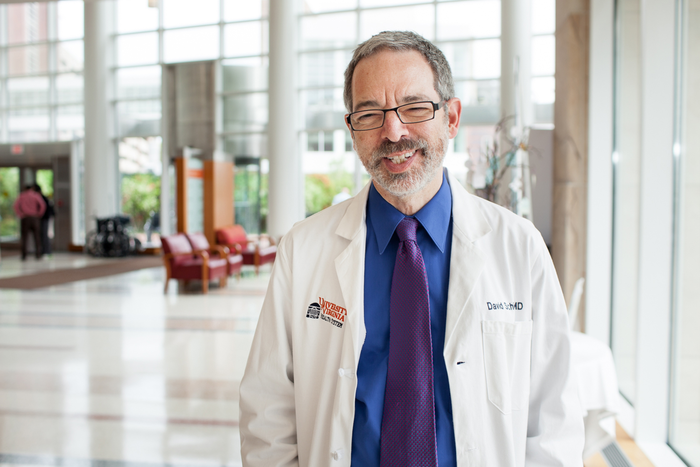
The new guidelines come from an expert panel assembled by the American Society of Clinical Oncology (ASCO). The panel included a diverse range of top cancer doctors, including UVA Cancer Center’s David Schiff, MD, as well as a patient representative.
The guidelines speak to the massive advances in care for brain metastases (cancers that have spread to the brain) over the last few decades. Attempts to develop guidelines in the 1970s largely emphasized steroids and whole-brain radiation therapy, without controlled, randomized studies to guide the use of surgery and chemotherapy.
The new guidelines are far more encompassing and far more evidence-based. They will help doctors and patients make the best treatment decisions and achieve the best outcomes.
“When I started in this field 30 years ago, the average survival with brain metastases was 4 months, and most patients died from the brain disease. With improvements in therapies, fewer than one-quarter of patients die from the brain metastases, and some patients live years or are even cured,” said Schiff, a co-chair of the ASCO panel and the co-director of UVA Cancer Center’s Neuro-Oncology Center. “Equally importantly, the use of advanced localized radiation techniques and new targeted chemotherapies and immunotherapies have improved the quality of survival for most patients suffering from brain metastases.”
Understanding Brain Metastases
Up to 30% of patients who are diagnosed with cancer will have it spread to the brain, where it can be extremely difficult to treat. In the United States, approximately 200,000 new brain metastases are diagnosed each year.
The likelihood of a solid tumor spreading to the brain varies by cancer type, with approximately 20% of lung cancers spreading to the brain within a year after diagnosis. For patients with breast cancer, renal cell cancer or melanoma, that number is up to 7%. That is in addition to the patients found to have brain metastases at the time of their initial diagnosis.
To obtain a comprehensive view of the best treatment options, the ASCO panel brought together care providers with diverse expertise, including neurosurgery, neurology, neuro-oncology, medical oncology and radiation oncology. The panelists then scoured the medical literature for hard evidence of the practices and treatment options that lead to the best outcomes for patients.
In total, they incorporated the results of more than 30 randomized trials published since 2008. The resulting guidelines cover everything from when surgery is appropriate and when and in what form radiation should be used to those circumstances in which medication alone may be employed.
The guidelines emphasize the importance of local therapies (surgery or stereotactic radiosurgery) for symptomatic brain metastases and lay out when these options are feasible. They highlight situations in which local therapy or whole brain radiotherapy can be deferred in place of chemotherapy, targeted therapy or immunotherapy depending on tumor type and molecular features. They also lay out how, in many cases, doctors can avoid the cognitive toxicity of whole brain radiotherapy by using either stereotactic radiosurgery or hippocampal-avoidant whole brain radiotherapy with the drug memantine.
“Patients with brain metastases may initially see a neurosurgeon, radiation or medical oncologist. The rigorous analysis underpinning these guidelines will provide each subspecialist a comprehensive picture of the treatment options appropriate for a given patient,” Schiff said. “The result will allow patients the optimal personalized approach to maximize long-term control of brain metastases with good functional outcome.”
The guidelines have been published in the Journal of Clinical Oncology. Additional information is available at the ASCO website.
Finding ways to improve cancer care is a primary mission of the UVA Cancer Center, which on Feb. 1 becomes one of only 52 cancer centers in the country to be designated as a Comprehensive Cancer Center by the National Cancer Institute (NCI). The designation recognizes elite cancer centers with the most outstanding cancer programs in the nation. Comprehensive Cancer Centers must meet extremely rigorous standards for innovative research and leading-edge clinical trials.
UVA Cancer Center is the only Comprehensive Cancer Center in Virginia.
About the ASCO Experts
The expert panel that compiled the new ASCO guidelines consisted of Michael A. Vogelbaum, Paul D. Brown, Hans Messersmith, Priscilla K. Brastianos, Stuart Burri, Dan Cahill, Ian F. Dunn, Laurie E. Gaspar, Na Tosha N. Gatson, Vinai Gondi, Justin T. Jordan, Andrew B. Lassman, Julia Maues, Nimish Mohile, Navid Redial, Glen Stevens, Erik Sulman, Martin van den Bent, H. James Wallace, Jeffrey S. Weinberg, Gelareh Zadeh and Schiff. Schiff disclosed that he has done consulting work for Orbus Therapeutics, GlaxoSmithKline, PRA and AstraZeneca, as well as receiving research funding from Bayer. A full list of the authors’ disclosures is included in the paper.
The project represented a collaboration of ASCO, the Society for Neuro-Oncology and the American Society for Radiation Oncology. The work was funded by ASCO.
To keep up with the latest medical research news from UVA, subscribe to the Making of Medicine blog at http://makingofmedicine.virginia.edu.