• HOME
  • NEWS
  • EXPLORE
    • CAREER
      • Companies
      • Jobs
    • EVENTS
    • iGEM
      • News
      • Team
    • PHOTOS
    • VIDEO
    • WIKI
  • BLOG
  • COMMUNITY
    • FACEBOOK
    • INSTAGRAM
    • TWITTER
Saturday, February 7, 2026
BIOENGINEER.ORG
No Result
View All Result
  • Login
  • HOME
  • NEWS
  • EXPLORE
    • CAREER
      • Companies
      • Jobs
        • Lecturer
        • PhD Studentship
        • Postdoc
        • Research Assistant
    • EVENTS
    • iGEM
      • News
      • Team
    • PHOTOS
    • VIDEO
    • WIKI
  • BLOG
  • COMMUNITY
    • FACEBOOK
    • INSTAGRAM
    • TWITTER
  • HOME
  • NEWS
  • EXPLORE
    • CAREER
      • Companies
      • Jobs
        • Lecturer
        • PhD Studentship
        • Postdoc
        • Research Assistant
    • EVENTS
    • iGEM
      • News
      • Team
    • PHOTOS
    • VIDEO
    • WIKI
  • BLOG
  • COMMUNITY
    • FACEBOOK
    • INSTAGRAM
    • TWITTER
No Result
View All Result
Bioengineer.org
No Result
View All Result
Home NEWS Science News Biology

The role of messenger RNA in DNA repair

Bioengineer by Bioengineer
December 3, 2021
in Biology
Reading Time: 2 mins read
0
ADAR
Share on FacebookShare on TwitterShare on LinkedinShare on RedditShare on Telegram

An organism’s genome could be compared to a complex system of instructions that allows it not only to develop, but also to carry out all the activities essential to its survival. To do this, this genome needs to be expressed correctly, i.e. these instructions need to be “read” properly, and the information it contains must not be altered or degraded over time.
ADAR

Credit: Universidad de Sevilla

An organism’s genome could be compared to a complex system of instructions that allows it not only to develop, but also to carry out all the activities essential to its survival. To do this, this genome needs to be expressed correctly, i.e. these instructions need to be “read” properly, and the information it contains must not be altered or degraded over time.

The first process is known as gene expression and involves the information contained in the genes (the DNA) being properly converted into a set of valid tools (the proteins). This requires the transient formation of a messenger molecule that transmits this information (messenger RNA). Classical biology, as it appears in textbooks, describes how DNA is literally copied into an RNA molecule that is transformed in a specific way into a specific protein in a process in which the information remains unchanged. This classical view has been shown to be erroneous, as the RNA molecule itself can be altered in a regulated manner in different ways before it is converted into proteins.

The second process, the maintenance of genomic stability, is possible because of a series of cellular intrinsic mechanisms that check and repair any physical or chemical alterations in the DNA to restore the original information. These processes are the DNA repair mechanisms.

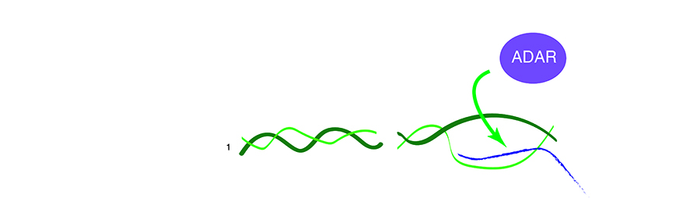
In a study led by Sonia Jimeno and carried out at the laboratory of Pablo Huertas (CABIMER and Department of Genetics of the University of Seville), a novel connection has been described between the repair of DNA breaks and the modifying factors of the messenger RNA molecule. Specifically, they have established that when the DNA of a cell suffers breaks, a specific mechanism is activated to alter the RNA molecules, changing the information they contain.

This mechanism promotes faithful DNA repair in several ways. In particular, one way is to facilitate the removal of RNA molecules that are trapped in the DNA requiring repair. This elimination is necessary for the repair machinery to work properly and is carried out by proteins called ADARs.

Taking into account that these proteins are implicated in some rare diseases and in the appearance of cancer, it is possible that these discoveries may serve in the long term to better understand how these pathologies appear.


Journal

Nature Communications

DOI

10.1038/s41467-021-25790-2

Article Title

ADAR-mediated RNA editing of DNA:RNA hybrids is required for DNA double strand break repair

Article Publication Date

17-Sep-2021
Share12Tweet8Share2ShareShareShare2

Related Posts

Florida Cane Toad: Complex Spread and Selective Evolution

Florida Cane Toad: Complex Spread and Selective Evolution

February 7, 2026
New Study Uncovers Mechanism Behind Burn Pit Particulate Matter–Induced Lung Inflammation

New Study Uncovers Mechanism Behind Burn Pit Particulate Matter–Induced Lung Inflammation

February 6, 2026

DeepBlastoid: Advancing Automated and Efficient Evaluation of Human Blastoids with Deep Learning

February 6, 2026

Navigating the Gut: The Role of Formic Acid in the Microbiome

February 6, 2026

POPULAR NEWS

  • Robotic Ureteral Reconstruction: A Novel Approach

    Robotic Ureteral Reconstruction: A Novel Approach

    82 shares
    Share 33 Tweet 21
  • Digital Privacy: Health Data Control in Incarceration

    63 shares
    Share 25 Tweet 16
  • Study Reveals Lipid Accumulation in ME/CFS Cells

    57 shares
    Share 23 Tweet 14
  • Breakthrough in RNA Research Accelerates Medical Innovations Timeline

    53 shares
    Share 21 Tweet 13

About

We bring you the latest biotechnology news from best research centers and universities around the world. Check our website.

Follow us

Recent News

Decoding Prostate Cancer Origins via snFLARE-seq, mxFRIZNGRND

Digital Health Perspectives from Baltic Sea Experts

Florida Cane Toad: Complex Spread and Selective Evolution

Subscribe to Blog via Email

Enter your email address to subscribe to this blog and receive notifications of new posts by email.

Join 73 other subscribers
  • Contact Us

Bioengineer.org © Copyright 2023 All Rights Reserved.

Welcome Back!

Login to your account below

Forgotten Password?

Retrieve your password

Please enter your username or email address to reset your password.

Log In
No Result
View All Result
  • Homepages
    • Home Page 1
    • Home Page 2
  • News
  • National
  • Business
  • Health
  • Lifestyle
  • Science

Bioengineer.org © Copyright 2023 All Rights Reserved.