University of Liverpool researchers have produced new evidence that could help rapidly boost efforts to scale-up the adoption of clean cooking with liquefied petroleum gas (LPG) in sub-Saharan Africa.
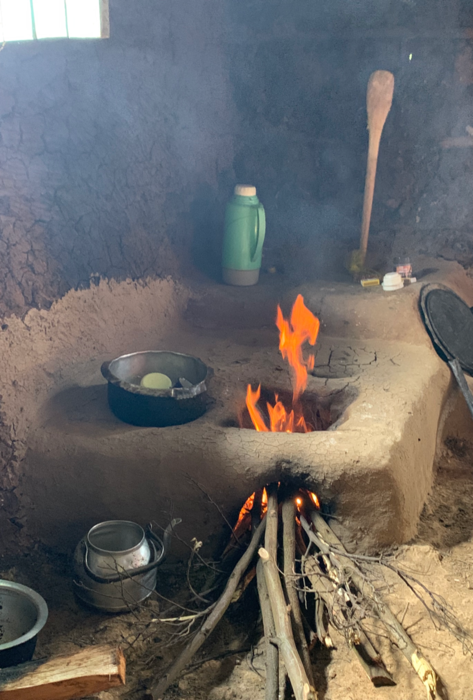
Credit: CLEAN-Air(Africa) group
University of Liverpool researchers have produced new evidence that could help rapidly boost efforts to scale-up the adoption of clean cooking with liquefied petroleum gas (LPG) in sub-Saharan Africa.
LPG is a key modern energy solution that can be rapidly scaled-up in sub-Saharan Africa to help achieve the United Nations Sustainable Development Goal 7 (universal clean energy for all by 2030) without negatively impacting the climate.
Published in Nature Energy, the new study suggests that supply-side interventions such as shortening the distance to LPG retail points and improving access to multi-burner LPG stoves could help increase the consumption of the clean cooking fuels, for the benefit of public health, gender equality and environmental protection.
Researchers from the University’s NIHR CLEAN-Air (Africa) Global Health Research Group examined survey data on cooking behaviours from more than 5500 households in three rapidly urbanising communities in Kenya, Cameroon and Ghana to assess both demand and supply-side determinants of LPG usage and consumption.
Household transitions to cleaner cooking fuels have historically been studied from a demand perspective, with clean energy usage expected to increase with improvements in household socioeconomic status. However, the team’s new analysis found that supply-side factors, such as greater LPG retailer availability and lower LPG cylinder refill and associated transportation costs, were better predictors of the probability of primarily cooking with LPG and annual LPG consumption than household socioeconomic status. For example, households indicating that LPG was always available at retailers had 25% higher predicted probability of using LPG as a primary fuel than those reporting that it was unavailable for purchase at least once per month, irrespective of socioeconomic status.
Lead author Dr Matthew Shupler from the University of Liverpool’s Institute of Population Health said: “This study is one of the first to quantitatively demonstrate the importance of supply-side determinants in increasing clean cooking, relative to demand-related factors. This is important policy information for governments that have set ambitious targets for national scale of clean cooking with LPG. The findings are in line with experience of other countries, including Morocco in North Africa, which has one of the largest LPG cooking markets and infrastructure distribution in the world.”
Approximately 900 million people cook with polluting fuels such as firewood, charcoal and kerosene in sub-Saharan Africa. Combustion of these fuels produces high levels of both health-damaging and climate pollutants. Governments in sub-Saharan Africa including Cameroon, Ghana and Kenya, plan to expand population-level use of LPG as a clean cooking solution to an aspirational target of 35-58% by 2030.
Dr Shupler added: “Our research demonstrates that, once the barrier of initial LPG equipment cost is overcome, families value the practicalities of cooking such as time and fuel savings, which is offered by multi-burner stoves.
“While a lower cylinder price of an LPG refill will undoubtedly increase its consumption, other factors such as shortening the distance to LPG access points, which underpins a greater investment in LPG cylinders and distribution over national territories, represent short-term, palpable interventions that may be crucial for accelerating growth of the clean cooking market in sub-Saharan Africa.”
The National Institute of Health Research (NIHR) CLEAN-Air(Africa) Global Health Research Group is led by Professor Dan Pope and Dr Elisa Puzzolo at the University of Liverpool in partnership with experts from Moi University and AMREF International University in Kenya; Douala General Hospital in Cameroon; and the University of Ghana and Kintampo Health Research Centre in Ghana.
###
Notes:
About CLEAN-Air(Africa)
The National Institute for Health Research (NIHR) Global Health Research Group: Clean Household Energy for the Prevention of Non-communicable Disease in Africa (CLEAN-Air Africa), led by the University of Liverpool, aims to address the burden of disease from household air pollution through a programme of policy research and capacity building of health systems. For more information, please visit https://cleanairafrica.com/ or follow the team om Twitter @CLEANAirAfrica
Additional links:
- Read a new NIHR CLEAN-Air(Africa) case study here: https://www.nihr.ac.uk/documents/case-studies/how-clean-air-africa-is-tackling-the-hidden-killer-of-household-air-pollution/29188
- Watch a video (shown at a COP26 side event at the Africa Pavilion in Glasgow on 4 November, 2021) here: www.youtube.com/watch?v=XRkUsuGtgjY
Journal
Nature Energy
DOI
10.1038/s41560-021-00933-3
Method of Research
Survey
Subject of Research
People
Article Title
‘Modelling of supply and demand-side determinants of liquefied petroleum gas consumption in peri-urban Cameroon, Ghana and Kenya’
Article Publication Date
18-Nov-2021