• HOME
  • NEWS
  • EXPLORE
    • CAREER
      • Companies
      • Jobs
    • EVENTS
    • iGEM
      • News
      • Team
    • PHOTOS
    • VIDEO
    • WIKI
  • BLOG
  • COMMUNITY
    • FACEBOOK
    • INSTAGRAM
    • TWITTER
Saturday, February 7, 2026
BIOENGINEER.ORG
No Result
View All Result
  • Login
  • HOME
  • NEWS
  • EXPLORE
    • CAREER
      • Companies
      • Jobs
        • Lecturer
        • PhD Studentship
        • Postdoc
        • Research Assistant
    • EVENTS
    • iGEM
      • News
      • Team
    • PHOTOS
    • VIDEO
    • WIKI
  • BLOG
  • COMMUNITY
    • FACEBOOK
    • INSTAGRAM
    • TWITTER
  • HOME
  • NEWS
  • EXPLORE
    • CAREER
      • Companies
      • Jobs
        • Lecturer
        • PhD Studentship
        • Postdoc
        • Research Assistant
    • EVENTS
    • iGEM
      • News
      • Team
    • PHOTOS
    • VIDEO
    • WIKI
  • BLOG
  • COMMUNITY
    • FACEBOOK
    • INSTAGRAM
    • TWITTER
No Result
View All Result
Bioengineer.org
No Result
View All Result
Home NEWS Science News

New study finds evolution of brain and tooth size were not linked in humans

Bioengineer by Bioengineer
January 2, 2017
in Science News
Reading Time: 2 mins read
0
Share on FacebookShare on TwitterShare on LinkedinShare on RedditShare on Telegram
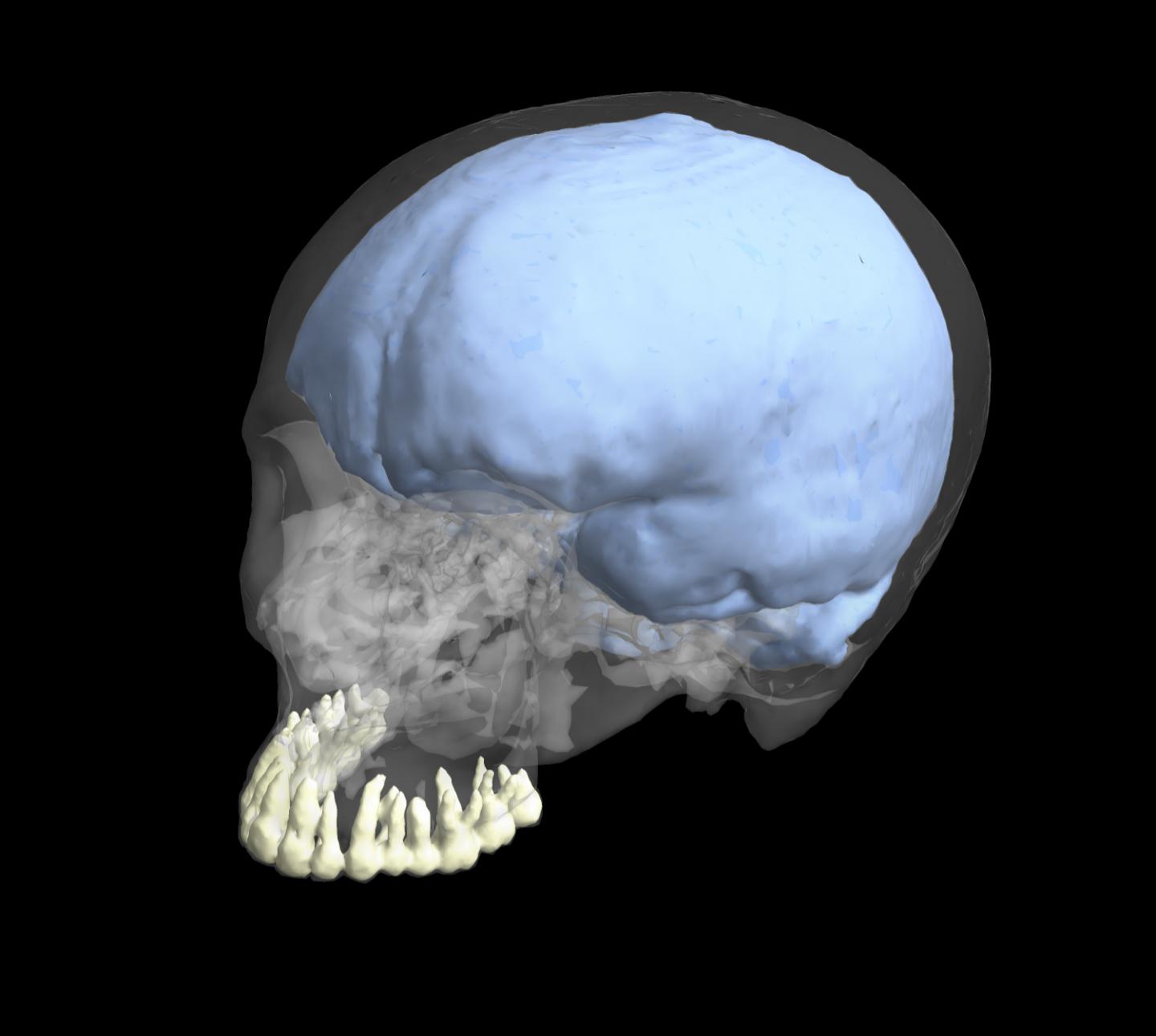
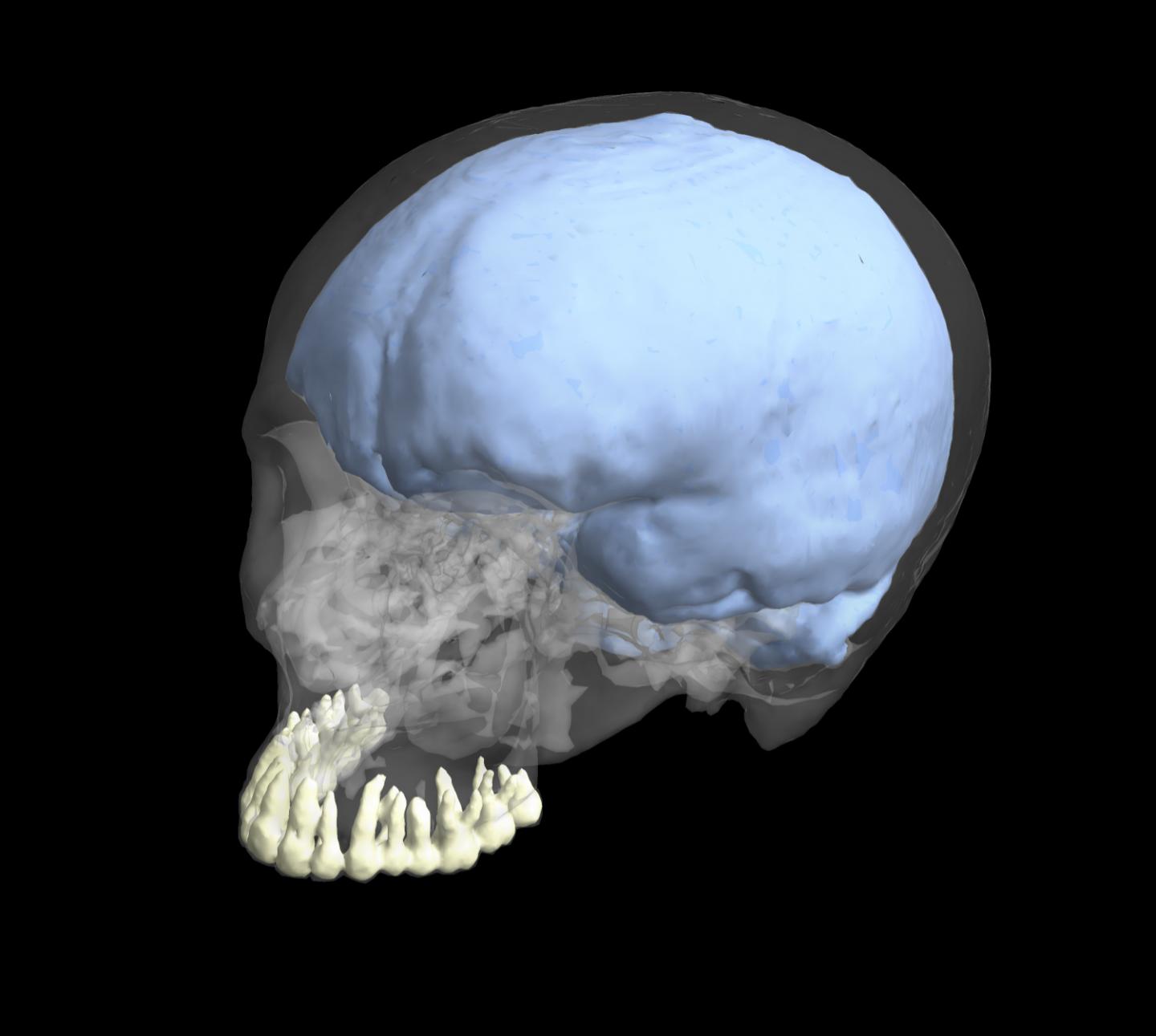
IMAGE

Credit: George Washington University

WASHINGTON (Jan. 2, 2017)–A new study from the George Washington University's Center for the Advanced Study of Human Paleobiology (CASHP) found that whereas brain size evolved at different rates for different species, especially during the evolution of Homo, the genus that includes humans, chewing teeth tended to evolve at more similar rates. The finding suggests that our brains and teeth did not evolve in lock step and were likely influenced by different ecological and behavioral factors.

This research challenges the classically accepted view that reduction of tooth size in hominins is linked with having a larger brain. The reasoning is that larger brains allowed hominins to start making stone tools and that the use of these tools reduced the need to have such large chewing teeth. But recent studies by other authors found that hominins had larger brains before chewing teeth became smaller, and they made and used stone tools when brains were still quite small, which challenges this relationship.

The new study evaluates this issue by measuring and comparing the rates at which teeth and brains have evolved along the different branches of the human evolutionary tree.

"The findings of the study indicate that simple causal relationships between the evolution of brain size, tool use and tooth size are unlikely to hold true when considering the complex scenarios of hominin evolution and the extended time periods during which evolutionary change has occurred," said Aida Gómez-Robles, lead author of the paper and a postdoctoral scientist at GW's CASHP.

To conduct the research, Dr. Gómez-Robles and her colleagues analyzed eight different hominin species. The researchers identified fast-evolving species by comparing differences between groups with those obtained when simulating evolution at a constant rate across all lineages, and they found clear differences between tooth evolution and brain evolution. If the classical view proposing co-evolution between brains and teeth is correct, they expected to see a close correspondence between species evolving at a fast rate for both traits. The differences they observed indicate that diverse and unrelated factors influenced the evolution of teeth and brains.

"Once something becomes conventional wisdom, in no time at all it becomes dogma," said Bernard Wood, university professor of human origins at GW and a co-author of the paper. "The co-evolution of brains and teeth was on a fast-track to dogma status, but we caught it in the nick of time."

The research published Jan. 2 in the Proceedings of the National Academy of Sciences.

###

Multimedia Resources

  • Photos available upon request.

-GW-

Media Contact

Emily Grebenstein
[email protected]
202-994-6460
@GWtweets

http://www.gwu.edu

############

Story Source: Materials provided by Scienmag

Share12Tweet8Share2ShareShareShare2

Related Posts

Evaluating Pediatric Emergency Care Quality in Ethiopia

February 7, 2026

TPMT Expression Predictions Linked to Azathioprine Side Effects

February 7, 2026

Improving Dementia Care with Enhanced Activity Kits

February 7, 2026

Decoding Prostate Cancer Origins via snFLARE-seq, mxFRIZNGRND

February 7, 2026
Please login to join discussion

POPULAR NEWS

  • Robotic Ureteral Reconstruction: A Novel Approach

    Robotic Ureteral Reconstruction: A Novel Approach

    82 shares
    Share 33 Tweet 21
  • Digital Privacy: Health Data Control in Incarceration

    63 shares
    Share 25 Tweet 16
  • Study Reveals Lipid Accumulation in ME/CFS Cells

    57 shares
    Share 23 Tweet 14
  • Breakthrough in RNA Research Accelerates Medical Innovations Timeline

    53 shares
    Share 21 Tweet 13

About

We bring you the latest biotechnology news from best research centers and universities around the world. Check our website.

Follow us

Recent News

Evaluating Pediatric Emergency Care Quality in Ethiopia

TPMT Expression Predictions Linked to Azathioprine Side Effects

Improving Dementia Care with Enhanced Activity Kits

Subscribe to Blog via Email

Enter your email address to subscribe to this blog and receive notifications of new posts by email.

Join 73 other subscribers
  • Contact Us

Bioengineer.org © Copyright 2023 All Rights Reserved.

Welcome Back!

Login to your account below

Forgotten Password?

Retrieve your password

Please enter your username or email address to reset your password.

Log In
No Result
View All Result
  • Homepages
    • Home Page 1
    • Home Page 2
  • News
  • National
  • Business
  • Health
  • Lifestyle
  • Science

Bioengineer.org © Copyright 2023 All Rights Reserved.