• HOME
  • NEWS
  • EXPLORE
    • CAREER
      • Companies
      • Jobs
    • EVENTS
    • iGEM
      • News
      • Team
    • PHOTOS
    • VIDEO
    • WIKI
  • BLOG
  • COMMUNITY
    • FACEBOOK
    • INSTAGRAM
    • TWITTER
Saturday, February 7, 2026
BIOENGINEER.ORG
No Result
View All Result
  • Login
  • HOME
  • NEWS
  • EXPLORE
    • CAREER
      • Companies
      • Jobs
        • Lecturer
        • PhD Studentship
        • Postdoc
        • Research Assistant
    • EVENTS
    • iGEM
      • News
      • Team
    • PHOTOS
    • VIDEO
    • WIKI
  • BLOG
  • COMMUNITY
    • FACEBOOK
    • INSTAGRAM
    • TWITTER
  • HOME
  • NEWS
  • EXPLORE
    • CAREER
      • Companies
      • Jobs
        • Lecturer
        • PhD Studentship
        • Postdoc
        • Research Assistant
    • EVENTS
    • iGEM
      • News
      • Team
    • PHOTOS
    • VIDEO
    • WIKI
  • BLOG
  • COMMUNITY
    • FACEBOOK
    • INSTAGRAM
    • TWITTER
No Result
View All Result
Bioengineer.org
No Result
View All Result
Home NEWS Science News

Genes and the environment equally affect language-related brain activity

Bioengineer by Bioengineer
December 29, 2016
in Science News
Reading Time: 2 mins read
0
Share on FacebookShare on TwitterShare on LinkedinShare on RedditShare on Telegram
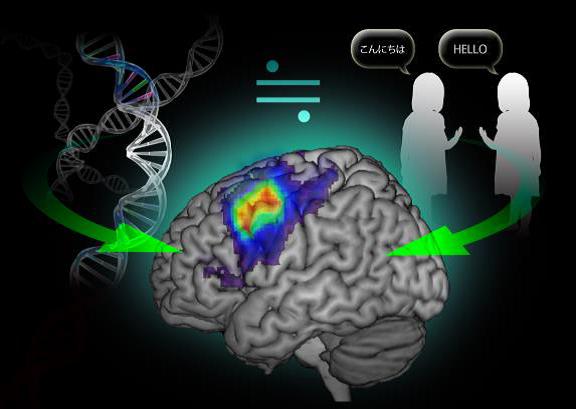
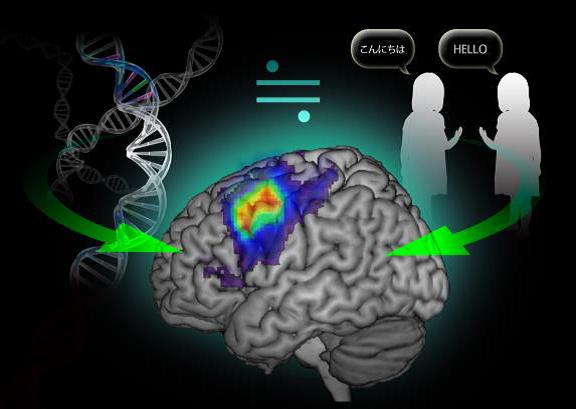
IMAGE

Credit: Osaka University

Osaka University-led researchers examine brain activity in monozygotic and dizygotic Japanese twins and show that environmental and genetic influences affect language-related brain activities in left frontal area of the brain.

Osaka, Japan – Language functions are influenced by environment and genetic makeup. Advances in genetic analyses have uncovered several genes associated with language development and abilities. Several cortical regions are involved in processing language function. Event-related desynchronizations (ERDs) are attenuations of brain activities in specific frequency band and have been associated with language processing. However, little is known about how genetic and environmental factors affect language-related ERDs. Furthermore, it is not clear how language-related ERDs differ among individuals and how they affect verbal ability.

In a new study, Masayuki Hirata, Toshihiko Araki and their group members at Osaka University used magnetoencephalography (MEG) to measure the brain activity of monozygotic (100% genetic similarity) and dizygotic (50% genetic similarity) elderly Japanese twins. Brain activity was measured while the participants silently read a series of words and generate a verb associated with them. The ERDs in the 25-50 Hz frequency band called low gamma ERDs had the highest power in the left frontal area of the brain. This brain region is important for language function.

The study authors compared the power of low gamma ERDs in the left frontal area of monozygotic and dizygotic twins using a quantitative genetic analysis called structural equation modelling. These analyses showed that the power of ERDs is equally affected by genetic and environmental factors. Interestingly, the genetic control of ERDs in the left frontal area was preserved even after the siblings had been living apart, in different environments, for many years. This suggests that genetic factors strongly affected the power of language-specific ERDs.

To determine how language-related ERDs affect verbal ability, the researchers examined correlations between the ERD powers and verbal test scores. Individuals with higher test scores had lower-power ERDs in the left frontal area, showing that verbal memory is associated with language-related ERDs. Verbal memory often deteriorates in elderly individuals. The authors suggest that the verbal task in this study placed a higher demand on the elderly participants, thereby increasing the power of low gamma ERDs.

The findings provide novel insights into how genes and the environment shape the development of verbal ability.

The article "Language-related cerebral oscillatory changes are influenced equally by genetic and environmental factors" was published in NeuroImage at DOI: 10.1016/j.neuroimage.2016.05.066

###

Media Contact

Saori Obayashi
[email protected]
81-661-055-886
@osaka_univ_e

http://www.osaka-u.ac.jp/en

############

Story Source: Materials provided by Scienmag

Share12Tweet8Share2ShareShareShare2

Related Posts

Digital Health Perspectives from Baltic Sea Experts

February 7, 2026
Florida Cane Toad: Complex Spread and Selective Evolution

Florida Cane Toad: Complex Spread and Selective Evolution

February 7, 2026

Exploring Decision-Making in Dementia Caregivers’ Mobility

February 7, 2026

Succinate Receptor 1 Limits Blood Cell Formation, Leukemia

February 7, 2026
Please login to join discussion

POPULAR NEWS

  • Robotic Ureteral Reconstruction: A Novel Approach

    Robotic Ureteral Reconstruction: A Novel Approach

    82 shares
    Share 33 Tweet 21
  • Digital Privacy: Health Data Control in Incarceration

    63 shares
    Share 25 Tweet 16
  • Study Reveals Lipid Accumulation in ME/CFS Cells

    57 shares
    Share 23 Tweet 14
  • Breakthrough in RNA Research Accelerates Medical Innovations Timeline

    53 shares
    Share 21 Tweet 13

About

We bring you the latest biotechnology news from best research centers and universities around the world. Check our website.

Follow us

Recent News

Digital Health Perspectives from Baltic Sea Experts

Florida Cane Toad: Complex Spread and Selective Evolution

Exploring Decision-Making in Dementia Caregivers’ Mobility

Subscribe to Blog via Email

Enter your email address to subscribe to this blog and receive notifications of new posts by email.

Join 73 other subscribers
  • Contact Us

Bioengineer.org © Copyright 2023 All Rights Reserved.

Welcome Back!

Login to your account below

Forgotten Password?

Retrieve your password

Please enter your username or email address to reset your password.

Log In
No Result
View All Result
  • Homepages
    • Home Page 1
    • Home Page 2
  • News
  • National
  • Business
  • Health
  • Lifestyle
  • Science

Bioengineer.org © Copyright 2023 All Rights Reserved.