• HOME
  • NEWS
  • EXPLORE
    • CAREER
      • Companies
      • Jobs
    • EVENTS
    • iGEM
      • News
      • Team
    • PHOTOS
    • VIDEO
    • WIKI
  • BLOG
  • COMMUNITY
    • FACEBOOK
    • INSTAGRAM
    • TWITTER
Saturday, February 7, 2026
BIOENGINEER.ORG
No Result
View All Result
  • Login
  • HOME
  • NEWS
  • EXPLORE
    • CAREER
      • Companies
      • Jobs
        • Lecturer
        • PhD Studentship
        • Postdoc
        • Research Assistant
    • EVENTS
    • iGEM
      • News
      • Team
    • PHOTOS
    • VIDEO
    • WIKI
  • BLOG
  • COMMUNITY
    • FACEBOOK
    • INSTAGRAM
    • TWITTER
  • HOME
  • NEWS
  • EXPLORE
    • CAREER
      • Companies
      • Jobs
        • Lecturer
        • PhD Studentship
        • Postdoc
        • Research Assistant
    • EVENTS
    • iGEM
      • News
      • Team
    • PHOTOS
    • VIDEO
    • WIKI
  • BLOG
  • COMMUNITY
    • FACEBOOK
    • INSTAGRAM
    • TWITTER
No Result
View All Result
Bioengineer.org
No Result
View All Result
Home NEWS Science News Biology

Line and hook fishing techniques in Epipaleolithic Israel

Bioengineer by Bioengineer
October 6, 2021
in Biology
Reading Time: 2 mins read
0
Hook & Weight
Share on FacebookShare on TwitterShare on LinkedinShare on RedditShare on Telegram

Humans in the Middle East were using complex fishing tools and techniques by 12,000 years ago, according to a study published October 6, 2021 in the open-access journal PLOS ONE by Antonella Pedergnana of the Archaeological Research Centre and Museum for Human Behavioural Evolution in Mainz, Germany and colleagues.
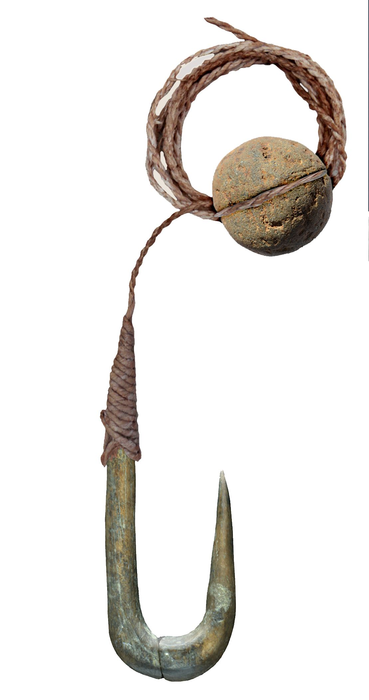
Hook & Weight

Credit: Emanuela Cristiani, CC-BY 4.0 (https://creativecommons.org/licenses/by/4.0/)

Humans in the Middle East were using complex fishing tools and techniques by 12,000 years ago, according to a study published October 6, 2021 in the open-access journal PLOS ONE by Antonella Pedergnana of the Archaeological Research Centre and Museum for Human Behavioural Evolution in Mainz, Germany and colleagues.

Fish have long been an important part of human diets, but it is challenging to study the history of the technology humans have used to acquire fish, in part because early fishing gear was made from perishable materials like wood and plant fibers. In this study, Pedergnana and colleagues examined a collection of fishing hooks and stones from the archaeological site of Jordan River Dureijat in northern Israel, at least 12,000 years old.

The team analyzed the shape and residues of 19 bone fish hooks, as well as six grooved pebbles that appear to have been used as sinkers, altogether one of the largest collections of early fishing technology. Plant fiber residue on the hooks and stones indicate the use of fishing line, and the wide variety of hook shapes, including multiple arrangements of barbs and multiple methods for attaching hook to line, reflect their utility for catching a variety of fish. Additionally, grooved lines and fiber residues on the bends of some hooks indicate the use of artificial lures.

This study identifies some of the earliest evidence of complex fishing technology. The use of lures and a wide variety of hook shapes suggests the humans of this time were not only hunting a broad spectrum of fish, but also that they had profound knowledge of fish behavior and ecology. These innovations coincide with broader patterns in human subsistence evolution which mark the beginning of the transition to agriculture in this region of the world.

The authors add: “Except for the use of metal and plastic, modern fishing has not invented anything new since the Natufian. A look at the JRD fishing gear reveals that all fishing techniques and knowledge already existed some 13,000 years ago. The finds highlight the importance of aquatic resources for the emergence of sedentism and the Neolithic life ways in the Levant.”


Journal

PLoS ONE

DOI

10.1371/journal.pone.0257710

Method of Research

Observational study

Subject of Research

Not applicable

Article Title

Early line and hook fishing at the Epipaleolithic site of Jordan River Dureijat (Northern Israel)

Article Publication Date

6-Oct-2021

COI Statement

The authors have declared that no competing interests exist.

Share12Tweet8Share2ShareShareShare2

Related Posts

Florida Cane Toad: Complex Spread and Selective Evolution

Florida Cane Toad: Complex Spread and Selective Evolution

February 7, 2026
New Study Uncovers Mechanism Behind Burn Pit Particulate Matter–Induced Lung Inflammation

New Study Uncovers Mechanism Behind Burn Pit Particulate Matter–Induced Lung Inflammation

February 6, 2026

DeepBlastoid: Advancing Automated and Efficient Evaluation of Human Blastoids with Deep Learning

February 6, 2026

Navigating the Gut: The Role of Formic Acid in the Microbiome

February 6, 2026

POPULAR NEWS

  • Robotic Ureteral Reconstruction: A Novel Approach

    Robotic Ureteral Reconstruction: A Novel Approach

    82 shares
    Share 33 Tweet 21
  • Digital Privacy: Health Data Control in Incarceration

    63 shares
    Share 25 Tweet 16
  • Study Reveals Lipid Accumulation in ME/CFS Cells

    57 shares
    Share 23 Tweet 14
  • Breakthrough in RNA Research Accelerates Medical Innovations Timeline

    53 shares
    Share 21 Tweet 13

About

We bring you the latest biotechnology news from best research centers and universities around the world. Check our website.

Follow us

Recent News

Inflammasome Protein ASC Drives Pancreatic Cancer Metabolism

Phage-Antibiotic Combo Beats Resistant Peritoneal Infection

Boosting Remote Healthcare: Stepped-Wedge Trial Insights

Subscribe to Blog via Email

Enter your email address to subscribe to this blog and receive notifications of new posts by email.

Join 73 other subscribers
  • Contact Us

Bioengineer.org © Copyright 2023 All Rights Reserved.

Welcome Back!

Login to your account below

Forgotten Password?

Retrieve your password

Please enter your username or email address to reset your password.

Log In
No Result
View All Result
  • Homepages
    • Home Page 1
    • Home Page 2
  • News
  • National
  • Business
  • Health
  • Lifestyle
  • Science

Bioengineer.org © Copyright 2023 All Rights Reserved.