Gerald Quon, an assistant professor in the Department of Molecular and Cellular Biology, College of Biological Sciences at the University of California, Davis has received a Director’s New Innovator Award from the National Institutes of Health (NIH). The award will support the development of a computational framework for characterizing how genetic variants associated with risk of psychiatric diseases like schizophrenia and bipolar disorder work at the cellular level.
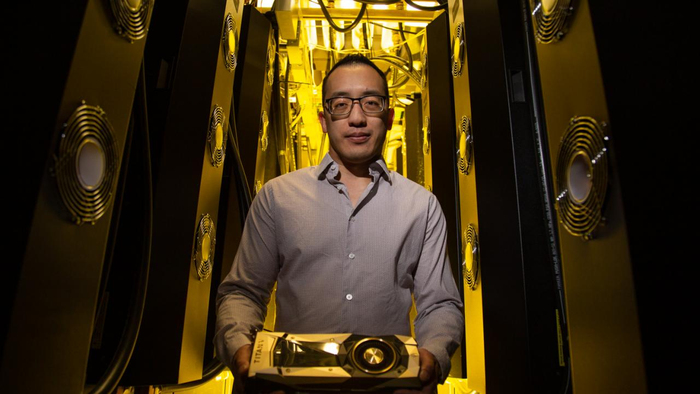
Credit: UC Davis College of Biological Sciences
Gerald Quon, an assistant professor in the Department of Molecular and Cellular Biology, College of Biological Sciences at the University of California, Davis has received a Director’s New Innovator Award from the National Institutes of Health (NIH). The award will support the development of a computational framework for characterizing how genetic variants associated with risk of psychiatric diseases like schizophrenia and bipolar disorder work at the cellular level.
“The science put forward by this cohort is exceptionally novel and creative and is sure to push at the boundaries of what is known,” said NIH Director Francis S. Collins in a news release announcing the awards. “These visionary investigators come from a wide breadth of career stages and show that groundbreaking science can happen at any career level given the right opportunity.”
Quon’s project, entitled “Linking genetics to cellular behavior and disease via multimodal data integration,” will receive $1.5 million in support over five years. The project aims to characterize the relationship between gene regulation, neuron firing patterns and the morphology of those neurons.
“A lot of people who study the genetics of different disorders in humans look at the impact of genetic variants on the molecular level,” said Quon. “We’re trying to connect what happens at the molecular level in neurons to cellular-level phenotypes.”
Learning how genetic variants associated with different psychiatric disorders work at the cellular level requires significant amounts of computing power. With the award, Quon and his colleagues can acquire the hardware needed to build, train and deploy complex digital models.
“We use a lot of graphics cards and those get expensive quickly,” Quon said.
Identifying targets for therapy
The award will also support efforts to validate predictions about which genetic variants are harmful and which are benign. Quon and his colleagues will be able to introduce specific DNA mutations into a neuron and evaluate how they impact a neuron’s response patterns.
“Hundreds of places in the genome might harbor mutations that affect our risk of disease,” said Quon, “but we don’t actually know which mutations are the most important to target with therapies. Our work is trying to identify which mutations may have the biggest effect on neuron function and should therefore be prioritized for therapy.”
This type of research is often stymied by the lack of an integral component: live neurons.
“Some types of neuron function studies need access to live neurons; it’s hard to get access to live human neurons, so those datasets are rare and small,” said Quon.
Small datasets are a huge obstacle to data analysis, so the computational framework Quon hopes to develop will enable the integration of data from both live and postmortem samples, from both humans and mice. Ultimately, using all this extra data will allow researchers to more accurately pinpoint which mutations actually result in disorders like schizophrenia.
“By using our proposed framework to pool additional data from other sources,” said Quon, “we can boost the amount of statistical power we have, and we’ll need fewer neurons to do proper data analysis.”
The High-Risk, High-Reward Research Program is part of the NIH Common Fund, which oversees programs that pursue major opportunities and gaps throughout the research enterprise that are of great importance to NIH and require collaboration across the agency to succeed. The program recognizes unusually innovative research from early career investigators.