• HOME
  • NEWS
  • EXPLORE
    • CAREER
      • Companies
      • Jobs
    • EVENTS
    • iGEM
      • News
      • Team
    • PHOTOS
    • VIDEO
    • WIKI
  • BLOG
  • COMMUNITY
    • FACEBOOK
    • INSTAGRAM
    • TWITTER
Wednesday, April 1, 2026
BIOENGINEER.ORG
No Result
View All Result
  • Login
  • HOME
  • NEWS
  • EXPLORE
    • CAREER
      • Companies
      • Jobs
        • Lecturer
        • PhD Studentship
        • Postdoc
        • Research Assistant
    • EVENTS
    • iGEM
      • News
      • Team
    • PHOTOS
    • VIDEO
    • WIKI
  • BLOG
  • COMMUNITY
    • FACEBOOK
    • INSTAGRAM
    • TWITTER
  • HOME
  • NEWS
  • EXPLORE
    • CAREER
      • Companies
      • Jobs
        • Lecturer
        • PhD Studentship
        • Postdoc
        • Research Assistant
    • EVENTS
    • iGEM
      • News
      • Team
    • PHOTOS
    • VIDEO
    • WIKI
  • BLOG
  • COMMUNITY
    • FACEBOOK
    • INSTAGRAM
    • TWITTER
No Result
View All Result
Bioengineer.org
No Result
View All Result
Home NEWS Science News Biology

Think a census of humans is hard? Try counting their brain cells!

Bioengineer by Bioengineer
October 6, 2021
in Biology
Reading Time: 3 mins read
0
Banbury Cell Meeting 2016
Share on FacebookShare on TwitterShare on LinkedinShare on RedditShare on Telegram

In 2013, the U.S. government began investing $100 million to decipher how the human brain works in a collaborative project called the BRAIN Initiative. Cold Spring Harbor Laboratory (CSHL) and other researchers built tools and set standards for describing all the cells in the brain. On October 7, 2021 the initiative reached a major milestone, publishing a comprehensive census of cell types in the mouse, monkey, and human primary motor cortex in Nature. 
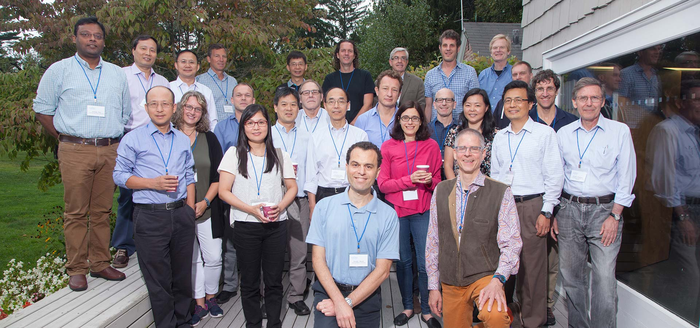
Banbury Cell Meeting 2016

Credit: CSHL

In 2013, the U.S. government began investing $100 million to decipher how the human brain works in a collaborative project called the BRAIN Initiative. Cold Spring Harbor Laboratory (CSHL) and other researchers built tools and set standards for describing all the cells in the brain. On October 7, 2021 the initiative reached a major milestone, publishing a comprehensive census of cell types in the mouse, monkey, and human primary motor cortex in Nature. 

The BRAIN Initiative Cell Census Network (BICCN) is the consortium of neuroscientists, computational scientists, physicists, geneticists, and instrument makers within the BRAIN Initiative tasked with counting and mapping all the cells in the brain. 

Z. Josh Huang, an adjunct professor at CSHL, leads one branch of the BICCN that includes five principal investigators from CSHL and researchers from other institutions. His lab outlined ways to classify new cell subtypes within the mouse forebrain based on their shapes, connections, and the genes they use. 

CSHL Professor Partha Mitra and other CSHL collaborators taught a computer to recognize different parts of neurons, then mapped the cells onto a topological world to see how those neurons are likely to connect. 

CSHL Associate Professor Jesse Gillis’ lab developed a statistics-based computer tool to categorize cells based on similarities in their component parts. This program, called MetaNeighbor, uses RNA transcripts (the instructions to build the components) to compare and categorize mammalian brain cells. 

CSHL Professor Anthony Zador’s lab developed MAPseq to map how different brain cells connect and interact. Several years later, Zador and his team developed BARseq and BARseq2, which can map connections and gene-use in thousands of neurons in a single mouse at single-neuron resolution. 

CSHL Associate Professor Pavel Osten leads another branch of the BICCN dedicated to finding anatomical differences between female and male mouse brains. He and his lab developed qBrain, a method that combines brain imaging techniques to map cells and connections of the mouse primary motor cortex in three dimensions. 

The atlases and catalogs published by the BICCN so far are frameworks upon which neuroscientists can now build. Neuroanatomists will be able to compare the human brain to the brains of other species. The BICCN scientists hope that within the next ten years, thousands of human brains will be mapped. This knowledge could be harnessed to study and treat schizophrenia, depression, Alzheimer’s, and traumatic brain injuries, and will be revolutionary to the future of neuroscience as a whole.


Journal

Nature

DOI

10.1038/s41586-021-03465-8

Article Title

Comparative cellular analysis of motor cortex in human, marmoset and mouse

Article Publication Date

6-Oct-2021
Share12Tweet8Share2ShareShareShare2

Related Posts

Chikungunya Virus Lingers in Joint Macrophages, Causes Chronic Disease

Chikungunya Virus Lingers in Joint Macrophages, Causes Chronic Disease

April 1, 2026
Unveiling How Two Genes Collaborate to Shape Dental and Facial Features

Unveiling How Two Genes Collaborate to Shape Dental and Facial Features

April 1, 2026

Do Your Genes Influence How Lifestyle Choices Affect Aging?

April 1, 2026

Combining Single-Cell Multiomics Unlocks Precise Identification of Rare Cell Types and States

March 31, 2026

POPULAR NEWS

  • blank

    Revolutionary AI Model Enhances Precision in Detecting Food Contamination

    96 shares
    Share 38 Tweet 24
  • Imagine a Social Media Feed That Challenges Your Views Instead of Reinforcing Them

    1006 shares
    Share 398 Tweet 249
  • Promising Outcomes from First Clinical Trials of Gene Regulation in Epilepsy

    51 shares
    Share 20 Tweet 13
  • Popular Anti-Aging Compound Linked to Damage in Corpus Callosum, Study Finds

    43 shares
    Share 17 Tweet 11

About

We bring you the latest biotechnology news from best research centers and universities around the world. Check our website.

Follow us

Recent News

NADPH Enzymes Suppress Pancreatic Precancerous Lesions

Entorhinal Cortex Maps Remote Tasks Without CA1

Chikungunya Virus Lingers in Joint Macrophages, Causes Chronic Disease

Subscribe to Blog via Email

Enter your email address to subscribe to this blog and receive notifications of new posts by email.

Join 78 other subscribers
  • Contact Us

Bioengineer.org © Copyright 2023 All Rights Reserved.

Welcome Back!

Login to your account below

Forgotten Password?

Retrieve your password

Please enter your username or email address to reset your password.

Log In
No Result
View All Result
  • Homepages
    • Home Page 1
    • Home Page 2
  • News
  • National
  • Business
  • Health
  • Lifestyle
  • Science

Bioengineer.org © Copyright 2023 All Rights Reserved.