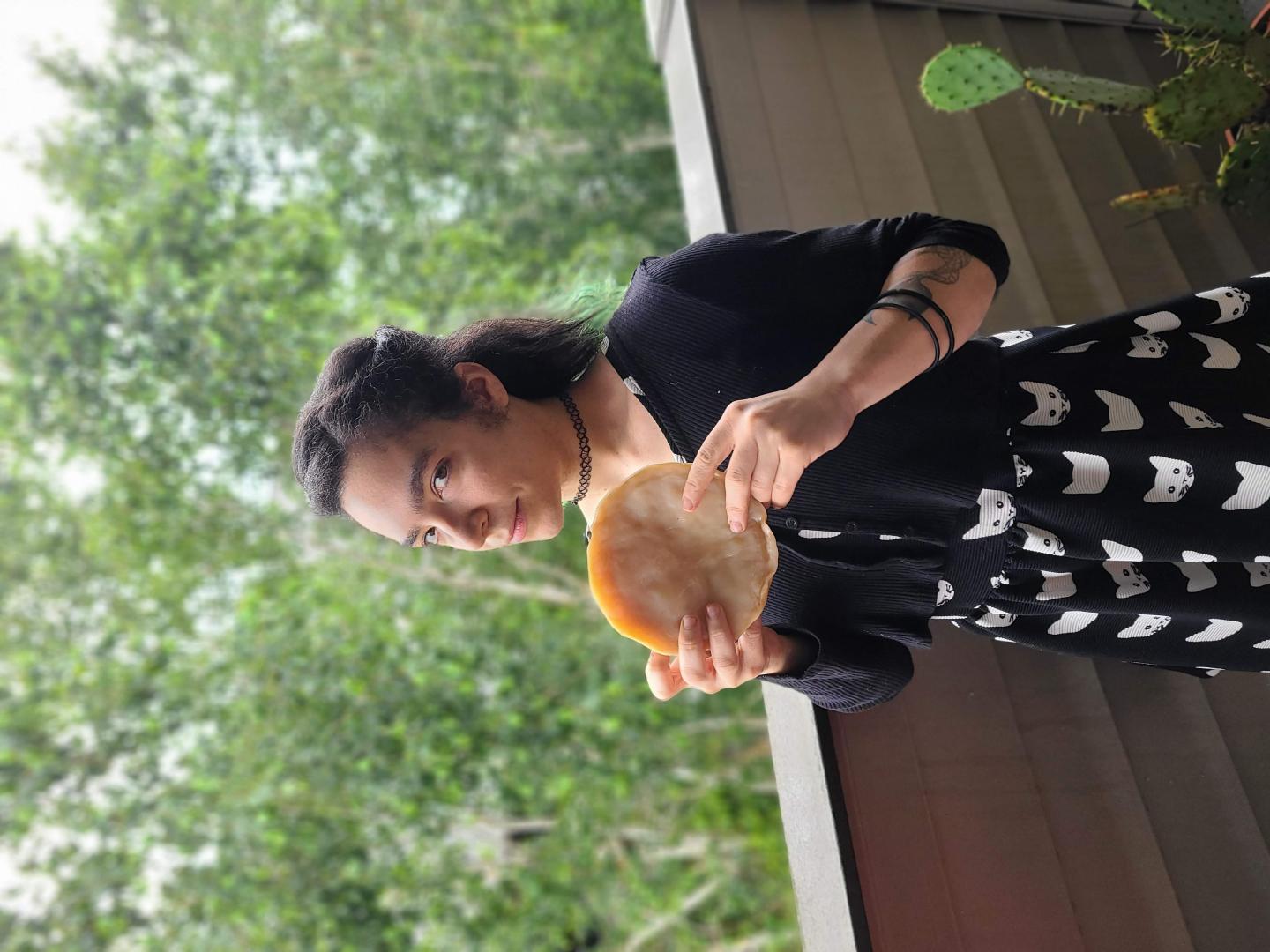
Credit: Oregon State University
CORVALLIS, Ore. – Oregon State University scientists are beginning to unravel the key microorganisms that contribute to the fermentation of kombucha, research that is already aiding large-scale kombucha producers in the fast-growing industry.
Kombucha is a fermented tea drink that has been homebrewed around the world for centuries, but in recent years has become widely popular with a global market size expected to grow from $1.3 billion in 2019 to $8.1 billion by 2027, according to an industry report. Several large producers, including Humm and Brew Dr., are based in Oregon.
Kombucha is produced by fermenting sugared tea using a symbiotic culture of bacteria and yeast, commonly referred to as SCOBY, and adding flavorings to enhance the taste. But little is known about what microorganisms in the SCOBY contribute to fermentation, which presents a challenge to kombucha brewers, especially those working on a commercial scale.
“Without having a baseline of which organisms are commonly most important, there are too many variables to try and think about when producing kombucha,” said Chris Curtin, an assistant professor of fermentation microbiology at Oregon State. “Now with this research we can say there are four main types of SCOBY. If we want to understand what contributes to differences in kombucha flavors we can narrow that variable to four types as opposed to, say, hundreds of types.”
Curtin and Keisha Harrison, a doctoral student in Curtin’s lab, recently published a paper in the journal Microorganisms about their kombucha microorganism research, which began in 2017 when Harrison joined the lab.
Harrison gave a presentation about the research at KombuchaKon, an annual technical meeting for the kombucha brewing industry. Her talk caught the attention of representatives from Sierra Nevada Brewing Co., who were looking to launch a line of hard kombucha, Curtin said.
Sierra Nevada launched that line, known as Strainge Beast, in 2020, and recently expanded it with three new flavors. The line uses a proprietary SCOBY culture developed with the Oregon State team, drawing upon results from the recently published paper.
Curtin and Harrison’s research follows work by other scientists who have uncovered the microbial communities that contribute to fermentation in other foods and beverages, such as wine, cheese and some types of beer. Past efforts to understand the microbial composition of kombucha have yielded inconclusive results.
In the recently published paper, Curtin and Harrison begin to change that. They used high-throughput DNA sequencing approaches to evaluate the microorganisms in 103 SCOBY used by kombucha brewers, primarily in North America. Only a few studies have applied these techniques with kombucha, and none at this scale.
The major finding was that there are essentially only four main types of SCOBY. Interestingly, each type consisted of very different combinations of yeast and bacteria working together. This contrasts with other fermented beverages, where a single organism consistently becomes dominant, as is the case for beer, wine and cider.
“This is the first comprehensive picture of SCOBY microbial community ecology,” Harrison said. “Further research is necessary to relate the microbial community composition of kombucha SCOBY to acidity, flavor and aroma of finished products. That work can now draw upon what we have discovered with the results in this paper.”
###
This research was partially funded by the Kombucha Brewers International and the Agricultural Research Foundation at Oregon State.
Media Contact
Sean Nealon
[email protected]
Original Source
https:/